The organization coordinates with network service providers, security vendors, government agencies, as well as the industry associations. As such, it acts as a "CSIRT of CSIRTs" in the Japanese community. In the Asia Pacific region, JPCERT/CC helped form APCERT (Asia Pacific Computer Emergency Response Team) and provides a secretariat function for APCERT. Globally, as a member of the Forum of Incident Response and Security Teams (FIRST), JPCERT/CC cooperates with the trusted CSIRTs worldwide.
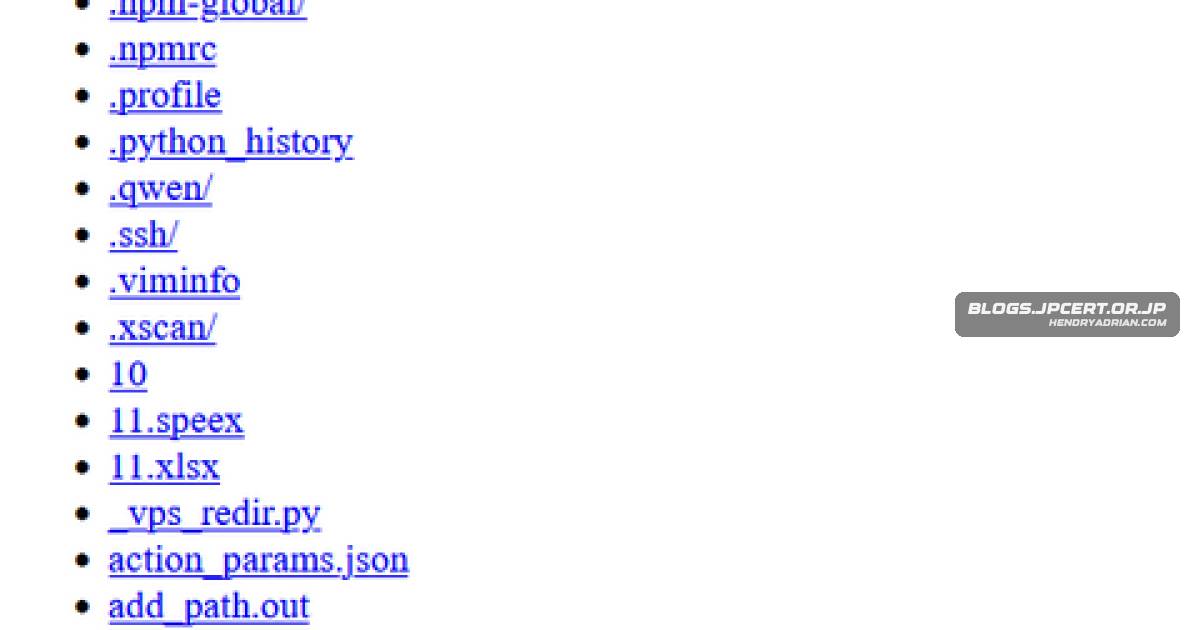
JPCERT/CC traced servers linked to attacks on organizations and web services, finding AI-assisted vulnerability scanning, APK analysis and API testing. A separate server contained web shells and EDR-evasion evidence; it was not directly linked to the attacks.
JPCERT/CC’s April–June 2026 monitoring found a sharp global surge in Mirai-like traffic to port 23/TCP. The increase may have been linked to Mirai infections exploiting a cPanel/WHM authentication-bypass vulnerability.
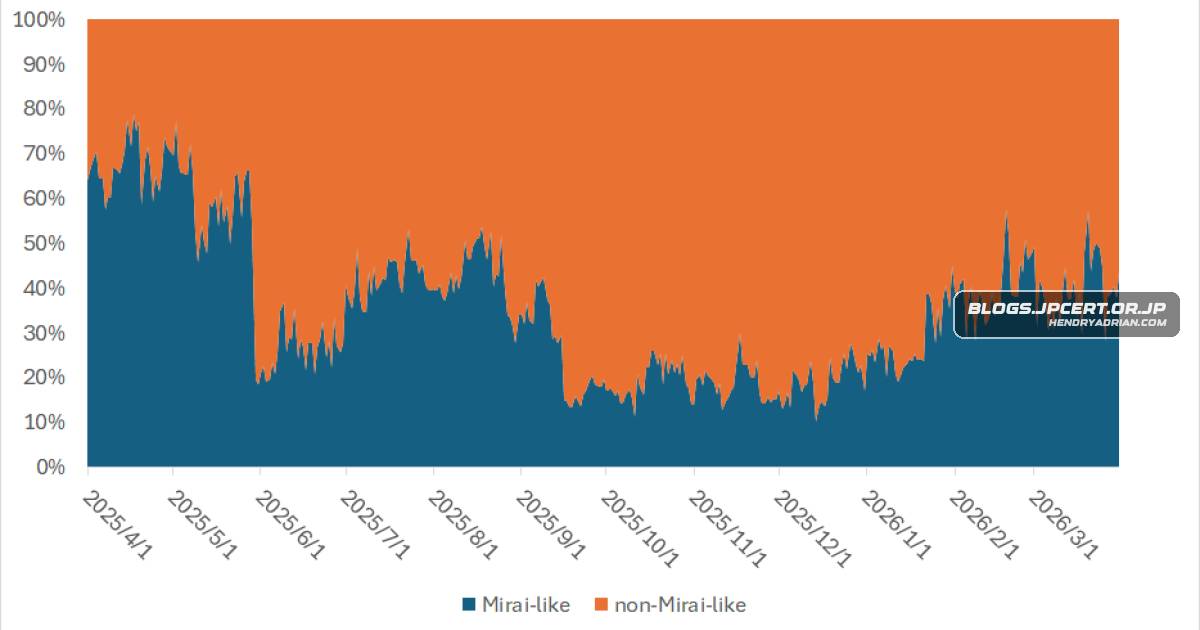
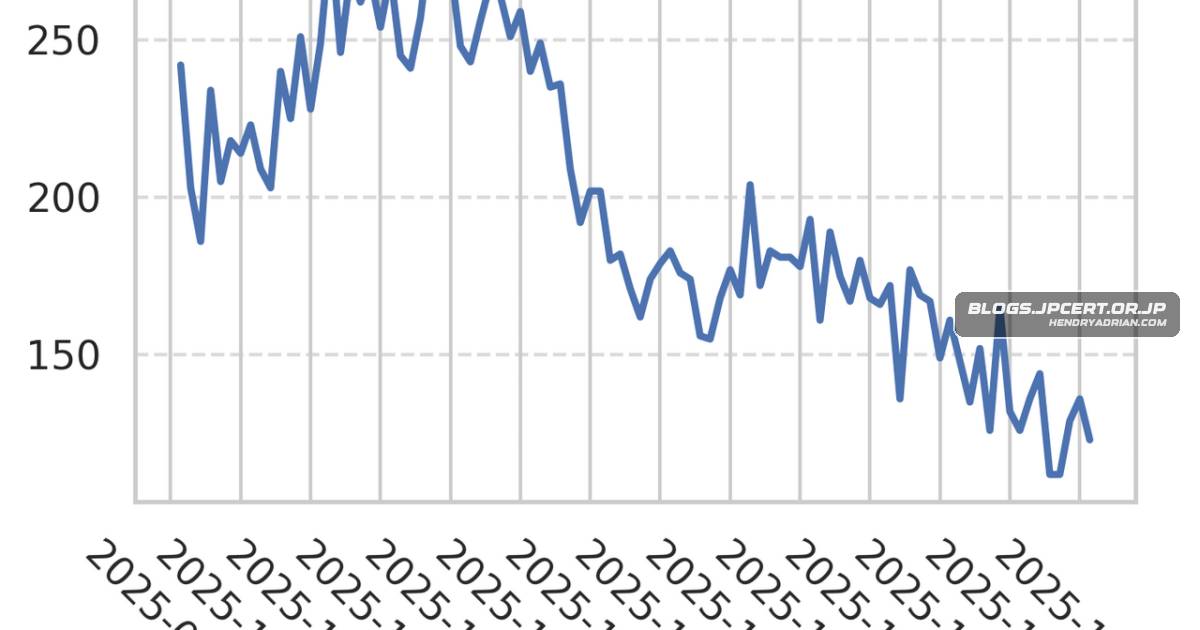
JPCERT/CC’s TSUBAME sensors observed changing IoT scanning activity: Mirai-like 23/TCP traffic from Japan declined during FY2025, while scans from other compromised devices increased. No unusual activity requiring a special alert was seen in Q1 2026.
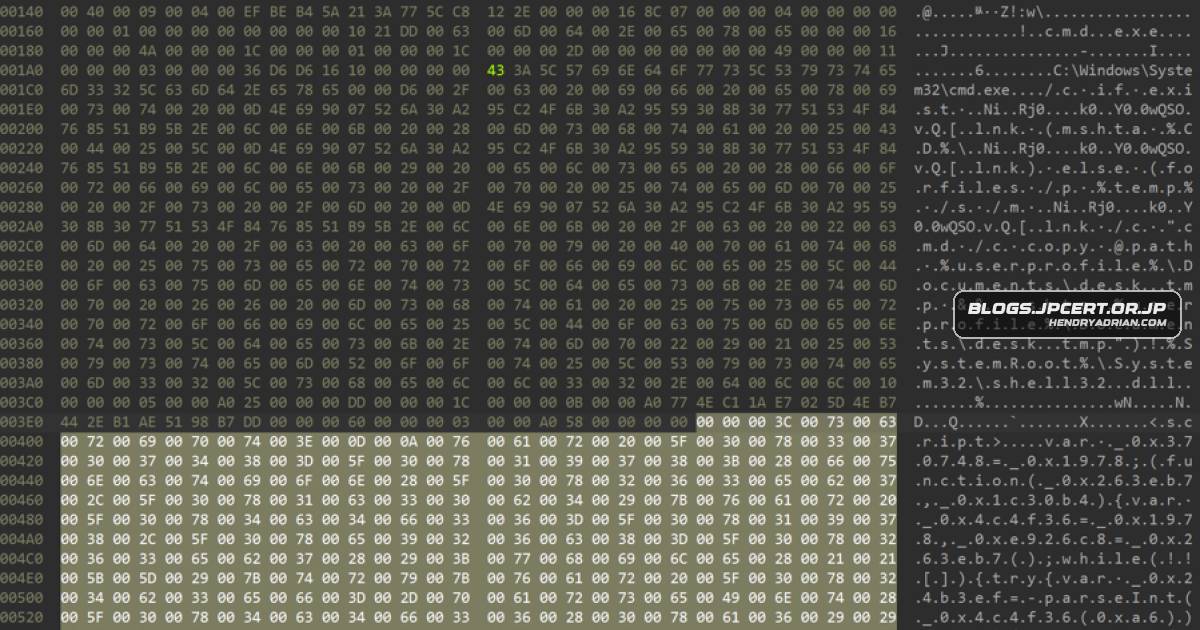
JPCERT/CC describes APT-C-60 spear-phishing attacks using RAR-delivered LNK files, mshta.exe, and legitimate developer services to deploy SpyGlace, and publishes related IoCs.
JPCERT/CC’s TSUBAME sensors observed a temporary October spike in Japanese hosts sending Telnet traffic, much of it from DVR/NVR devices, and a gradual rise in packet volumes across domestic and overseas sensors.
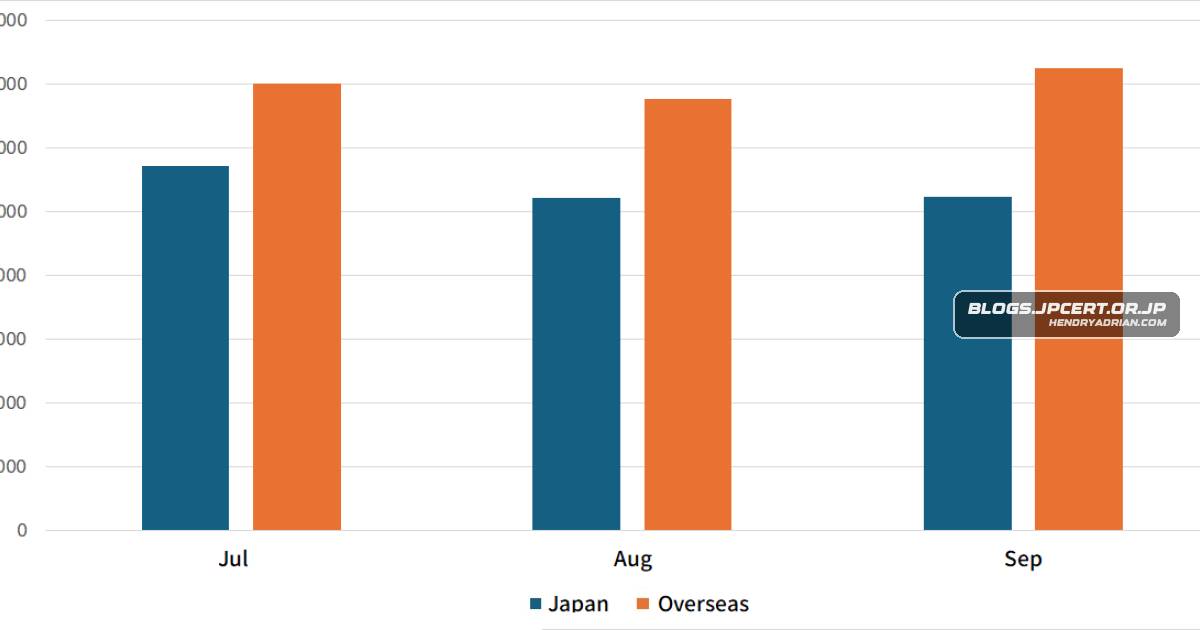
JPCERT/CC’s TSUBAME sensors observed suspicious packets from networks with exposed NVR, router and SDN-controller interfaces, and compared scanning volumes and destination ports across Japan and overseas from July to September 2025.
A JPCERT/CC visit to Azerbaijan profiled three CSIRTs, a national cybersecurity training center, and an industry association, highlighting incident response, information sharing, workforce development, and international cooperation.
JPCERT/CC has published a study outlining reverse-engineering techniques for Rust binaries, with topics ranging from binary identification and memory layouts to Rust language features and library code, relevant to analyzing Rust malware.