
How to Reduce Common Endpoint Security Risks
Summary
Huntress outlines risks from exposed RDP, phishing, abused RMM tools, and unpatched software, with steps such as MFA, access controls, monitoring, user training, and regular patching.
Key points
- The article says up to 70% of organizations have RDP exposed to the public internet and recommends limiting exposure, restricting admin access, enabling MFA, and monitoring suspicious logins.
- It describes phishing via email, text, phone, voicemail, and QR codes, and recommends security awareness training and MFA.
- The article cites Huntress’ 2025 Cyber Threat Report, which says 17.3% of remote access methods originated from RMM abuse.
- It says attackers may abuse existing RMM tools through outdated software, misconfigurations, or stolen credentials, or deploy their own tools, including portable executables.
- Recommended RMM safeguards include role-based permissions, patching, activity-log monitoring, and auditing approved tools.
- The article recommends automatic updates where possible, regular patch schedules, and prioritizing patches because attackers target known vulnerabilities in outdated software.
Article Details
- Defense Focus
- Reduce common endpoint exposure and detect unauthorized access through RDP, phishing, RMM abuse, and unpatched software.
- Detection Methods
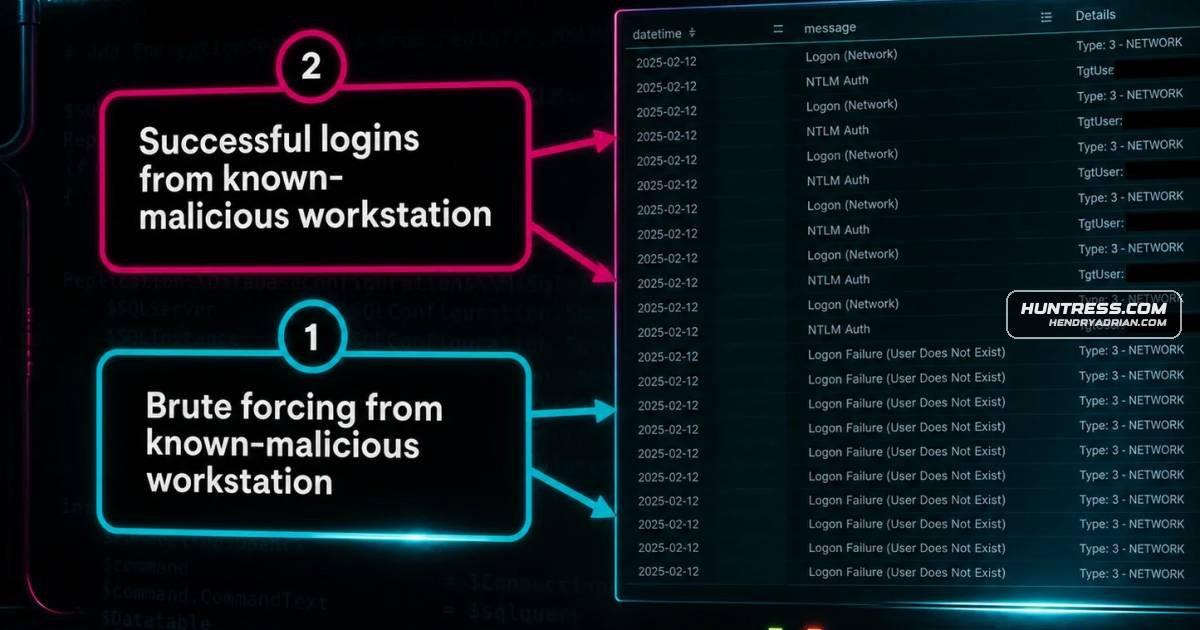
- Review RDP activity for successful brute-force attempts and logins from unknown IP addresses.
- Monitor RMM activity logs for unusual logins and unauthorized installations.
- Audit and track approved RMM tools so unauthorized instances stand out.
- Use endpoint detection and response (EDR) solutions.
- Data Sources
- RDP event logs
- RMM activity logs
- Endpoint telemetry
- Platforms
- Huntress
- Defensive Actions
- Avoid exposing RDP to the public internet unless required.
- Restrict administrative privileges and use role-based permissions for RMM access.
- Enforce MFA for RDP sessions and use MFA to reduce the impact of compromised credentials.
- Keep Windows security configurations hardened.
- Provide regular security awareness training to help users recognize phishing.
- Patch and update RMM software and other software on a regular schedule; prioritize vulnerabilities.
- Use automatic updates where possible.
- Audit, track, and monitor authorized RMM tools.
MITRE ATT&CK
T1059.001 · PowerShellThe article includes an example of a PowerShell script exploiting CVE-2023-27532 in outdated Veeam software.T1110 · Brute ForceAttackers are described cycling through password options to gain an RDP login session.T1219 · Remote Access ToolsAttackers abuse existing RMM software or install their preferred RMM tools to gain unauthorized remote access.T1566 · PhishingThe article describes phishing messages and other communications used to trick victims into clicking malicious links or disclosing information.