
AWS Introduces Next Generation Policies for Network Firewall
Summary
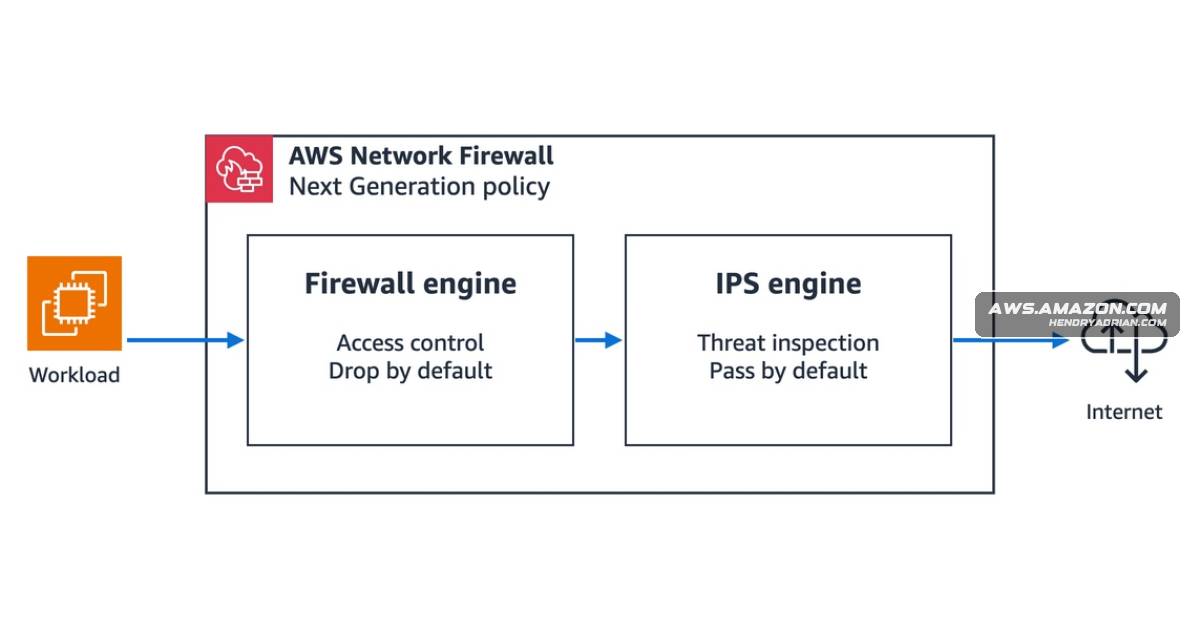
AWS Network Firewall Next Generation policies separate access control and intrusion prevention into stateful engines with independent rule capacity. AWS also describes monitor-mode validation and an example policy setup.
Key points
- Next Generation policies use separate stateful firewall and IPS engines, each with its own rule capacity.
- The firewall engine evaluates access rules across connection states and drops traffic by default unless a rule allows it.
- Allowed traffic proceeds to an IPS engine that evaluates Suricata-compatible rules in action order.
- Policies can use reusable referenced rule groups or policy-specific embedded rules.
- Monitor mode evaluates traffic and logs what rules would do without applying drop or reject actions; AWS recommends validating policies in monitor mode before enforcement.
- Changing policy mode or the firewall default action restarts stateful inspection and interrupts established connections.
- Classic policies remain supported, and each firewall uses either a Classic or Next Generation policy.
Article Details
- Event Type
- AWS announced Next Generation policies for AWS Network Firewall.
- Impact
- The policies separate access control and threat protection into two stateful engines, each with its own rule capacity. The firewall engine applies access rules, and the IPS engine checks allowed traffic against threat rules. Monitor mode lets teams evaluate and log policy decisions before enforcement; switching to enforce mode or changing the firewall default action restarts stateful inspection and interrupts established connections. Classic policies remain supported, and Next Generation policies are available at no additional charge.