
Kaspersky Details The Gentlemen’s Custom Go Backdoor and New Ransomware Variant
Summary
Kaspersky details The Gentlemen’s ransomware operations, including exposed-service and credential-based access, reconnaissance, BYOVD defense evasion, a custom Go backdoor for command execution and SOCKS proxying, and Go and C-based ransomware variants.
Key points
- Kaspersky reports observing The Gentlemen since February 2026; public reports ranked the group among the top 10 ransomware actors by victim announcements in the first half of the year.
- Initial access reportedly involves exploiting exposed services, including VPNs and firewalls, or using stolen, weak, leaked, or default credentials. Some observed access preceded ransomware deployment, leading researchers to suggest other actors or initial access brokers may have been involved.
- The group uses SharpADWS, NetScan, Advanced IP Scanner, and netsh for network and Active Directory reconnaissance; packet captures could reveal unencrypted activity and potential passwords.
- Kaspersky observed a custom Go implant deployed before ransomware activity. It collected host information, maintained C2 communication, and supported command execution and SOCKS proxying.
- Reported defense-evasion methods include vulnerable-driver abuse (BYOVD), kernel tools, registry changes, and attempts to disable Windows Defender and Kaspersky products.
- The Go ransomware can spread through Group Policy or PsExec and uses Curve25519 with XChaCha20 for encryption. A C-based Windows variant was observed in a limited number of attacks; it uses AES256-GCM with RSA, and several listed features are not yet implemented.
- Kaspersky says it has high confidence in attributing the observed activity to The Gentlemen and affiliates, citing the group’s name, associated email addresses, and data leak site in binaries and ransom notes.
Article Details
- Attack Vectors
- The group and its affiliates gain access by exploiting vulnerabilities in internet-exposed services and devices, including VPNs and firewalls, and by using stolen, weak, leaked, or default credentials. Researchers say some intrusions may involve other actors or initial access brokers.
- A custom Go backdoor collects host information and maintains a TCP connection to a C2 server, enabling remote command execution and SOCKS proxying.
- Reconnaissance includes Active Directory enumeration, network and service scanning, and packet capture with netsh.
- The group moves laterally by distributing ransomware through NETLOGON and Group Policy, and by remotely executing it with PsExec.
- Defense evasion includes exploiting vulnerable drivers, using kernel tools to interfere with security software, changing Windows Defender settings, and attempting to uninstall Kaspersky Antivirus.
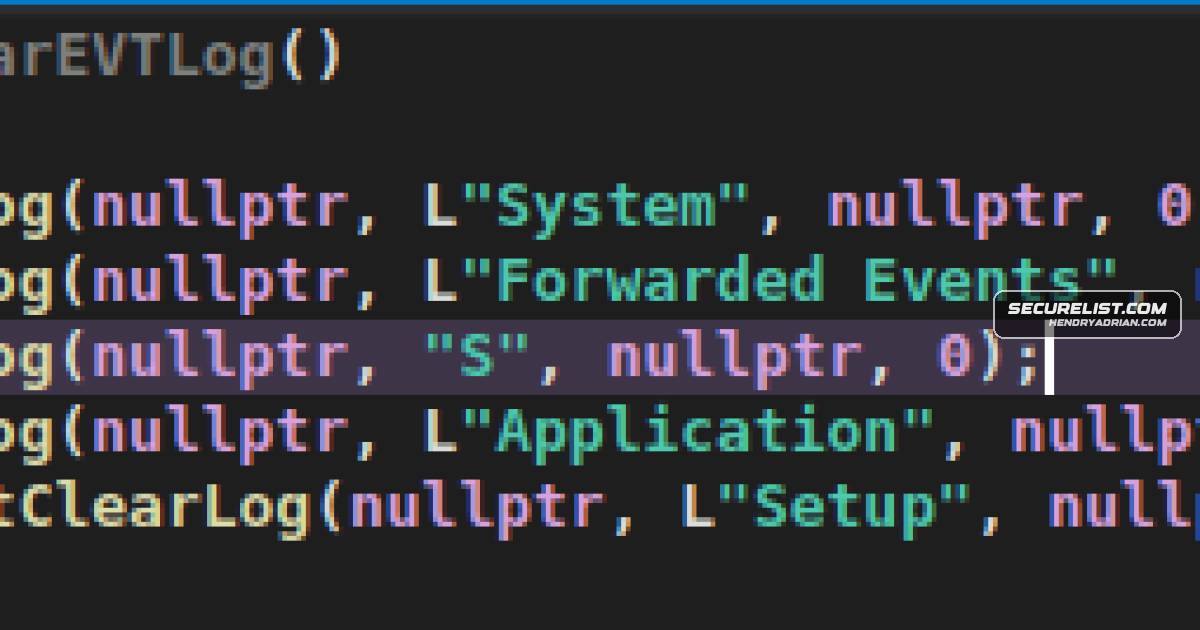
- The ransomware stops processes and services, shuts down Hyper-V virtual machines, encrypts files, and may delete shadow copies and event logs.
- Defensive Notes
- The article advises prioritizing vulnerability management and system hardening to reduce the risk of compromise.
Indicators of compromise
| Type | Indicator | Context |
|---|---|---|
| IPV4 | 81[.]177[.]215[.]15 | C2 server for the custom Go backdoor; the article gives port 9443. |
| MD5 | 02944c8a5535cdb5b2cbb893db2d5acf | Hash listed for a Go ransomware sample named locker_lqy8xb_windows_amd64.exe. |
| MD5 | 10ca9a4040001560d053b7e7885c1b95 | Hash listed for a Go ransomware sample named locker_28f3cl_windows_386.exe. |
| MD5 | 3b46a729db7ae6af8b19711c9452194d | Hash listed for a Go ransomware sample named locker_eryoo5_windows_amd64. |
| MD5 | 3c471ebc947cdf32240a90ffadf49b13 | Hash listed for a Go ransomware sample named locker_aga19g_windows_amd64.exe. |
| MD5 | 407b6a136bbaa7172eb44ef9d08bb58a | Hash listed for biontdrv_winbs.sys among the vulnerable-driver indicators. |
| MD5 | 4be8bb62f0ebbcf4ce52c35ab6f794f5 | Hash listed for a Go ransomware sample named locker_wh54td_windows_386.exe. |
| MD5 | 525ef6014f0ef20e44fe47c1d9980b69 | Hash listed for biontdrv_wink.sys among the vulnerable-driver indicators. |
| MD5 | 53c616677bc7e2a0a03127f19166d007 | Hash listed for a Go ransomware sample named locker_p663zs_windows_amd64.exe. |
| MD5 | 554e699c96b332468f1ae69c1ae81ef9 | Hash listed for the custom backdoor binary sihost.exe. |
| MD5 | 5761bd63da03686fc480245da7bd1e9f | Hash listed for ProcessMonitorDriver.sys, a vulnerable driver observed in the group's BYOVD activity. |
| MD5 | 5c3b9821fc82a9028cb63b9671950919 | Hash listed for the Go ransomware binary locker.exe. |
| MD5 | 5f0b2c6d9f442754258bf4dd841c8341 | Hash listed for a Go ransomware sample named locker_t1zged_windows_amd64.exe. |
| MD5 | 608faf58353b65c45ef9833358ac3787 | Hash listed for a Go ransomware sample named locker_u90lyt_windows_amd64.exe. |
| MD5 | 6ae7c9a7ea0b8c40a64225734f6bd01d | Hash listed for the Go ransomware binary gentle.exe. |
| MD5 | 73f0a8c3ea794a04e80c32038249f044 | Hash listed for wsddprm.sys among the vulnerable-driver indicators. |
| MD5 | 846dc77c1246db20d976346e0e359502 | Hash listed for a Go ransomware sample named locker_p663zs_windows_386.exe. |
| MD5 | 8f0577d28c4ff5f71b149f444bfaba8e | Hash listed for gamedriverx64.sys, a vulnerable driver observed in the group's BYOVD activity. |
| MD5 | 9321a61a25c7961d9f36852ecaa86f55 | Hash listed for inpoutx64.sys, a vulnerable driver observed in the group's BYOVD activity. |
| MD5 | adac9984b3cc43d66a0d33079bbec299 | Hash listed for a Go ransomware sample named UcAaJ_o_1j9srso9a14071ps4p7s3f81s1b. |
| MD5 | ae0e536766788478263bf448a9381641 | Hash listed for a Go ransomware binary named cosmo.exe. |
| MD5 | b3e418d30312c1b2c58a791286868f42 | Hash listed for a Go ransomware sample named system_386.exe. |
| MD5 | b6b51508ad6f462c45fe102c85d246c8 | Hash listed for wamsdk.sys, a vulnerable driver observed in the group's BYOVD activity. |
| MD5 | b9986a0f1f1f1a798dc3f0c59a80a1a3 | Hash listed for fin.exe among the article's Go-ransomware indicators. |
| MD5 | c2764744dcb4b0e1db79ca1e8bf65368 | Hash listed for a Go ransomware binary named getlwd.exe. |
| MD5 | d12a5b36dd00586cc374a1cae43efed4 | Hash listed for a Go ransomware sample named locker_c65ffp_windows_amd64.exe. |
| MD5 | d2f72897e8986303d5567eb2384932b8 | Hash listed for a Go ransomware sample named UcAaJ_o_1j9srso9a14071ps4p7s3f81s1b. |
| MD5 | de1522f9219497632f30f8a6e72f26b6 | Hash listed for a Go ransomware sample named locker_c7ekh7_windows_amd64.exe. |
| MD5 | eef8a950952696b018aa9c6da2f5d7ad | Hash listed for Havoc.sys, a vulnerable driver observed in the group's BYOVD activity. |
| MD5 | fdae2beb813778b4540a997706862096 | Hash listed for a Go ransomware binary named AIR.exe. |
MITRE ATT&CK
T1018 · Remote System DiscoveryNetScan and Advanced IP Scanner are used to identify active systems on victim networks.T1021.002 · SMB/Windows Admin SharesRansomware is copied to the NETLOGON share, and PsExec is used to execute it remotely on other systems.T1040 · Network SniffingThe attackers use `netsh trace` to capture network packets and analyze the captured data for sensitive information.T1046 · Network Service DiscoveryThe group scans networks to identify active ports and services.T1053.005 · Scheduled TaskThe ransomware creates scheduled tasks named `UpdateUser` or `TaskSystem` for startup execution or elevated execution.T1059.001 · PowerShellPowerShell scripts and cmdlets are used for Group Policy deployment, security-setting changes, and lateral movement.T1068 · Exploitation for Privilege EscalationThe group installs and exploits vulnerable drivers to gain elevated capabilities and disable security software.T1069.002 · Domain GroupsThe backdoor's reconnaissance commands include `net group “Domain Admins” /domain` to enumerate domain groups.T1078 · Valid AccountsThe group and its affiliates use stolen, weak, leaked, or default credentials to access victim systems.T1087.002 · Domain AccountSharpADWS and `Get-ADComputer -Filter *` are used to enumerate Active Directory objects and computers.T1190 · Exploit Public-Facing ApplicationThe group is reported to exploit vulnerabilities in internet-exposed services and devices, including VPNs and firewalls, for initial access.T1486 · Data Encrypted for ImpactThe Go and C-based ransomware variants encrypt victim files using their respective encryption schemes.T1490 · Inhibit System RecoveryThe ransomware deletes shadow copies with `vssadmin.exe` and `wmic.exe` commands to hinder recovery.T1547.001 · Registry Run Keys / Startup FolderThe Go ransomware adds a `GupdateS` value under the Windows Run registry key to launch the ransomware at startup.T1562.001 · Disable or Modify ToolsThe group attempts to disable Windows Defender and Kaspersky Antivirus using driver abuse, registry changes, PowerShell commands, and an uninstall utility.
Threat Actors
Vendors
KasperskyDefense evasion includes BYOVD attacks, vulnerable drivers, open-source kernel tools, registry changes, PowerShell commands, and attempts to disable Windows Defender and Kaspersky.MicrosoftMicrosoft’s netsh tool is used to capture network packets and gather intelligence, executing the command
Products
ESXiidentified two ransomware implant versions: the cross-platform Go variant described above and a C-based ESXi locker for Linux.Kaspersky Antivirusgroup employs simple methods to disable security software, such as using kavrmvr.exe to uninstall Kaspersky Antivirus, which is prevented by the product’s behavioral detection, and modifying Windows registry settingsMicrosoft Active DirectoryThe group performs extensive reconnaissance with tools such as SharpADWS, NetScan, Advanced IP Scanner, and netsh packet capture to collect network and Active Directory intelligence.Microsoft Hyper-V[T1489] Service Stop – Stopping Hyper-V virtual machines before encrypting virtual disks (‘Stop-VM -Force -TurnOff’).Microsoft WindowsDefense evasion includes BYOVD attacks, vulnerable drivers, open-source kernel tools, registry changes, PowerShell commands, and attempts to disable Windows Defender and Kaspersky.Windows DefenderDefense evasion includes BYOVD attacks, vulnerable drivers, open-source kernel tools, registry changes, PowerShell commands, and attempts to disable Windows Defender and Kaspersky.
Tools
Advanced IP ScannerThe group performs extensive reconnaissance with tools such as SharpADWS, NetScan, Advanced IP Scanner, and netsh packet capture to collect network and Active Directory intelligence.netscanThe group performs extensive reconnaissance with tools such as SharpADWS, NetScan, Advanced IP Scanner, and netsh packet capture to collect network and Active Directory intelligence.netshThe group performs extensive reconnaissance with tools such as SharpADWS, NetScan, Advanced IP Scanner, and netsh packet capture to collect network and Active Directory intelligence.OpenArk64The Gentlemen group also uses open-source tools, including Windows Kernel Explorer and OpenArk64, to disable security software.PsExec#TheGentlemenSharpADWS#TheGentlemenWindows Kernel ExplorerThe Gentlemen group also uses open-source tools, including Windows Kernel Explorer and OpenArk64, to disable security software.Wiresharkdata is saved to a shared administrative folder with a random name, and can be analyzed with tools like Wireshark to reveal sensitive information such as unencrypted network activity and potential passwords, which the
Countries
BrazilThe group targets large corporations and critical infrastructure, with observed intrusions across multiple regions including Brazil, China, Indonesia, Taiwan, and Thailand.ChinaThe group targets large corporations and critical infrastructure, with observed intrusions across multiple regions including Brazil, China, Indonesia, Taiwan, and Thailand.IndonesiaThe group targets large corporations and critical infrastructure, with observed intrusions across multiple regions including Brazil, China, Indonesia, Taiwan, and Thailand.TaiwanThe group targets large corporations and critical infrastructure, with observed intrusions across multiple regions including Brazil, China, Indonesia, Taiwan, and Thailand.ThailandThe group targets large corporations and critical infrastructure, with observed intrusions across multiple regions including Brazil, China, Indonesia, Taiwan, and Thailand.
Industries
ConstructionThe Gentlemen target a wide range of industries worldwide, including manufacturing, IT services, healthcare, financial services, construction, and logistics.Financial ServicesThe Gentlemen target a wide range of industries worldwide, including manufacturing, IT services, healthcare, financial services, construction, and logistics.HealthcareThe Gentlemen target a wide range of industries worldwide, including manufacturing, IT services, healthcare, financial services, construction, and logistics.IT servicesThe Gentlemen target a wide range of industries worldwide, including manufacturing, IT services, healthcare, financial services, construction, and logistics.logisticsThe Gentlemen target a wide range of industries worldwide, including manufacturing, IT services, healthcare, financial services, construction, and logistics.ManufacturingThe Gentlemen target a wide range of industries worldwide, including manufacturing, IT services, healthcare, financial services, construction, and logistics.