
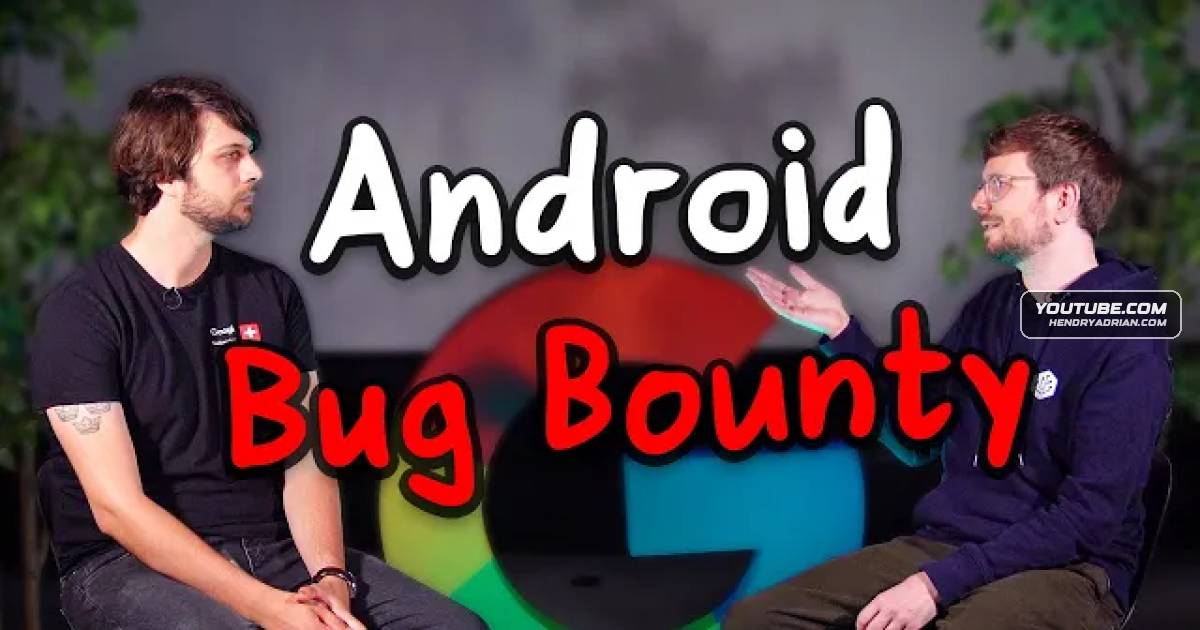
Google Mobile VRP Engineer Explains Android Bug Report Triage
· 24:07 · Watch on YouTube ↗
Summary
A Google Mobile VRP engineer explains how Android app reports are triaged, assessed and rewarded, highlighting reproducible proof-of-concepts, program scope, common permission and intent bugs, and how user interaction affects impact.
Key points
- Valid reports are initially triaged and may go to a specialist panel, typically involving several security engineers, to review the bug and determine a reward.
- Reports are easier to assess when they clearly explain the issue and include a reproducible proof-of-concept that works on the latest Android version.
- For some bugs, a simple ADB command can demonstrate the issue. If researchers submit an APK, including its source helps Google reproduce it without running an unexplained binary.
- Google Mobile VRP tiers first-party apps: tier one covers specified high-value apps, tier two covers apps that interact with tier-one apps, and tier three covers others. Android platform issues generally fall under Android VRP.
- The engineer identifies intent redirection, authentication or authorization issues, and permission bypasses as common findings; permission-related edge cases can also create serious bugs.
- Sideload-dependent issues may qualify, but the required user interaction can lower their impact. Vulnerabilities requiring less interaction, or triggered remotely, are generally assessed as higher impact.
- The panel assesses demonstrated impact, and may ask researchers to investigate further when a report appears to have greater potential impact.
Article Details
- Topics
- [00:14] Google Mobile VRP and Android app bug bounty responsibilities
- [01:40] Report triage, panel review, validation and reward decisions
- [03:09] What makes an actionable vulnerability report and proof-of-concept
- [06:13] Android PoC formats, APK source and ADB-based reproduction
- [08:41] Mobile VRP scope, app tiers and Android Open Source Project coverage
- [11:36] Common Android vulnerabilities: intent redirection and permission flaws
- [13:08] Sideloading, user interaction and vulnerability impact tiers
- [20:53] Demonstrated impact and reward assessment