
TuxBot v3 IoT Botnet Shows Signs of LLM-Assisted Development
Summary
Researchers analyzed TuxBot v3 Evolution, an IoT botnet with working brute-force and DDoS capabilities. Recovered code suggests LLM-assisted development, while implementation bugs disable several exploit and fallback command channels.
Key points
- Researchers recovered source code, multi-architecture binaries and automated DDoS test reports; samples appeared in telemetry through April 2026.
- The bot uses 1,496 Telnet credential pairs and supports encrypted primary command-and-control, persistence and network-flood attacks.
- A mismatched XOR key breaks several exploit payloads and the IRC and HTTP fallback channels; incompatible file formats prevent the exploit virtual machine from loading its package.
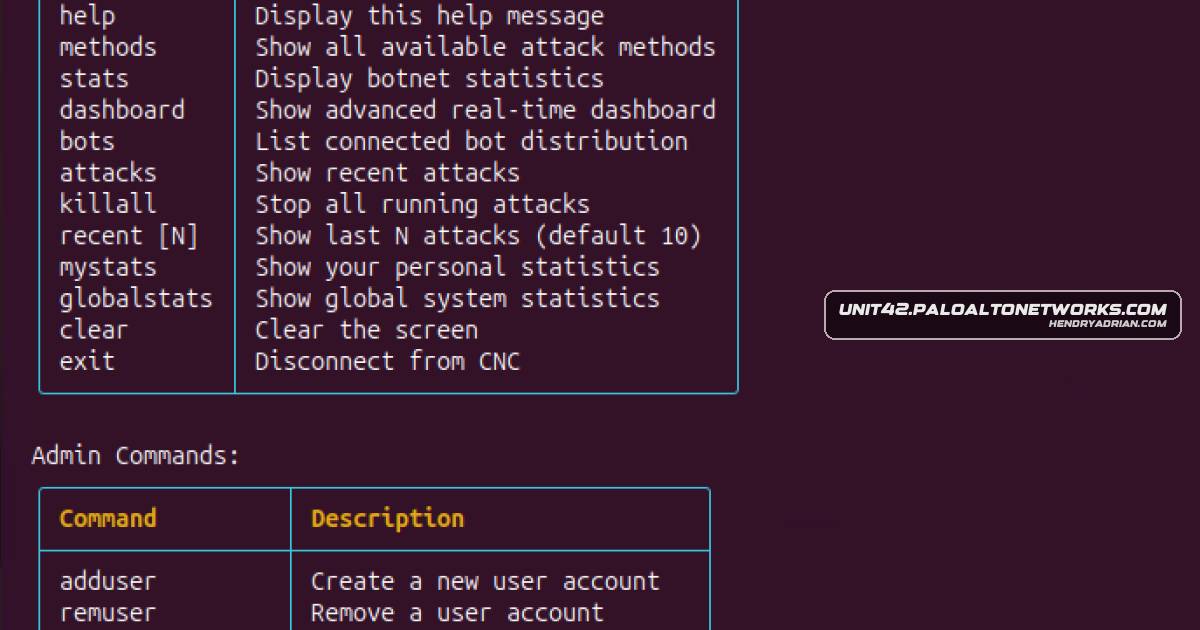
- The Go-based control server provides an SSH panel for DDoS operators, while the build system produces binaries for 17 architectures.
- Comments and authentication code led researchers to conclude that an LLM assisted development; one password-hashing implementation is labeled Argon2id but uses SHA256 loops instead.
- Shared dropper infrastructure and a TLS certificate link TuxBot infrastructure to Kaitori and AISURU tooling, according to the researchers.
- Researchers repaired selected defects during analysis, but a corrected production version remains an inference rather than a confirmed finding.
Article Details
- Attack Vectors
- TuxBot uses 1,496 credential pairs to brute-force Telnet access on IoT devices.
- The HTTP scanner probes random public IP addresses and administrative endpoints using hard-coded credentials, but its propagation logic is incomplete.
- The framework includes functional SSH and ADB scanners. Its broader exploit engine and exploit VM do not execute successfully in the analyzed version.
- Infected devices receive commands over an encrypted TCP C2 channel and can conduct UDP, TCP and DNS floods.
- Defensive Notes
- The bot establishes persistence through a disguised systemd service, cron entries and shell profile modifications.
- It masquerades as system daemons, relocates its binary and checks for virtualized or analysis environments.
- IRC and HTTP fallback C2 are broken in the analyzed samples; DNS TXT, DGA and P2P fallback mechanisms are reported as functional.
- The historical Tsunami dropper at 188.166.2[.]226 now serves a legitimate platform; the source warns that blocking it will affect legitimate services.
Indicators of compromise
| Type | Indicator | Context |
|---|---|---|
| DOMAIN | jetross[.]com | Domain on a TLS certificate observed on both the TuxBot C2 and dropper servers. |
| IPV4 | 107[.]174[.]133[.]119 | Keksec dropper associated with a Huawei exploit payload. |
| IPV4 | 154[.]6[.]197[.]43 | Address in the bot source to which successful Telnet logins are reported. |
| IPV4 | 185[.]10[.]68[.]127 | Dropper server used for TuxBot and Kaitori payloads. |
| IPV4 | 194[.]46[.]59[.]169 | AISURU infrastructure contacted by a sample that also communicates with the shared dropper. |
| IPV4 | 209[.]182[.]237[.]133 | TuxBot primary C2 server hosting the bot protocol, operator panel and machine API. |
| IPV4 | 45[.]145[.]185[.]229 | Keksec dropper identified in the related ecosystem. |
| SHA256 | 0f8bcca3ed65e980da2a1f90a767b7d543be32eeea3e9338d09d4d635a497988 | Compiled TuxBot MIPS binary. |
| SHA256 | 146f6010f6ee082aab13e0148d39baefa77eaba4ff65817b511b08c2092bdfd2 | Compiled TuxBot ARM binary. |
| SHA256 | 15c17dce89deccd5172285b2650de957918aa1157cde8e4633ae15dfe31f2711 | Compiled TuxBot x86-64 binary. |
| SHA256 | 246c97957651de568e61eba1abe572f0b0f960456209995d43d53a0d7cc494a1 | Compiled TuxBot MIPS little-endian binary. |
| SHA256 | 2f2c3551762c03da126e45dca6fc2f997c63f0f1bfc21fd0ceed680ac6f083ce | Compiled TuxBot PowerPC 64-bit little-endian binary. |
| SHA256 | 3ec016d637e4c9cd331edd2580a229621ad638e924a4aa29ac0342e9144ace19 | Compiled TuxBot PowerPC binary. |
| SHA256 | 511d3ffb4091cbcc94571d9fb3102e8cb424c6e187d01d53ff12078d54929bda | Confirmed TuxBot ARM sample from internal telemetry. |
| SHA256 | 6aa4034dc7a2858094ff4dc59af07d6fe31119591e41599bcc0f3d0b516ee734 | Confirmed TuxBot ARM sample from internal telemetry. |
| SHA256 | 6b7a8e0c96c2318e747f074f9a99d26738700769ac01bba692d19fc884847737 | Compiled TuxBot Alpha binary. |
| SHA256 | 71dfbb171eca4ef9d02ff630b56e5283bbef7b375d4dbe9e8c9531bef312fa8d | Confirmed TuxBot x86-64 debug sample. |
| SHA256 | 96b1f96efca3b9df2dea85678d60da27e3265b4a00e39e20e64b27bb985e1561 | Compiled TuxBot MIPS64 binary. |
| SHA256 | 9cd5e7e3c8bad321ef6c3d47fe25b3b56e9487f703a7eeee52db4067e6bafe61 | Compiled TuxBot RISC-V binary. |
| SHA256 | a03b0d41f5ef03328150331ffa0ed970998883f7e0343d79b2d3b95330d8e7c1 | Compiled TuxBot ARM7 binary. |
| SHA256 | a8d70d16509e227d8306be361bc37a3dc9fe34bf476f51e361e55e6d293c2b3f | Compiled TuxBot m68k binary. |
| SHA256 | bd6431fb06e4689142ef597cf00382e38ae20a5393a4d9277e45a3f5b3cbcff9 | Compiled TuxBot ARM64 binary. |
| SHA256 | c7a36d6b8128c41f93a32413675401a10a2b5769b221bbaa8c5c309585b73ceb | Compiled TuxBot MIPS64 little-endian binary. |
| SHA256 | e3a5296e762e9ee16010399666441d663beeea956382e97cca032a6a5ad06811 | Compiled TuxBot S/390 binary. |
| SHA256 | eb2fa179fde2f097c18d5d700ad87d660fc238ee14cbe5477032e60856859621 | Compiled TuxBot PA-RISC binary. |
| SHA256 | f1efb78887bb8783d7781c07cd13b53c9c79ebe5baa81f335838d0a6e73dec7e | Compiled TuxBot SH4 binary. |
| SHA256 | f324a45fcd2a9db4e542c09486c21b08bc42d6bf76fbd5f17871090361b10815 | Compiled TuxBot SPARC64 binary. |
MITRE ATT&CK
T1027 · Obfuscated Files or InformationThe bot stores C2 addresses and other sensitive strings in an XOR-encrypted table and decrypts them at runtime.T1036.004 · Masquerade Task or ServiceThe bot masquerades as randomly selected system daemons, including systemd-udevd and sshd.T1046 · Network Service DiscoveryThe bot scans public IP addresses for Telnet, SSH, HTTP and ADB services.T1053.003 · CronThe bot creates reboot and recurring cron entries for persistence.T1071.004 · DNSThe functional DNS fallback issues TXT queries for C2.T1090 · ProxyThe bot includes a SOCKS5 proxy subsystem.T1095 · Non-Application Layer ProtocolThe primary C2 channel exchanges encrypted commands over TCP using custom packet framing.T1110.001 · Password GuessingTuxBot guesses Telnet credentials and probes HTTP administrative interfaces with hard-coded credential combinations.T1497.001 · System ChecksThe anti-VM module checks DMI data, MAC prefixes, disk size and CPU count.T1497.003 · Time Based ChecksThe anti-VM module uses timing-based detection.T1498 · Network Denial of ServiceThe bot executes UDP, TCP and DNS flood attacks through its DDoS handlers.T1543.002 · Systemd ServiceTuxBot installs a systemd service disguised as sd-pam.service for persistence.T1546.004 · Unix Shell Configuration ModificationThe bot injects persistence commands into .bashrc, .profile and .zshrc.T1568.002 · Domain Generation AlgorithmsThe bot generates 20 candidate domains per day for fallback C2 connections.T1622 · Debugger EvasionThe bot initializes anti-debugging protections and checks for running analysis tools.
Threat Actors
Malware
AisuruThe framework includes a Go-based C2 panel, encrypted bot communications, DDoS capabilities, multi-architecture binaries, and infrastructure linked to the Keksec/Kaitori and AISURU ecosystems.KaitoriThe framework includes a Go-based C2 panel, encrypted bot communications, DDoS capabilities, multi-architecture binaries, and infrastructure linked to the Keksec/Kaitori and AISURU ecosystems.Mirai[T1562.001 ] Impair Defenses: Disable or Modify Tools – The competitor killer scans for rival malware and kills matches (‘Scans of /proc for memory signatures of Mirai, QBOT, Vamp, Anime and dvrHelper’).Tsunami[URL paths ] Payload and dead-code download paths – /bins/bot., hxxp[:]//188.166.2[.]226/OwO/Tsunami.x86, hxxp[:]//127.0.0[.]1/cmdTuxBot v3 EvolutionResearchers uncovered TuxBot v3 Evolution, a modular IoT botnet framework whose developers used an LLM to help generate code, leaving behind safety disclaimers, reasoning comments, and several broken features.
Tools
Countries
IcelandThe dropper server at 185.10.68[.]127 is hosted on FlokiNET, an Iceland-based provider known for bulletproof hosting.Iranlonger live, but the parent domain digikalas[.]online has remained active and resolved to an IP address on Iran’s Arvan Cloud content delivery network (CDN) during our research.SingaporeThe primary C2 server is hosted at 209.182.237[.]133, in Singapore.