

How macOS Full Disk Access Works and How to Manage It
An explainer on macOS Full Disk Access, its role in TCC privacy controls, the risks of excessive permissions, and how users and administrators can review and manage access, including through MDM.
An explainer on macOS Full Disk Access, its role in TCC privacy controls, the risks of excessive permissions, and how users and administrators can review and manage access, including through MDM.

The article explains how adversary-in-the-middle attacks proxy login sessions to capture credentials and tokens, why stolen tokens can bypass MFA, and how phishing-resistant MFA and prompt session revocation can reduce risk.

Huntress identifies RMM abuse, BYOVD and WebDAV abuse as notable 2024 threats, describing attack methods, reported increases and defensive steps including MFA, driver blocking and disabling unused WebDAV.

A survey cited in the article found 93% of responses linked security awareness training adoption to a trigger event. It outlines common triggers and advises building programs around lasting security outcomes, not just compliance.

Huntress explains how to hunt for Microsoft 365 password spraying, including jitter and cloud IP rotation, and recommends password protection, blocking legacy authentication, and phishing-resistant MFA.

Huntress shares practical cybersecurity advice, including ransomware precautions, VPN protections, Mac security, and basic habits such as using unique passwords, enabling MFA, and recognizing scams.

The article explains how filtering low-security-value logs before SIEM storage can reduce noise and cost. Huntress says its early-adopter Managed SIEM filtered more than 20 Windows event types, including Event ID 4627.
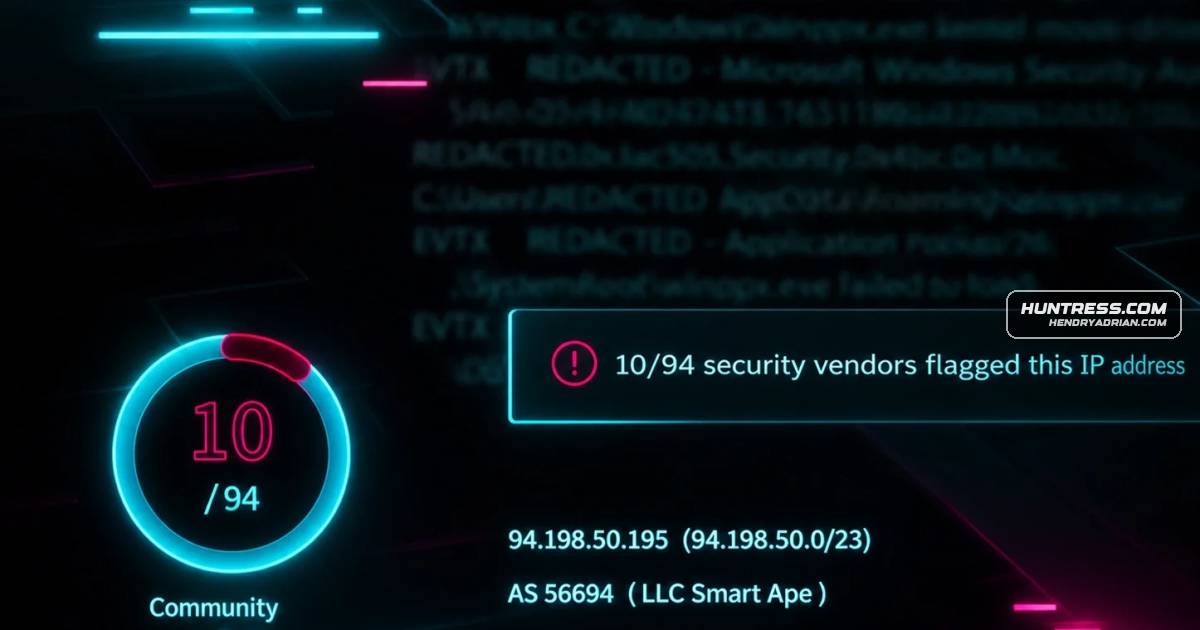
Huntress investigators traced a ReadText34 ransomware attack involving Administrator access, RDP, a vulnerable driver that crashed security software, persistence attempts, recovery inhibition and file encryption. Limited endpoint coverage left possible data theft unassس

Huntress analysts describe activity seen before Akira ransomware deployments, including new accounts, RDP access, hidden accounts, Cloudflared tunnels, and ransomware execution. They recommend asset inventory, attack-surface reduction, and monitoring.

Huntress describes dark-web businesses selling cybercrime services, a ransomware group’s customer-support system, and a purported cybercriminal university, highlighting how organized and accessible criminal activity can be.
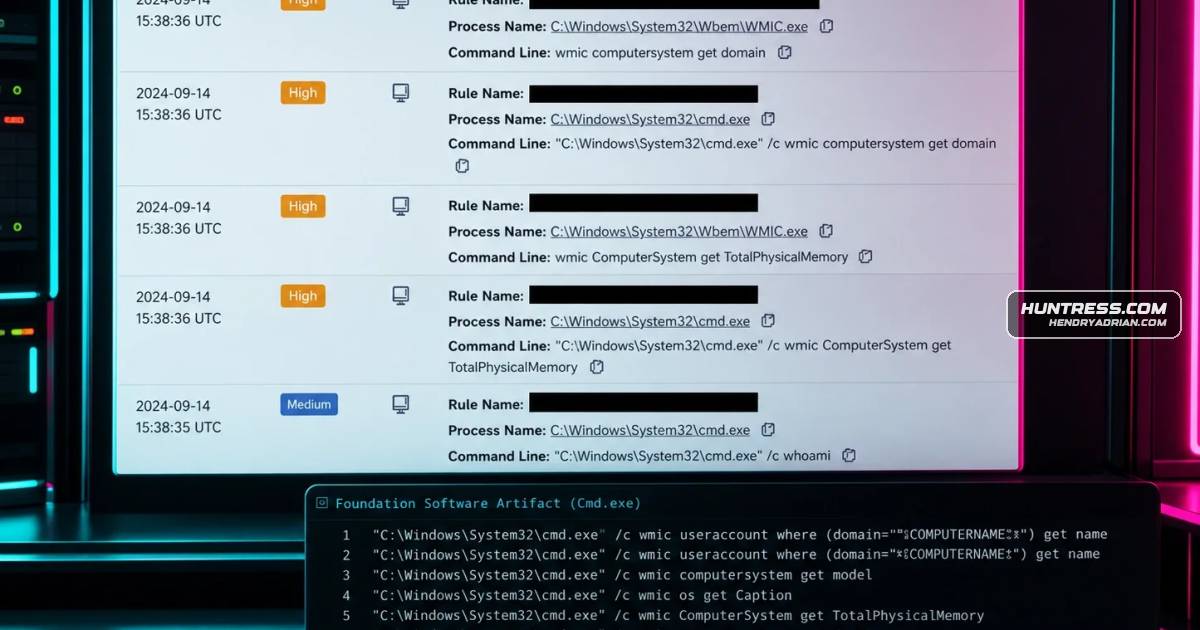
Huntress found attackers brute-forcing publicly exposed FOUNDATION Accounting MSSQL servers, with unchanged default credentials enabling access and xp_cmdshell command execution. It confirmed 33 exposed hosts in its sample and advised rotating credentials and limiting.

A webinar recap highlights mid-sized businesses’ cybersecurity challenges: limited time and skills, difficulty engaging employees in security awareness, and uncertainty about cybersecurity budgeting.

Biometrics can reduce password-related risks, but compromised fingerprints or facial data cannot be reset. The article discusses past biometric-data exposures and concerns about surveillance, human rights, and expanding data use.

The article outlines patient-data privacy risks from GPT use in healthcare and recommends private, controlled systems, anonymization, audits, staff training and clear data-handling protocols.

An MSPCFO analysis of 62 MSPs using Huntress and 129 not using it found 26.4% less time per 100 endpoints on identified tickets at Huntress MSPs, based on median sample values.

A Huntress episode recap shows how AI can help create convincing phishing, smishing, and vishing attacks, including voice-cloning demonstrations, and recommends MFA-protected authorization for sensitive actions.

Huntress investigated an intrusion at a nonprofit supporting Vietnamese human rights, suspected to span at least four years. Malware analysis revealed layered persistence, PNG-hidden payloads, and overlaps with APT32/OceanLotus.

The article compares state breach totals through 2022 with per-capita cybercrime victim rates from the FBI’s 2023 report, highlighting Alaska and California and discussing SMB exposure and a 2023 hospital ransomware incident.

Huntress introduced Unwanted Access, a Microsoft 365 identity capability that analyzes login sessions and lets customers define expected or unauthorized locations and VPNs. Its SOC can send escalations when login activity needs clarification.

Huntress described how attackers could exploit two ScreenConnect flaws, including an authentication bypass, to gain access through the setup wizard. Thousands of servers were vulnerable; attackers reportedly deployed ransomware, coin miners, and remote access tools.

Huntress says it has been authorized as a CVE Numbering Authority, allowing it to assign CVE identifiers when necessary and contribute vulnerability records to the CVE Program.

Huntress found a fake MicroDicom site distributing an oversized installer that bundled OpenSSH and installed a persistent service and SSH tunnel. The activity affected endpoints at two medical organizations; no data theft is reported.

Huntress traced fake-browser-update infections to fileless AsyncRAT and BOINC clients repurposed as C2. Two malicious BOINC servers had about 10,000 connected clients, but researchers observed no tasks issued or further payloads.

The article outlines nine endpoint security practices, including asset inventory, prompt patching, MFA, employee training, BYOD controls, least privilege, real-time monitoring, risk assessments, and EDR.