Huntress Details ReadText34 Ransomware Attack and Its Use of a Vulnerable Driver
Summary
Huntress investigators traced a ReadText34 ransomware attack involving Administrator access, RDP, a vulnerable driver that crashed security software, persistence attempts, recovery inhibition and file encryption. Limited endpoint coverage left possible data theft unassس
Key points
- In September 2024, Huntress observed Administrator credentials used to access the C$ share, followed by RDP being enabled and a successful login from HOME-PC.
- The attacker ran trend.exe, which appeared to install the vulnerable TrueSight driver; Trend Micro security products then crashed.
- winppx.exe attempted to disable driver-signature checks, install a kernel driver and establish a reverse shell. Event logs indicated the driver failed to load, while the executable also created persistence.
- readtext34.exe stopped processes and services, attempted to inhibit recovery, and persisted through the Administrator account's Run key.
- The ransomware used Windows cipher.exe with the /w option to complicate recovery, then encrypted files; ransomware canaries triggered alerts.
- The ransom note claimed confidential data had been collected, but investigators found no evidence of staging or exfiltration in the limited endpoint data available.
- Huntress recommends exercising incident-response plans, maintaining an asset inventory, reducing attack surface and monitoring all endpoints.
Article Details
- Attack Vectors
- The threat actor used Administrator credentials to access the C$ share from an internal IP address, then enabled RDP through a remote reg.exe command and logged in from the workstation named HOME-PC.
- The actor executed trend.exe, which was likely used to install the vulnerable TrueSight RogueKiller Antirootkit Driver (truesight.sys); security applications on the endpoint crashed after driver installation.
- winppx.exe attempted to disable driver signature checks, install itself as a kernel-mode boot-start driver, and establish a reverse shell. The driver failed to load because its image hash was invalid.
- readtext34.exe used process-termination and service-stop commands, attempted to inhibit recovery by deleting Volume Shadow Copies and system backups, and persisted through the compromised Administrator account's Run key.
- The ransomware encrypted files and used cipher.exe /w commands to remove data from unallocated volume space, complicating recovery. The ransom note claimed confidential data had been collected, but investigators found no evidence of staging or exfiltration in the monitored endpoint.
- Defensive Notes
- Develop and regularly exercise incident response plans.
- Maintain a thorough asset inventory and reduce the attack surface.
- Deploy endpoint monitoring across all endpoints, including servers and workstations.
Indicators of compromise
| Type | Indicator | Context |
|---|---|---|
ithelp15@securitymy[.]name | Ransom-note contact address attributed to the threat actor. | |
ithelp15@yousheltered[.]com | Ransom-note contact address attributed to the threat actor. | |
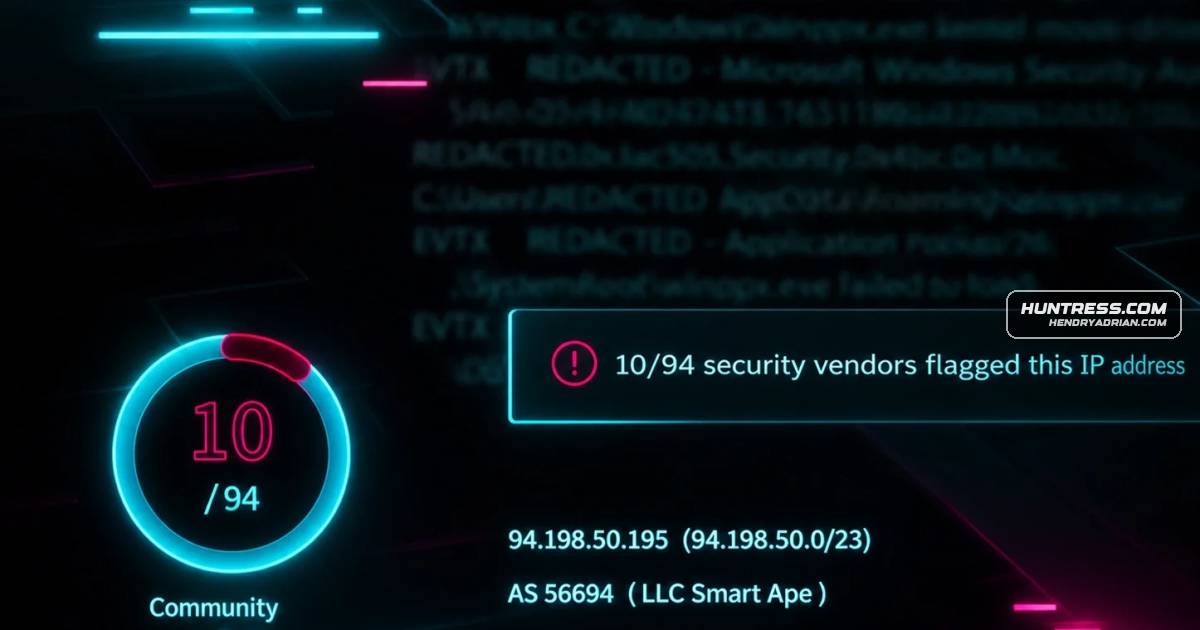
| IPV4 | 94[.]198[.]50[.]195 | IP address supplied to winppx.exe as the reverse-shell connection target; VirusTotal references cited in the article identify it as C2 for the BianLian Go Trojan. |
| SHA256 | 8368925651fefcd85e0e73790082b9a69237fa66225f932c2a44014cc356acdc | SHA-256 hash of the ReadText34 ransomware executable. |
| SHA256 | 90daac69da7201e4e081b59b61ca2a2116772318621c430f75c91a65e56ea085 | SHA-256 hash of the trend.exe installer collected from the ransomware-affected endpoint. |
| SHA256 | ac66828fbdf661d67562da5afb7cc8f55d9a8739ab1524e775d5dcebfc4de069 | SHA-256 hash of winppx.exe, which attempted to install a driver and launch a reverse shell. |
MITRE ATT&CK
T1021.002 · SMB/Windows Admin SharesThe actor enabled RDP and successfully logged in remotely.T1071.001 · Web Protocolswinppx.exe launched a reverse shell to an IP address using a command-line connection option.T1486 · Data Encrypted for ImpactFiles were encrypted, triggering ransomware canary alerts.T1489 · Service StopThe ransomware ran taskkill.exe and net stop commands to terminate processes and stop Windows services.T1490 · Inhibit System RecoveryCommands attempted to inhibit recovery by deleting Volume Shadow Copies and system backups.T1543.003 · Windows Servicewinppx.exe attempted to install itself as a kernel-mode boot-start driver through a service-creation command.T1547.001 · Registry Run Keys / Startup Folderreadtext34.exe was configured to persist through the compromised Administrator account's Run key.T1562.001 · Disable or Modify ToolsInstallation of truesight.sys was followed by crashes of endpoint security applications; winppx.exe also attempted to disable driver signature checks.
People
Malware
Vendors
Products
Tools
bcdeditbcdedit.exe /set loadoptions DDISABLE_INTEGRITY_CHECKScipher.exeThe cipher.exe native Windows utility is a command line tool that administrators can use to manage encrypted data using the Encrypted File System. The “/w” option, from typing the command cipher /?, has the effectreg.exeused to access the C$ share from an internal IP address. The threat actor then ran a remote command via reg.exe to enable RDP, as illustrated in Figure 1.scsc create winppx binPath="C:\Windows\winppx.exe" type=kerneltaskkillbatch file-style list of commands embedded within the executable. Following this command, a series of taskkill.exe commands were run, something often seen embedded within file encryption executables as a means of