cyber.hendryadrian.com
Login
Navigation
HomeDashboardCyber Reports

Research

Threat ResearchVulnerability & ExploitDetection & DefenseSecurity Report

News

Security NewsCyber Attack & Data BreachRansom MonitorSecurity InsightsYouTube
Sources & Credits

Entities

CVEMalwarePeopleThreat ActorsMITRE ATT&CKVendorsProductsSecurity ToolsCountriesIndustries

Threat Research

In-depth analysis of malware, threat actors, attack campaigns, techniques, and emerging cyber threats.

2509 articles

Threat Research · huntress.com

.NET Malware Hides Its Payload in an Embedded Image

Huntress analysts traced a suspicious .NET executable that compiled and loaded a DLL, extracted a payload disguised as an embedded image, and concealed malware capabilities including password theft and keylogging.


Mar 9, 2021
Threat Research · huntress.com

Huntress Details Widespread Exploitation of On-Premises Exchange Servers

Huntress reported widespread exploitation of on-premises Exchange flaws, finding 350+ webshells across roughly 3,000 servers. Its analysis traced multi-stage PowerShell payloads, persistence, and suspected Mimikatz activity; Microsoft had issued emergency patches.

Mar 3, 2021
Threat Research · huntress.com

PowerShell Malware Uses Encoded Payloads to Launch a WinInet Downloader

Huntress traces a PowerShell payload launched from a registry Run key through base64 and gzip layers to shellcode that uses VirtualAlloc and CreateThread and loads WinInet, indicating downloader behavior.

Feb 9, 2021
Threat Research · huntress.com

Huntress Traces Satoban Persistence to a Windows XP svchost.exe Copy

Huntress traced a Windows persistence mechanism to VBS/Satoban.A: a service used a Windows XP svchost.exe copy to launch an encoded VBScript, revealing malware behaviors including USB spreading, downloads, and shadow-volume deletion.

Jan 12, 2021
Threat Research · huntress.com

Huntress Explains TrickBot’s Obfuscated Windows Batch Launcher

Huntress analyzed a TrickBot v100 launcher that uses Windows batch variables to obscure a command. The article explains how the script reconstructs a command to start the malware executable and why the obfuscation may challenge automated detection.

Nov 24, 2020
Threat Research · huntress.com

Malware Hides Payloads in DNS TXT Records to Retrieve a Final Payload

Huntress analyzed multi-stage malware that used obfuscated PowerShell and DNS-over-HTTPS TXT records to conceal data, select external servers, and retrieve a final payload.

Aug 20, 2020
Threat Research · huntress.com

Malware Hides PowerShell and mshta Behind Legitimate-Looking Windows Files

Huntress analyzed a malware foothold that mimicked a legitimate Windows task, used renamed mshta and PowerShell executables, and concealed commands in a fake log file. The payload could bypass AMSI and collect host information.

Jun 18, 2020
Threat Research · darkowl.com

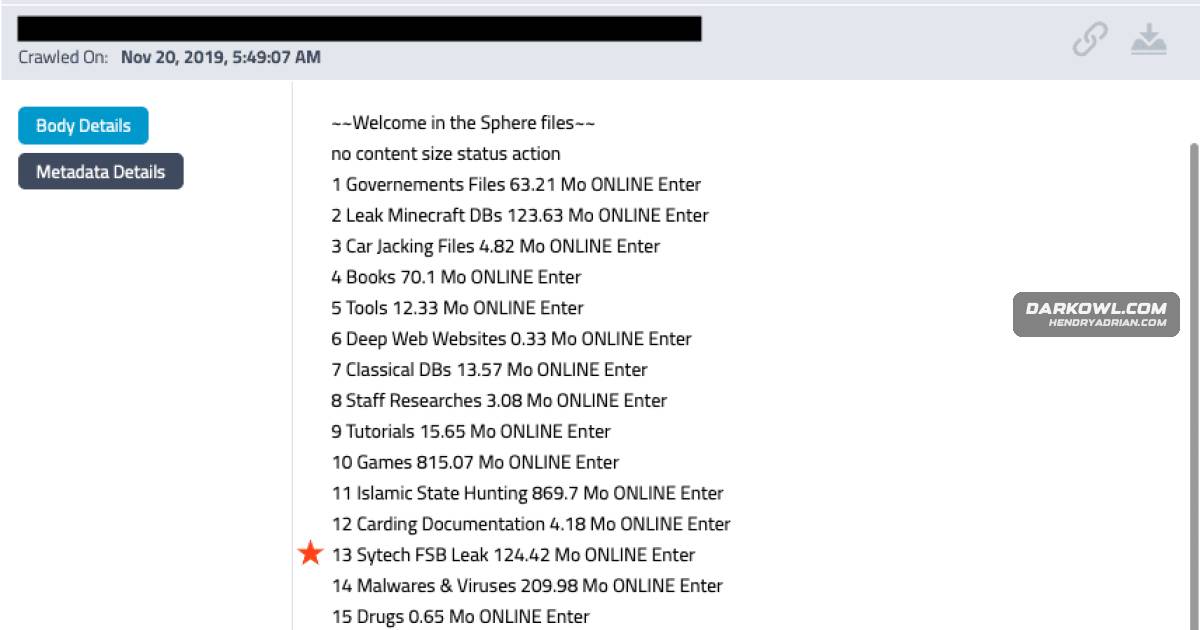
Leaked SyTech Documents Detail Russia’s Plans to Control Internet Traffic

DarkOwl’s analysis of leaked SyTech documents describes Russia’s HOPE project to monitor and route internet traffic, and finds similarities to the Sovereign Internet Law. The documents indicate prototype-scale work; a direct link remains unproven.

Jan 17, 2020
Threat Research · huntress.com

Malware Uses a LNK File to Launch a Multi-Stage PowerShell Chain

Huntress analyzes malware launched by a LNK file that uses mshta.exe and obfuscated PowerShell to retrieve and execute staged payloads, collect system and security-software details, and communicate with remote servers.

May 30, 2019
Threat Research · huntress.com

Attackers Use Trusted Windows Tools to Evade Process Analysis and Maintain Access

Huntress describes attackers using trusted Windows utilities and scripts to evade process analysis, execute payloads, and establish persistence through logon mechanisms and scheduled tasks.

Aug 16, 2018
Threat Research · huntress.com

Huntress Details Kaseya VSA PowerShell Payload and Persistence Techniques

Huntress analyzed a PowerShell payload that used registry-stored scripts and disguised scheduled tasks to persist. Attackers later changed registry paths and task behavior to evade Kaseya’s removal procedure; Dropbox removed identified malicious files.

Jan 30, 2018
Threat Research · huntress.com

Attackers Brute-Forced MSSQL, Disabled Antivirus, and Established Persistence

Huntress reconstructs an MSSQL breach in which attackers brute-forced credentials, used xp_cmdshell to disable antivirus and download malware, then created registry and service persistence.

Jul 17, 2017
Threat Research · huntress.com

Redosdru Malware Hides an Encrypted DLL Payload to Evade On-Disk Detection

Huntress analyzed a packed Redosdru dropper that downloaded an encrypted DLL, decrypted it in memory, and exposed capabilities including keylogging, clipboard harvesting, and user and group management.

Jul 17, 2017
PreviousPage 105 of 105
© 2026 cyber.hendryadrian.com