How to Enumerate Active Directory with BloodHound-Python
Summary
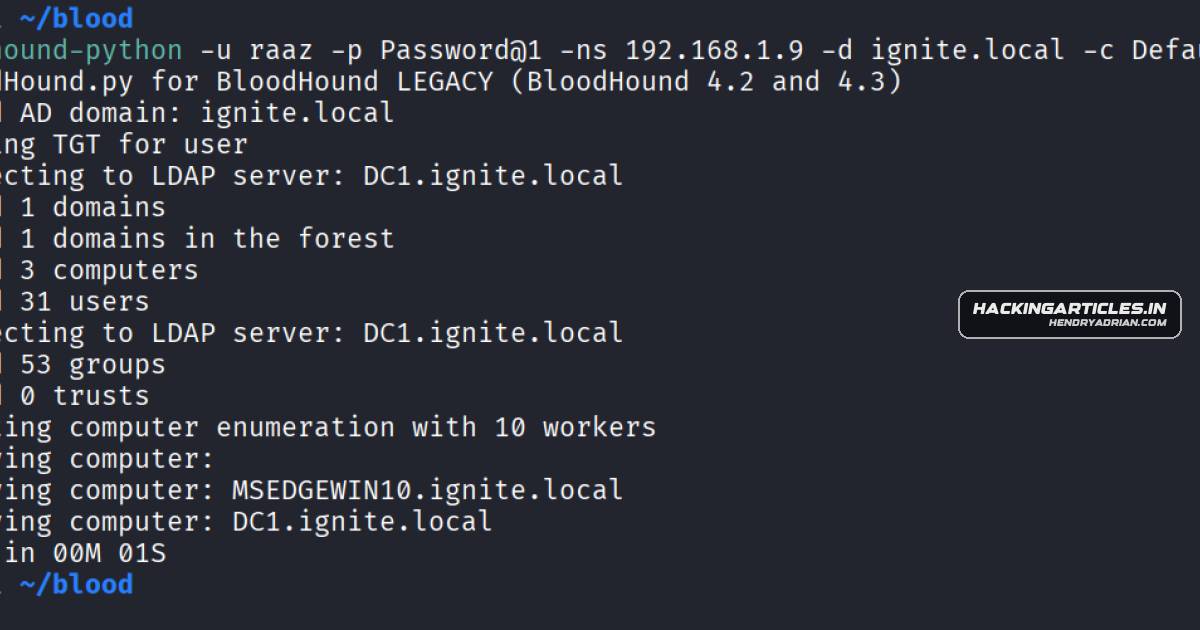
A practical walkthrough of using BloodHound-Python to collect Active Directory data with different methods and password, hash, and Kerberos authentication, then package results for BloodHound analysis.
Key points
- BloodHound-Python collects Active Directory relationships and writes JSON data for graph analysis without requiring a domain-joined Windows host.
- Default gathers broad domain and host data; LoggedOn focuses on active sessions; DCOnly queries the domain controller over LDAP; All provides the broadest collection.
- The tutorial demonstrates authentication with a password, an NT hash, a Kerberos AES key, and a cached Kerberos ticket.
- Collected data can reveal users, groups, policies, computer relationships, and sessions that may expose paths toward privileged accounts.
- The --zip option bundles collection output into a single archive for import into BloodHound.
- The article advises using these techniques only in authorized assessments and notes that defenders can use the resulting graphs to identify paths that need hardening.
Article Details
- Topic
- Using BloodHound-Python to enumerate Active Directory environments with different collection methods and authentication options.