Cisco Talos Details AI-Directed Windows Malware and CAIRN Analysis Framework
Summary
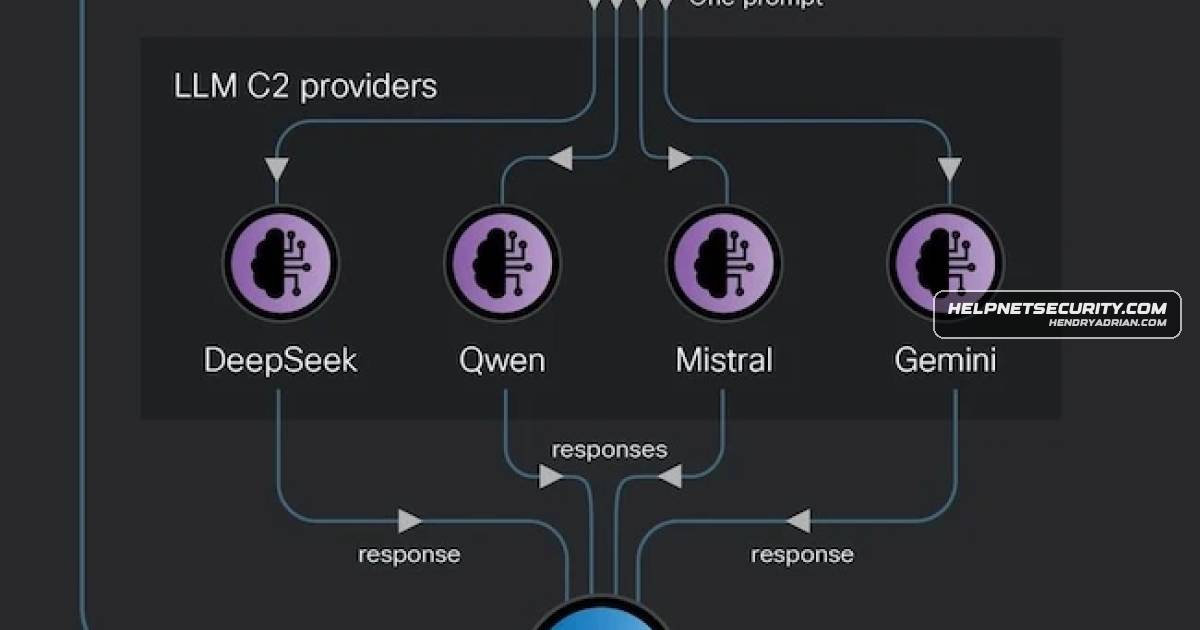
Cisco Talos introduced CAIRN, a metadata-only framework for analyzing AI-integrated malware, and detailed CLOSEDQUORUM, a Windows implant that uses four LLMs to select actions. Static analysis found its decision loop, but researchers did not observe a live run.
Key points
- CAIRN analyzes file metadata and cognitive artifacts, including embedded prompts and AI-provider endpoints, without downloading or executing malware.
- The framework sorts findings into tiers covering AI-related strings, evidence of operational AI integration, and confirmed named malware families.
- Talos says AI-specific evasion text has appeared in unrelated malware samples within 12 months of its first confirmed use in the wild.
- CLOSEDQUORUM is a Windows implant that asks DeepSeek, Qwen, Mistral and Gemini to vote on actions such as stealing data, injecting code or establishing persistence.
- The malware is written in Go and does not require continued human commands or a dedicated attacker-operated C2 server, according to Talos.
- Static analysis confirmed the decision loop, but the examined sample had placeholder API keys and a dummy webhook, so researchers did not observe a complete live run.
Article Details
- Attack Vectors
- CLOSEDQUORUM is a Windows implant that queries commercial LLMs and uses their votes to select actions from a fixed menu: steal data, inject code, or establish persistence.
- The implant is designed to harvest user credentials and crypto wallets. Researchers reported that the analyzed sample contained placeholder API keys and a dummy webhook address and was not observed operating against a live target.
- The article reports AI-specific evasion text embedded to suppress analysis by AI-based sandbox scanners in unrelated malware samples.
- Defensive Notes
- CAIRN classifies AI-integrated malware from file metadata without downloading or executing samples, using cognitive artifacts such as embedded prompts, provider API endpoints, orchestration logic, and evasion text.
- CAIRN separates findings into tiers for AI-related strings, behavioral evidence of operational AI integration, and confirmed named malware families.
- The article describes CAIRN strategies including surface expansion, pivoting, and corpus analysis to identify unknown samples, related samples, and patterns.
MITRE ATT&CK
T1055 · Process InjectionThe implant's fixed action menu includes code injection, but the article does not describe the target process or injection method.T1110 · Brute ForceCLOSEDQUORUM is designed to harvest user credentials, although the article gives no specific credential-acquisition method.T1547 · Boot or Logon Autostart ExecutionThe implant's fixed action menu includes setting up persistence on the machine; no specific persistence mechanism is described.T1555 · Credentials from Password StoresCLOSEDQUORUM is designed to steal crypto wallets; the article does not specify the wallet-access mechanism.