Telegram Tightens Search and Removes Channels as Moderation Changes Take Effect
Summary
DarkOwl analysts report that Telegram’s policy changes have reduced global-search results and led to channel removals. They have not observed a broader user migration, and say existing communities may still circulate invite links.
Key points
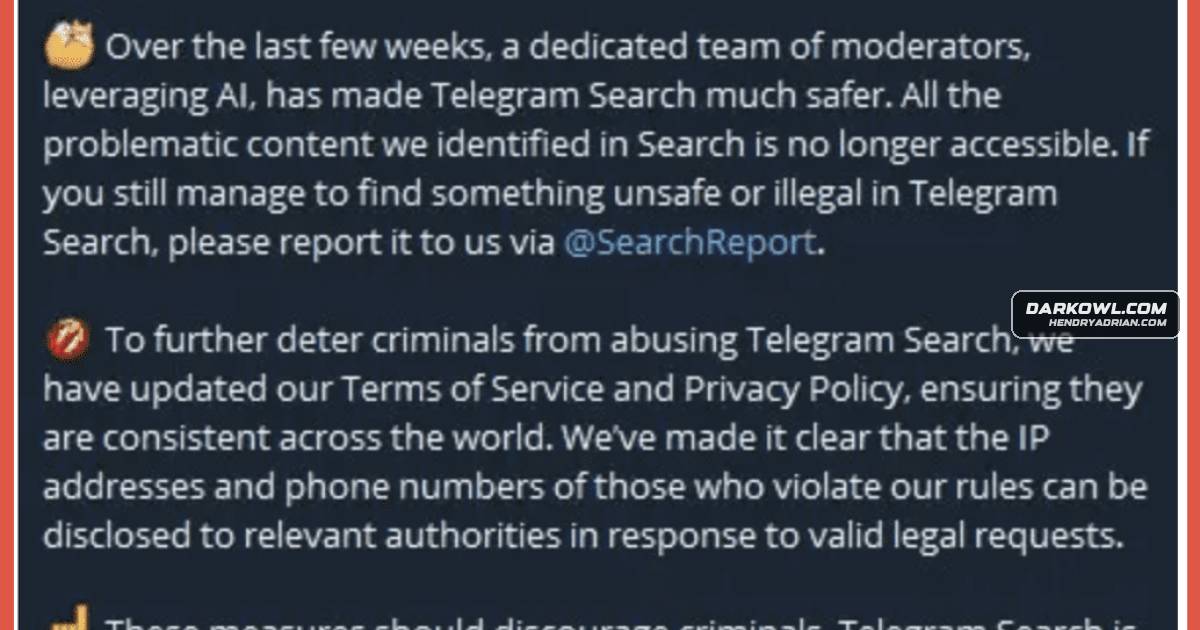
- Telegram said it would provide IP addresses and phone numbers to authorities in response to valid legal requests.
- The platform changed global search to make some illicit channels and bots harder to find.
- DarkOwl analysts observed fewer results for generic illicit-activity search terms, though known channels often remained discoverable.
- Telegram removed channels and messages over alleged violations including illicit content and copyright laws; the article also discusses continuing removals of ISIS-related channels.
- Some users discussed leaving Telegram or expanding to other platforms, but DarkOwl had not observed an actual migration away from Telegram.
- The article says established communities may continue sharing invite links and creating replacement channels, limiting the effect of search changes and removals.
Article Details
- Event Type
- Telegram’s response to its CEO’s arrest, including stricter moderation, reduced discoverability of some channels, and reported cooperation with law enforcement.
- Impact
- DarkOwl analysts observed fewer global-search results for generic terms associated with illicit activity and the removal of channels for alleged legal or copyright violations. Some users discussed moving to other platforms or preparing for bans, but DarkOwl had not observed an actual migration away from Telegram. The article says existing communities may continue through invite links and newly created channels, while the scale of the increase in banned channels and its relationship to the 2024 policy changes remain uncertain.