Huntress Rolls Out EDR/ITDR Correlations to Link Endpoint Alerts With Identity Response
Summary
Huntress says its new EDR/ITDR capability links Windows endpoint detections to logged-in Microsoft 365 identities, enabling responders to disable accounts or revoke sessions. The company says it has stopped 64 incidents with zero false positives.
Key points
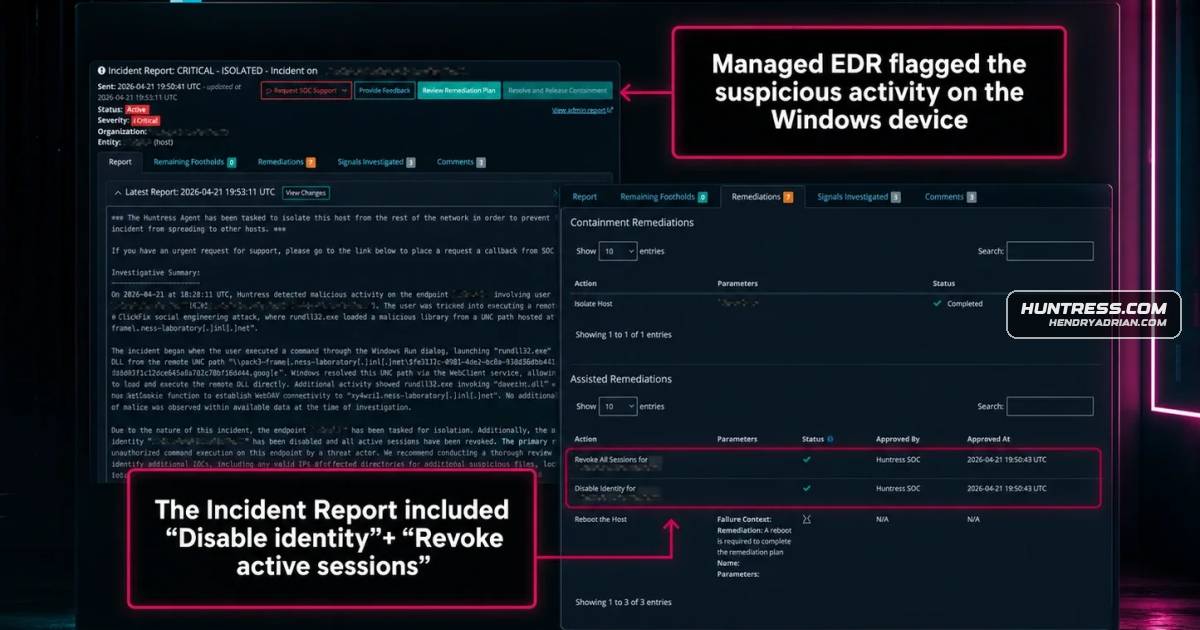
- The capability maps a compromised Windows endpoint to Microsoft 365 identities logged in on that device, displaying the context in the EDR incident report.
- Responders can use Managed ITDR to disable identified accounts or revoke active sessions from the incident workflow.
- Huntress says the correlation uses endpoint-collected identity context rather than waiting for Microsoft audit logs.
- The company says the feature has stopped 64 incidents with zero false positives; the article provides no supporting methodology or independent verification.
- The capability is rolling out to organizations using both Huntress Managed EDR and Managed ITDR.
Article Details
- Event Type
- Product capability rollout: Huntress introduced EDR/ITDR Correlations, which link endpoint detections to cloud identities and enable guided identity remediation.
- Impact
- Huntress says the capability automatically maps compromised Windows endpoints to associated Microsoft 365 identities, allowing responders to revoke sessions or disable accounts before stolen credentials are reused. The company reports stopping 64 incidents since release with zero false positives. The feature is rolling out to organizations using both Huntress Managed EDR and Managed ITDR.
People
Vendors
Products
Entra IDThose answers don’t live in the endpoint. They live in identity systems, like Microsoft 365, Entra ID, and beyond. So the team pivots. They dig through logs, correlate timestamps, and make educated guesses. SometimesHuntress Agentic Security PlatformThat’s the idea behind the Huntress Agentic Security Platform. Not more alerts. Not more dashboards. Outcomes.Huntress Managed EDRHuntress Managed EDR did exactly what you’d expect: it detected the malicious behavior on the Windows device and raised an Incident Report.Managed ITDRFrom there, Managed ITDR does what it’s designed to do: it enables immediate, guided remediation of those identities. Revoke sessions. Disable accounts. Contain the blast radius before stolen credentials can be used.Microsoft 365 Apps for EnterpriseThose answers don’t live in the endpoint. They live in identity systems, like Microsoft 365, Entra ID, and beyond. So the team pivots. They dig through logs, correlate timestamps, and make educated guesses. Sometimes