Study Finds Frequent Targeted and Operationally Detailed Threats in Far-Right Telegram Channels
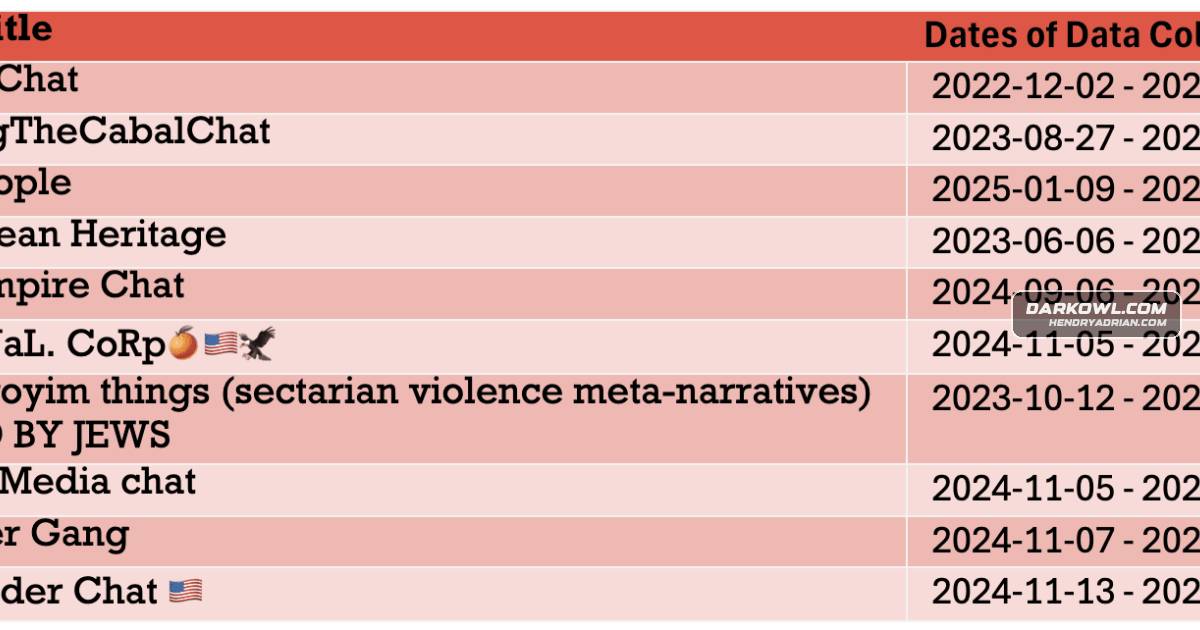
Summary
A study of 190,535 messages from far-right Telegram channels found that 5% contained threats or violent content. In a sampled analysis, 93% named a target and over 41% described operational details.
Key points
- Researchers analyzed 190,535 messages from 11,068 users in selected, active far-right Telegram channels.
- Automated tools flagged 9,442 messages, or 5%, as threatening or violent; nearly 4% of users had posted at least one such message.
- In a qualitative review of 749 flagged messages, 93% named a target and more than 41% included operational details.
- Only 0.3% of the sampled threats specified a date or time, and none indicated research on the target.
- Commonly cited methods included shooting, hanging, execution, and beating; threats also frequently targeted racial, religious, and other identity groups.
- The authors say online threats require careful credibility assessment and recommend ongoing monitoring and attention to incitement, including generalized violent rhetoric.
Article Details
- Publisher
- DarkOwl and Mind Intelligence Labs
- Report Period
- Published 2025-11-05; data collection dates not specified
- Scope
- Analysis of threatening and violent communication in selected active far-right Telegram channels
- Sample Size
- 190,535 messages from 11,068 individuals; qualitative analysis of a random sample of 749 automatically identified threatening messages
- Key Statistics
- 5% (9,442) of the 190,535 collected messages contained threatening or violent content.
- Nearly 4% of users had posted at least one violent threat.
- 93% (697) of the 749 sampled threats explicitly mentioned a target.
- More than 41% (308) of the 749 sampled threats included operational details.
- 0.3% (2) of the 749 sampled threats contained an explicit date or time.
- Recommendations
- Continuously monitor high-threat online environments for emerging risks and shifts in rhetoric.
- Map targeted individuals and groups and track changes in targeting patterns.
- Assess the credibility of online threats carefully, distinguishing symbolic aggression from genuine intent.
- Address incitement and messages that glorify or encourage violence, not only explicit threats.