TA419 Uses Frameless BitB Phishing to Target U.S. AI Policy Experts
Summary
China-aligned TA419 targeted U.S. AI policy experts with phishing that used impersonation, shortened links, redirects, and a Frameless BitB adversary-in-the-middle page to steal Microsoft credentials and session cookies.
Key points
- TA419 campaigns targeted AI experts at U.S. think tanks, universities, and legal organizations.
- The group impersonated economists, AI policymakers, and an Anthropic employee to build trust.
- After initial outreach, targets received shortened URLs that led through multiple redirects and a Cloudflare Turnstile check.
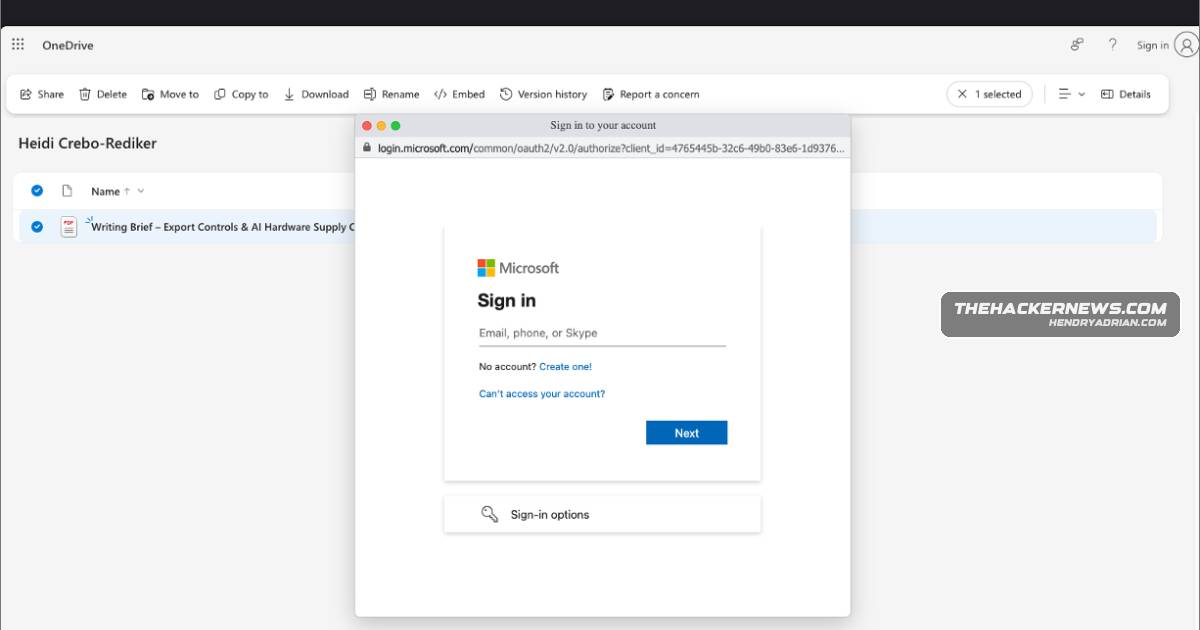
- A Frameless BitB page spoofed a Microsoft sign-in flow without using an iframe.
- An adversary-in-the-middle proxy captured credentials and session cookies while relaying sign-in activity to Microsoft.
- Recommended defenses include phishing-resistant authentication such as passkeys and verifying unsolicited subject-matter outreach.
Article Details
- Attack Vectors
- TA419 sends trust-building invitations and, after the target responds, follows up with a shortened URL that leads through a multi-stage redirection chain to an adversary-in-the-middle credential-phishing page.
- The phishing flow uses a Cloudflare Turnstile check and a Frameless BitB page designed to imitate a trusted sign-in window.
- The AitM proxy relays sign-in details to Microsoft infrastructure while capturing credentials and session cookies.
- Defensive Notes
- Organizations are advised to enable phishing-resistant authentication methods such as passkeys.
- Targets should treat unsolicited subject-matter outreach cautiously and verify its authenticity before proceeding.
MITRE ATT&CK
T1056.003 · Web Portal CaptureThe phishing page and AitM proxy capture Microsoft sign-in credentials.T1539 · Steal Web Session CookieThe AitM setup captures session cookies during the victim's Microsoft sign-in.T1566.002 · Spearphishing LinkAfter establishing trust through outreach, TA419 sends targets a shortened URL that leads to a credential-phishing page.
People
Threat Actors
Vendors
Products
Cloudflare TurnstileAttack chains use shortened URLs, redirection, and Cloudflare Turnstile checks.Microsoft OneDrivefollowing it up with a shortened URL that triggers a multi-stage redirection chain, which leads to an OneDrive adversary-in-the-middle (AitM) credential phishing page after completing a Cloudflare Turnstile check.
Countries
ChinaTA419, a China-nexus espionage group, has been using credential phishing campaigns to target AI experts at U.S.Japana track record of orchestrating credential phishing campaigns against individuals working for U.S.- and Japan-based think tanks, defense contractors, universities, and law firms since at least April 2025.United StatesTA419 is a China-aligned espionage group targeting AI policy experts in the United States.
Industries
Defensecredential phishing campaigns against individuals working for U.S.- and Japan-based think tanks, defense contractors, universities, and law firms since at least April 2025.Energy“TA419 has consistently shown an interest in defense, national security, energy, international relations, and foreign policy targets, predominantly with a nexus to the U.S.Foreign policy“TA419 has consistently shown an interest in defense, national security, energy, international relations, and foreign policy targets, predominantly with a nexus to the U.S.International relations“TA419 has consistently shown an interest in defense, national security, energy, international relations, and foreign policy targets, predominantly with a nexus to the U.S.Legalthink tanks, universities, and legal organizations by impersonating economists, AI policymakers, and a prominent Anthropic employee.National security“TA419 has consistently shown an interest in defense, national security, energy, international relations, and foreign policy targets, predominantly with a nexus to the U.S.Think tanksthink tanks, universities, and legal organizations by impersonating economists, AI policymakers, and a prominent Anthropic employee.Universitiesthink tanks, universities, and legal organizations by impersonating economists, AI policymakers, and a prominent Anthropic employee.