Phishers Abuse Meta’s Business Partner Service to Steal Account Credentials
Summary
Huntress details a phishing campaign that abused Meta’s business partner email service, evolving to use a Messenger chatbot and steal account credentials, MFA codes, contact details, and ID documents. Meta has blocked the technique, and attacks have subsided.
Key points
- The attackers used Meta’s legitimate business partner service to send phishing emails that appeared to come from a Meta address, embedding a URL in the purported partner’s name.
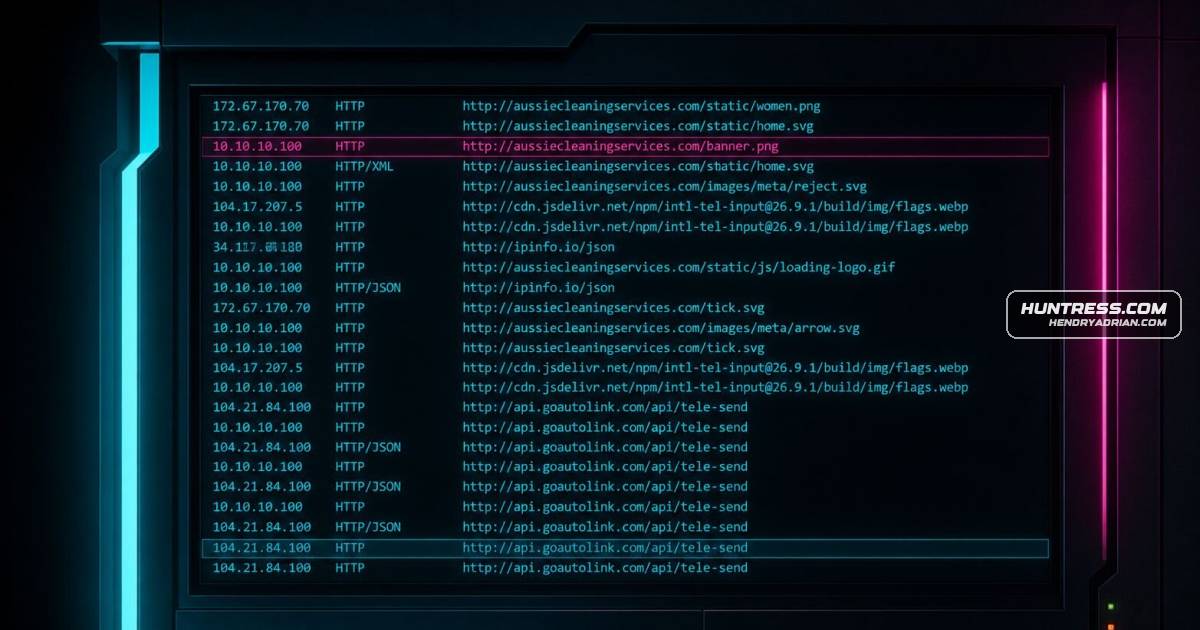
- An earlier variant directed targets through sites.google[.]com/view/profile1012 to a fake Meta Agency Partner Program page hosted on aussiecleaningservices[.]com.
- A June variant sent targets to a fraudulent Facebook Messenger chatbot, which directed them to phishing pages on sw[.]run and businesshelpcenterpageid563252.netlify[.]app.
- The pages collected Meta credentials, TOTP MFA codes, business and personal contact details, and uploaded identity documents; submissions were sent to a Telegram bot.
- Huntress says Meta added detections for URLs in business or owner names and blocked the technique; the observed attacks have subsided.
Article Details
- Attack Vectors
- Abused Meta’s business-partner email mechanism to send phishing lures from a legitimate Meta email address, embedding a URL in the purported partner name.
- Redirected targets from a Google Sites lure or a Facebook Messenger chatbot to phishing pages impersonating Meta programs.
- Collected Meta credentials, TOTP MFA codes, contact details, and identity documents through the phishing pages, then sent submissions to a Telegram bot channel.
- Defensive Notes
- Meta reportedly added detections for URLs embedded in business or business-owner names and restricted bogus accounts from initiating partnership requests.
- Check the actual destination domain before following unexpected business invitations; legitimate-looking sender origins do not establish that a message is safe.
Indicators of compromise
| Type | Indicator | Context |
|---|---|---|
| DOMAIN | api[.]goautolink[.]com | Domain used by the earlier phishing variant to receive stolen victim data. |
| DOMAIN | aussiecleaningservices[.]com | Phishing landing-page domain posing as a Meta Agency Partner Program page. |
| DOMAIN | sw[.]run | Attacker-controlled domain used to frame Netlify-hosted phishing pages. |
| HOSTNAME | businesshelpcenterpageid563252[.]netlify[.]app | Netlify-hosted phishing page used in the content-monetization variant to collect credentials, MFA codes, and identity documents. |
MITRE ATT&CK
People
Vendors
Products
Facebookin June, they modified their phishing lure to incorporate a chatbot, run through a fraudulent account on Facebook Messenger, and began sending credentials to a private Telegram channel.Facebook Messengerthey modified their phishing lure to incorporate a chatbot, run through a fraudulent account on Facebook Messenger, and began sending credentials to a private Telegram channel.Instagramactor took advantage of a service offered by Meta meant to connect businesses who use Facebook or Instagram with third-party social media managers. The threat actor had been using this service to send phishingTelegramrun through a fraudulent account on Facebook Messenger, and began sending credentials to a private Telegram channel.