Warden Infostealer Targets AI Coding Tools, Developer Credentials and Crypto Wallets
Summary
Warden Stealer is reported to target credentials and data from browsers, AI coding tools, developer environments, and cryptocurrency wallets. The article describes its collection, evasion, and wallet-bruteforcing capabilities.
Key points
- The article describes Warden as a malware-as-a-service infostealer, clipper, and loader with a reported target list spanning more than 360 applications.
- It reportedly collects browser passwords, history, autofill data, and session cookies, as well as data from messaging apps, password managers, VPNs, and FTP clients.
- Version 1.9 is reported to target Claude Code, Codex CLI, GitHub, SSH keys, and other developer-related data.
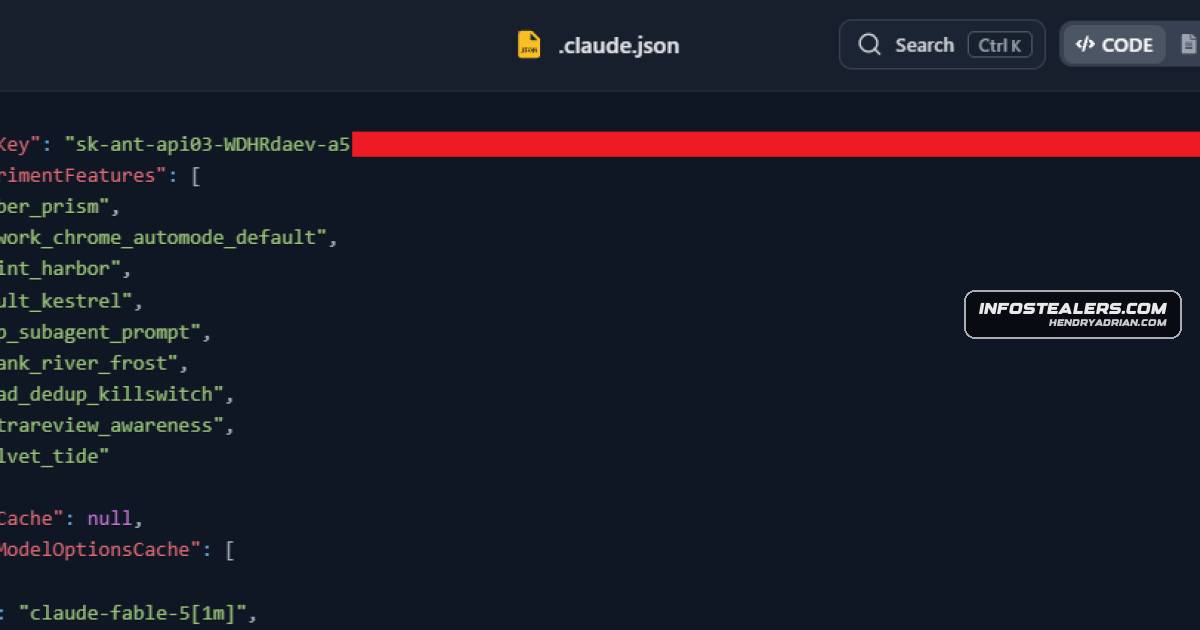
- The article cites extracted data from a compromised .claude.json file as evidence that Warden can steal API key and OAuth account information.
- The malware reportedly uses encrypted chunked data transfers, binary morphing, and server-side processing to hinder detection and limit its on-device footprint.
- Its wallet features reportedly cover more than 200 extensions and desktop apps; a password-guessing engine builds candidate lists from stolen victim data.
- Warden’s developers reportedly claimed a recent wallet-checking run cracked 66% of balance-holding wallets and yielded more than $485,000; these figures are attributed claims.
Article Details
- Attack Vectors
- Warden Stealer collects passwords, browser history, autofill data, and session cookies from Chromium and Gecko profiles.
- The malware targets developer and AI-agent data, including Claude Code and Codex CLI directories, GitHub-related data, SSH keys, and Claude account API keys and OAuth data.
- Warden builds custom password dictionaries from stolen victim data and applies mutation rules to try to crack encrypted cryptocurrency wallets.
- The article reports that Warden transfers stolen data in chunks to attacker servers using a custom encrypted protocol.
- The article describes binary morphing and injected garbage instructions intended to evade signature-based antivirus detection.
MITRE ATT&CK
T1027 · Obfuscated Files or InformationWarden reportedly morphs its binary and injects garbage instructions to hinder signature-based detection.T1041 · Exfiltration Over C2 ChannelThe article says Warden exfiltrates collected data to attacker servers in chunks over a custom encrypted protocol.T1110.002 · Password CrackingWarden reportedly generates password candidates from stolen victim data and applies mutation rules to crack encrypted wallets.T1539 · Steal Web Session CookieWarden steals full browser session cookies, which the article says can restore authenticated sessions.T1555.003 · Credentials from Web BrowsersWarden collects passwords and other stored data from Chromium and Gecko browser profiles.
People
Malware
Products
Anthropicvalues and detailed OAuth account data tied to Anthropic/Claude accounts. By grabbing these CLI tokens, attackers are bypassing traditional web logins entirely, gaining direct, programmatic access to premium AI models,Avastgarbage instructions, effectively rendering signature-based antivirus tools (like Windows Defender and Avast) useless.Claudeenvironments. As evidenced by leaked payload folders, the malware actively targets directories for Claude Code, Codex CLI, Discord, GitHub, and SSH Keys.Claude Codeenvironments. As evidenced by leaked payload folders, the malware actively targets directories for Claude Code, Codex CLI, Discord, GitHub, and SSH Keys.Codex CLIAs evidenced by leaked payload folders, the malware actively targets directories for Claude Code, Codex CLI, Discord, GitHub, and SSH Keys.Discordgrabber is voracious. It targets over 360 applications across 13 categories, including messengers (Discord, Telegram), gaming clients (Steam), password managers, VPNs, and FTP clients. It dynamically collects allGitHubby leaked payload folders, the malware actively targets directories for Claude Code, Codex CLI, Discord, GitHub, and SSH Keys.Steamover 360 applications across 13 categories, including messengers (Discord, Telegram), gaming clients (Steam), password managers, VPNs, and FTP clients. It dynamically collects all Chromium and Gecko browserTelegramis voracious. It targets over 360 applications across 13 categories, including messengers (Discord, Telegram), gaming clients (Steam), password managers, VPNs, and FTP clients. It dynamically collects all ChromiumWindows Defendermathematical garbage instructions, effectively rendering signature-based antivirus tools (like Windows Defender and Avast) useless.