
Malicious NuGet Packages Turn Fake .NET Job Assessments Into Malware Traps
Summary
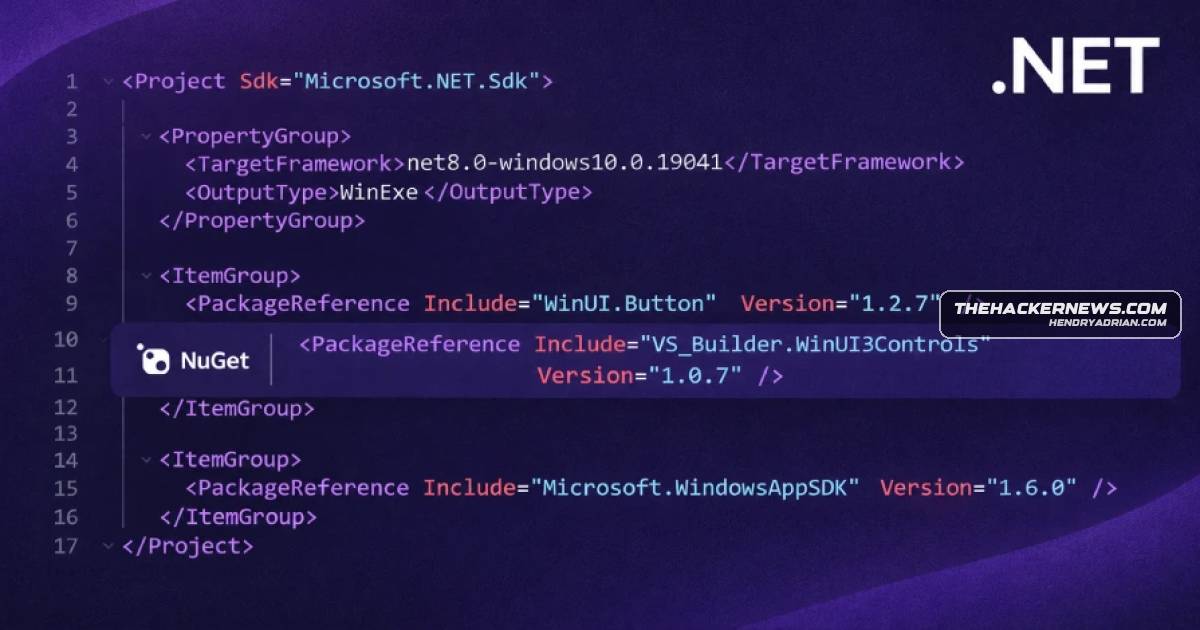
Socket researchers traced 13 malicious NuGet packages used in fake .NET job assessments. The packages can download and run payloads, including through DLL sideloading; researchers linked the activity to related fake Axios repositories and npm packages.
Key points
- The packages posed as Windows UI controls and were embedded in a fake take-home assessment for .NET developers.
- VS_Builder.MSBuildAnalyzer downloads a DLL and stages it beside osk.exe; a related package can trigger the DLL through sideloading.
- Other packages download and run Windows executables, including one retrieved through the GitHub API using an embedded access token.
- Researchers connected the activity to bogus Axios repositories, related npm packages, and a .NET app whose bundled DLL continues running after its window is closed.
- The fraudulent job was advertised on LaborX as a C# WPF development project involving crypto-wallet inventory.
- The 13 identified NuGet packages had been removed from the gallery. Researchers did not attribute the campaign to a named actor and found no indicators or code shared with published Contagious Interview or other North Korean campaigns.
Article Details
- Attack Vectors
- Malicious NuGet packages posed as WinUI 3 and WPF controls and executed code when projects using them were built or run.
- An MSBuild targets file ran a bundled DLL after each build; the DLL downloaded a file from GitHub and staged it alongside osk.exe for DLL sideloading.
- Other packages downloaded Windows executables from GitHub repositories and ran them, including through a background routine in WinUI.Button.
- A fake job-assessment repository directed .NET developers to projects that referenced the malicious packages.
- A fake reCAPTCHA page used a ClickFix-style prompt telling visitors to copy a security token into the Windows Run dialog.
- A .NET app presented as a crypto-wallet inventory tool loaded a bundled native DLL that continued running in a background thread after the window was closed.
- Defensive Notes
- The identified NuGet packages had been deleted from the gallery as of the article's publication.
- Review package dependencies and build-time MSBuild targets in untrusted assessment projects; the reported targets ran a bundled DLL after every build.
MITRE ATT&CK
T1105 · Ingress Tool TransferMalicious package code downloaded files and Windows executables from GitHub repositories, including a DLL saved to %LOCALAPPDATA%\osk\OskSupport.dll.T1127.001 · MSBuildThe VS_Builder.MSBuildAnalyzer targets file ran its bundled MSBuildAnalyzer.dll after each project build.T1574.002 · DLL Side-LoadingThe VS_Builder.WinUI3Controls package launched a copied osk.exe with a DLL placed beside it, causing the DLL to execute through sideloading.
People
Products
.NETCybersecurity researchers have discovered 13 malicious NuGet packages that are designed to target Windows .NET developers under the guise of a fake take-home job assessment.GitHubwrite-up. "In the versions we analyzed, building or running a project that uses them downloads files from GitHub, stages a DLL sideloading pair around the Microsoft On-Screen Keyboard (osk.exe), or downloads and runsMicrosoft WindowsCybersecurity researchers have discovered 13 malicious NuGet packages that are designed to target Windows .NET developers under the guise of a fake take-home job assessment.MSBuild.exe"VS_Builder.MSBuildAnalyzer, later republished as HappyOne.MSBuildAnalyzer, ships an MSBuild targets file, build/VS_Builder.MsBuildAnalyzer.targets, that runs a bundled DLL ['MSBuildAnalyzer.dll'] after every build,"NuGetCybersecurity researchers have discovered 13 malicious NuGet packages that are designed to target Windows .NET developers under the guise of a fake take-home job assessment.Windows Presentation Foundation (WPF)"Most of the packages pose as WinUI 3 and WPF [Windows Presentation Foundation] button controls," Socket security researcher Kush Pandya said in a technical write-up. "In the versions we analyzed, building or running aWinUI 3"Most of the packages pose as WinUI 3 and WPF [Windows Presentation Foundation] button controls," Socket security researcher Kush Pandya said in a technical write-up. "In the versions we analyzed, building or running a