
Using Git and Human Review to Make AI-Drafted Honeypot Analysis Safer
Summary
A honeypot operator describes using a public Git repository, evidence queries and hashes, and mandatory human-reviewed pull requests to make AI-drafted security reports more reproducible and reduce the risk of exposing sensitive data.
Key points
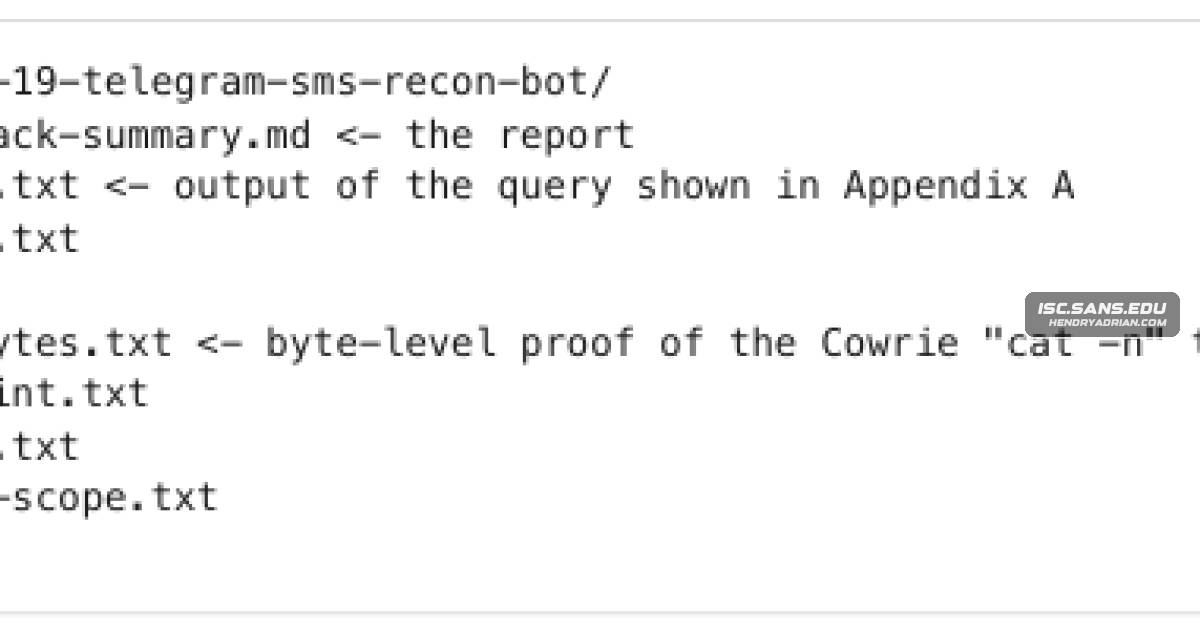
- Each attack report is stored with its supporting evidence and the queries used to produce it, so readers can check how claims were derived.
- Evidence is filtered to replace the sensor's address and then hashed before it is committed.
- A separate AI-operated GitHub account can draft changes but cannot approve or merge its own pull requests; a server-side ruleset requires human approval.
- A pull-request checklist covers secret scans, placeholder use for IPs and accounts, hostnames, local paths, and manual attachment review.
- A local pre-commit hook runs gitleaks to scan for secrets.
- The author used the workflow for reports on SSH brute force, Telegram session and SMS modem reconnaissance, and PHP attacks.
Article Details
- Topic
- Using Git, pull requests, and human review to make AI-assisted honeypot analysis reproducible and safer to publish.
Indicators of compromise
| Type | Indicator | Context |
|---|---|---|
| IPV4 | 77[.]239[.]124[.]204 | Source IP identified in the referenced honeypot report as conducting an SSH brute-force attack. |