
React2STEAL Uses Compromised GitHub Repositories as Attack Infrastructure; Trojanized Microsoft PyPI Releases Steal Credentials
Summary
The episode analyzes React2STEAL’s use of 45 compromised GitHub repositories to scan for vulnerable systems and collect credentials, and trojanized Microsoft agent-framework releases that targeted cloud and CI/CD credentials.
Key points
- React2STEAL runs automated scans through GitHub Actions in 45 repositories whose owners are described as victims, not the intended targets.
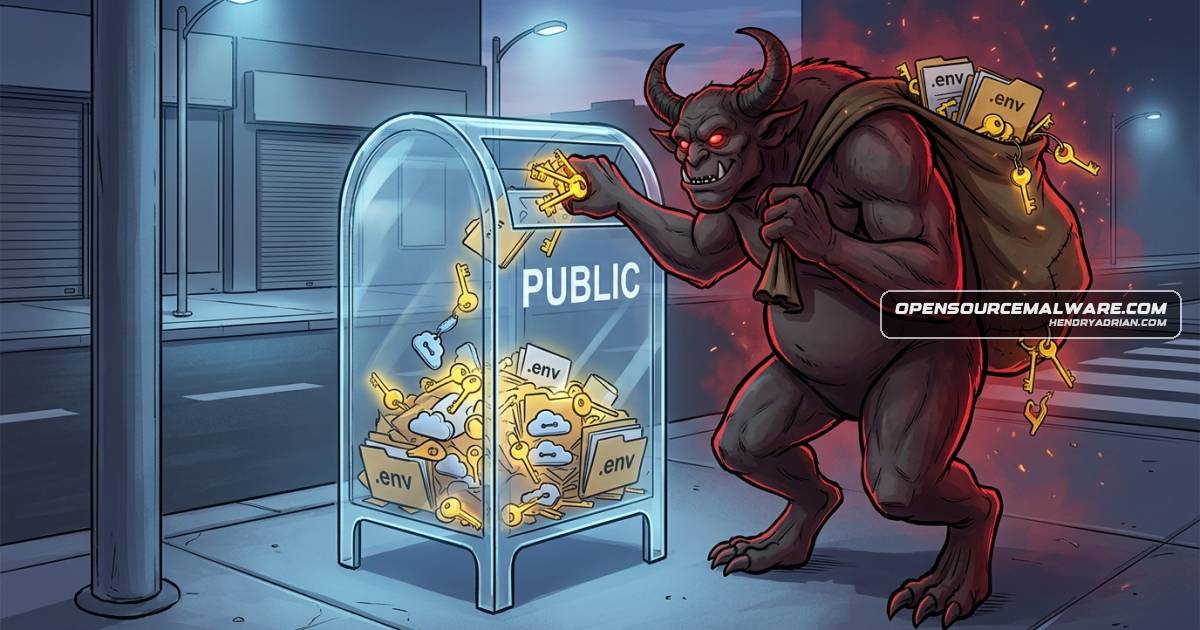
- The pipeline checks for React2Shell, a Next.js middleware bypass, and an AWS metadata endpoint, then collects credentials and commits the results to public repositories.
- One target list contained 18 million host names; researchers found more than 1,000 stolen credentials in the repositories.
- Overlap with wfx-loot, PolinRider, and GhostAction may reflect a shared pool of compromised accounts; the speakers do not establish that the campaigns share an actor.
- Trojanized Microsoft agent-framework versions 1.26.1 and 1.26.2 on PyPI included a .pth infostealer targeting Azure managed identities, GitHub Actions OIDC tokens, and local cloud credentials.
- Research discussed in the episode suggests the attacker accessed Microsoft's internal ESRP release system; the method of access remains unknown, and the releases passed Microsoft's malware scan.
- The stolen data was sent to webhook[.]site, where researchers reportedly observed three payload executions; users who installed or built with the affected versions were advised to audit Azure and CI/CD access.
Article Details
- Attack Vectors
- React2STEAL scans host lists for React2Shell and a Next.js middleware bypass, then attempts exploitation and an AWS metadata request. It collects environment variables, configuration files, cloud credentials, and AI keys, and commits stolen data to public GitHub repositories.
- Trojanized Microsoft Agent Framework releases 1.26.1 and 1.26.2 on PyPI contained a .pth infostealer targeting Azure managed identities, GitHub Actions OIDC tokens, and local cloud credentials. Stolen data was sent to webhook[.]site.
- Defensive Notes
- Organizations that installed or built with Microsoft Agent Framework versions 1.26.1 or 1.26.2 should audit their Azure and CI/CD access.
Indicators of compromise
| Type | Indicator | Context |
|---|---|---|
| DOMAIN | webhook[.]site | Destination used to receive stolen data from the trojanized Microsoft Agent Framework package. |
MITRE ATT&CK
T1078 · Valid AccountsStolen GitHub credentials are used to operate compromised repositories as infrastructure for the React2STEAL campaign.T1190 · Exploit Public-Facing ApplicationReact2STEAL attempts to exploit React2Shell and a Next.js middleware bypass on scanned hosts.T1195.002 · Compromise Software Supply ChainTrojanized Microsoft Agent Framework releases were published through a compromised internal release process.T1528 · Steal Application Access TokenThe .pth infostealer targeted GitHub Actions OIDC tokens.T1552.001 · Credentials In FilesReact2STEAL collects environment variables, configuration files, and .env files containing credentials.T1552.005 · Cloud Instance Metadata APIReact2STEAL uses an AWS metadata request as an additional path to obtain credentials.T1567 · Exfiltration Over Web ServiceThe trojanized package sent stolen data to webhook[.]site.T1567.001 · Exfiltration to Code RepositoryReact2STEAL commits collected credentials and other stolen data to public GitHub repositories.T1595.002 · Vulnerability ScanningReact2STEAL scans host lists for systems vulnerable to React2Shell and a Next.js middleware bypass.
People
Jenn GileValidated Karina Reaño's findings and expanded the investigation into the React2STEAL repositories and their activity.Karina ReañoFound suspicious GitHub repositories scanning for React2Shell and asked Jenn Gile to validate the findings.Paul McCartyAnalyzed technical details of the React2STEAL activity, including payload changes and overlap with other activity.RamiA Wiz researcher whose deep dive examined the Microsoft Agent Framework compromise and captured data sent to the exfiltration service.
Vendors
Products
Azurescan and came out clean. Anyone who installed or built with versions 1.26.1 or 1.26.2 should audit their Azure and CI/CD access. The .pth infostealer targeted Azure managed identities, GitHub Actions OIDC tokens, andGitHub ActionsReact2STEAL turns victims' GitHub Actions into attack infrastructure, trojanized agent-framework passes Microsoft's own malware scan