
Researchers Bypass TPM Lockouts on Some PCs to Guess Windows Hello and BitLocker PINs
Summary
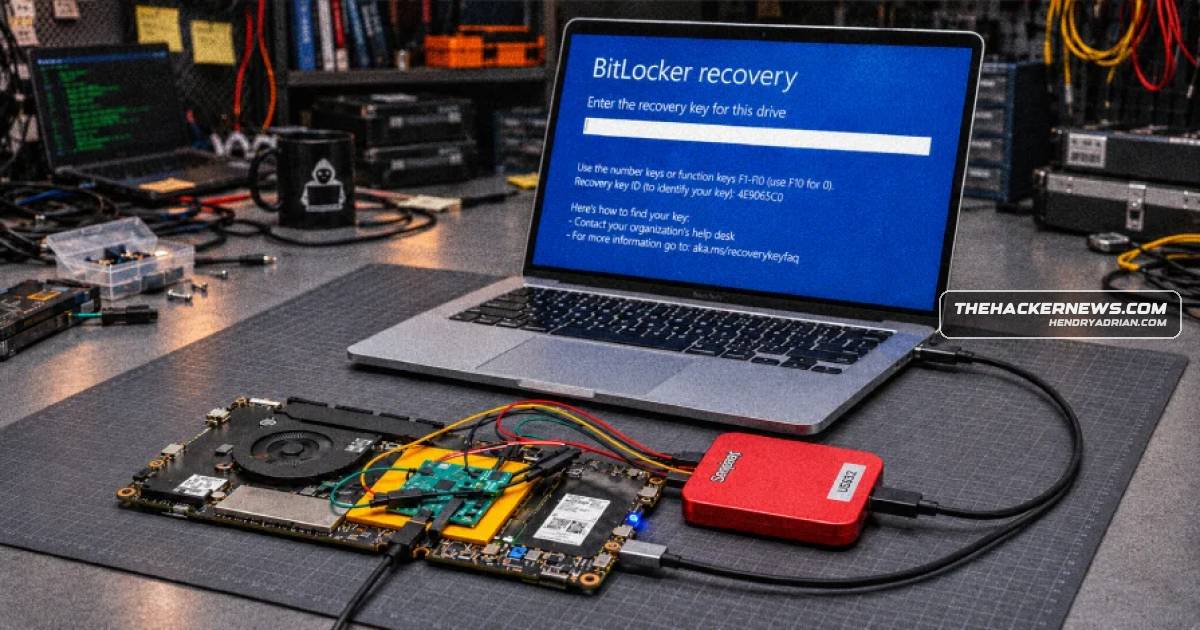
Researchers reset TPM lockouts on tested AMD and Intel laptops using flash-state attacks, guessing configured PINs in 236 tries. AMD confirmed a firmware flaw and plans fixes; Intel said no Intel-component vulnerability was demonstrated.
Key points
- Researchers at Technische Universität Berlin found that rollback of saved firmware TPM state can reset wrong-guess counts on some PCs.
- On some AMD systems, firmware does not verify an RPMC counter increase; researchers used an interposer to block the update. AMD confirmed the flaw as CVE-2026-43613.
- A voltage glitch on tested Winbond flash chips exposed the key used to sign counter values, allowing researchers to forge them. Their Intel laptop test also relied on a reused counter value across boots.
- In lab tests, researchers guessed a configured four-digit Windows Hello PIN on an AMD laptop and a six-digit BitLocker PIN on an Intel laptop, each after 236 tries.
- Researchers estimated worst-case guessing times of 40 hours for a four-digit Hello PIN and 20 days for a default six-digit BitLocker PIN with the bypass, versus 69 days and 19 years with lockout working as documented.
- AMD plans firmware fixes for most affected chips between November 2026 and February 2027. The article does not report fixes as already available.
- The tests required physical access and custom hardware; the researchers said the attack is not plug-and-play, and the article reports no attacks outside the lab.
Article Details
- Vulnerability Types
- Firmware fails to verify RPMC counter increments, allowing rollback of TPM lockout state.
- Voltage glitching of Winbond flash can expose the key used to sign RPMC counter values.
- Severity
- CVSS 5.1, as assigned by AMD.
- Exploitation Status
- reported
- Exploit Availability
- public_poc
- Patch Status
- unavailable
- Workarounds
- Use PINs at least two digits longer than the current PINs.
MITRE ATT&CK
T1110.001 · Password GuessingThe researchers' setup automated guesses against Windows Hello and BitLocker PINs until it found the correct values.T1200 · Hardware AdditionsThe demonstrated attack used a board physically installed between the processor and flash chip to interfere with counter updates.T1552.004 · Private KeysA voltage glitch on the Winbond flash chip exposed the secret key used to sign RPMC counter values.
CVE
Vendors
AMDOn AMD-based PCs and some Intel PCs, the TPM lockout for Windows Hello and BitLocker PINs can be reset by someone who opens the PC's case, researchers at Technische Universität Berlin say.IntelOn AMD-based PCs and some Intel PCs, the TPM lockout for Windows Hello and BitLocker PINs can be reset by someone who opens the PC's case, researchers at Technische Universität Berlin say.Microsoftforced a restart after every 5 incorrect PIN attempts on that laptop, but no lockout delay was applied. Microsoft's lockout defaults lock the TPM after 32 wrong tries and forget one failure every 10 minutes.WinbondRPMC chips from flash maker Winbond have a different weakness, the researchers found. A brief drop in the chip's power supply, called a voltage glitch, can cause the chip to reveal the secret key that signs its counter
Products
AthlonThe chipmaker's fix targets run from November to February 2027 across Ryzen, Ryzen AI, Ryzen Threadripper, Athlon and EPYC chips, and one unnamed product has no date yet. These are planned dates for its own firmware,BitLockerOn AMD-based PCs and some Intel PCs, the TPM lockout for Windows Hello and BitLocker PINs can be reset by someone who opens the PC's case, researchers at Technische Universität Berlin say.Epycfix targets run from November to February 2027 across Ryzen, Ryzen AI, Ryzen Threadripper, Athlon and EPYC chips, and one unnamed product has no date yet. These are planned dates for its own firmware, not updatesFramework Laptop 13The BitLocker test ran on a Framework Laptop 13 with an Intel Core Ultra 5 125H processor and Winbond flash. BitLocker's startup prompt adds no limit of its own, so each reset gave a fresh 32 tries. The setup found theHP OmniBook 3For the Hello test, the researchers attacked a locked HP OmniBook 3 with an AMD Ryzen AI 5 330 processor and a BitLocker-encrypted drive. Their setup typed PINs from 1000 upward and reached the correct one, 1235, afterIntel Core Ultra 5 125HThe BitLocker test ran on a Framework Laptop 13 with an Intel Core Ultra 5 125H processor and Winbond flash. BitLocker's startup prompt adds no limit of its own, so each reset gave a fresh 32 tries. The setup found theMicrosoft PlutonThe researchers expect the AMD firmware flaw to affect AMD PCs that use the Microsoft Pluton security core as their TPM, but did not show this.RyzenFor the Hello test, the researchers attacked a locked HP OmniBook 3 with an AMD Ryzen AI 5 330 processor and a BitLocker-encrypted drive. Their setup typed PINs from 1000 upward and reached the correct one, 1235, afterRyzen AIFor the Hello test, the researchers attacked a locked HP OmniBook 3 with an AMD Ryzen AI 5 330 processor and a BitLocker-encrypted drive. Their setup typed PINs from 1000 upward and reached the correct one, 1235, afterRyzen ThreadripperThe chipmaker's fix targets run from November to February 2027 across Ryzen, Ryzen AI, Ryzen Threadripper, Athlon and EPYC chips, and one unnamed product has no date yet. These are planned dates for its own firmware,Windows HelloOn AMD-based PCs and some Intel PCs, the TPM lockout for Windows Hello and BitLocker PINs can be reset by someone who opens the PC's case, researchers at Technische Universität Berlin say.