
Optimizely Vulnerability Led to Malware Delivery on 178 Websites
Summary
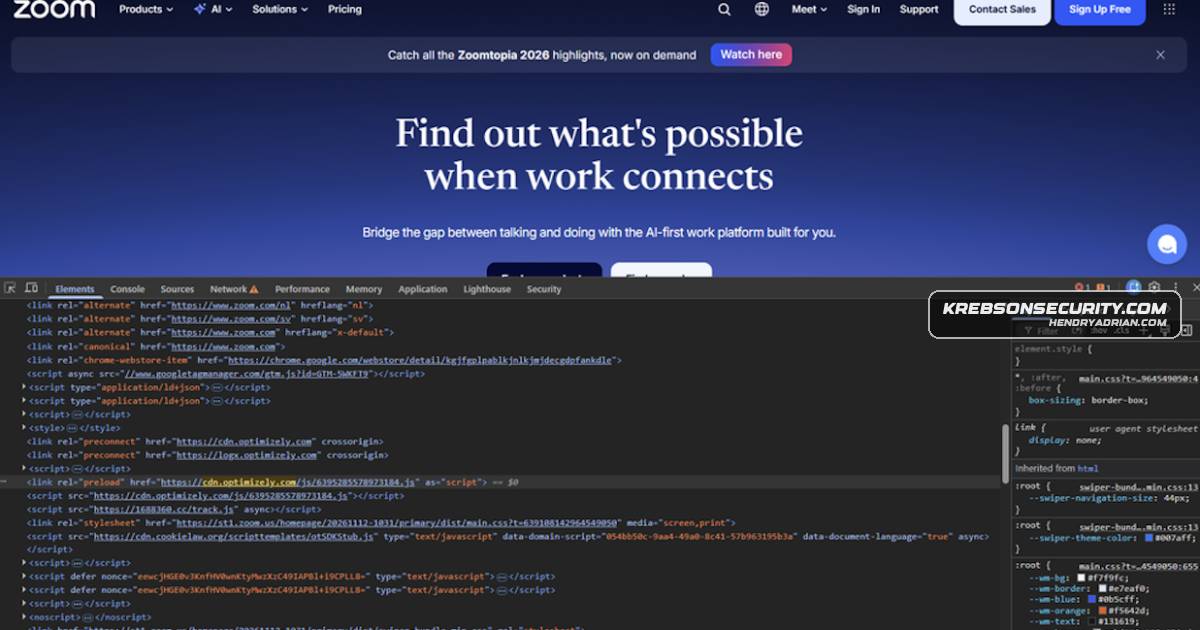
An exploited Optimizely vulnerability enabled malicious JavaScript to reach visitors of 178 organizations’ websites, according to Report URI. The scripts delivered data-stealing malware and exploit code; Optimizely says it remediated the vulnerability.
Key points
- Optimizely said an unauthorized party exploited a vulnerability in Optimizely Experimentation on November 16, 2026, to add malicious JavaScript to some customer projects.
- Report URI said the malicious JavaScript was served to visitors of 178 organizations, including the BBC, CNN, Equifax, Ledger and Zoom.
- Report URI researcher Scott Helme said the payload was rebuilt 26 times and could steal payment card data, cookies and screenshots, and replace cryptocurrency payment addresses.
- The affected websites also served exploit code targeting known vulnerabilities in older Apple iPhone and iPad devices, identified in the article as DarkSword and Coruna.
- Report URI found that 68 affected sites had no Content Security Policy (CSP), 50 had a CSP that still allowed the payload, and 24 fully blocked it.
- Report URI estimated the attackers stole about $7,500 in virtual currency; the number of payment card records, if any, was unknown.
- Optimizely said it blocked access to the vulnerable path, deployed a fix, removed injected code, ended active sessions, revoked tokens and reset affected account access.
Article Details
- Victim Organization
- Optimizely
- Incident Type
- Supply-chain attack involving exploitation of a vulnerability in Optimizely Experimentation to inject malicious JavaScript, which was served to visitors of downstream websites.
- Incident Date
- 2026-11-16
- Disclosure Date
- 2026-11-17
- Data Types Exposed
- Payment card records (Report URI said an unknown number were stolen)
- Cookies and screenshots (the payload was capable of stealing these; actual theft was not confirmed)
- Affected Records
- Unknown number of payment card records; Report URI estimated that approximately $7,500 worth of virtual currency was stolen.
- Affected Data Size
- Unknown
- Operational Impact
- Malicious JavaScript was served through Optimizely to visitors of 178 organizations. Optimizely said it blocked access to the vulnerable path, deployed a fix, removed injected code from affected projects, ended active sessions, revoked tokens, and reset affected user accounts.
- Ransom Or Extortion
- Unknown
- Claim Status
- confirmed