
Intezer Report Finds Threats in Low-Severity SOC Alerts and EDR ‘Mitigations’
Summary
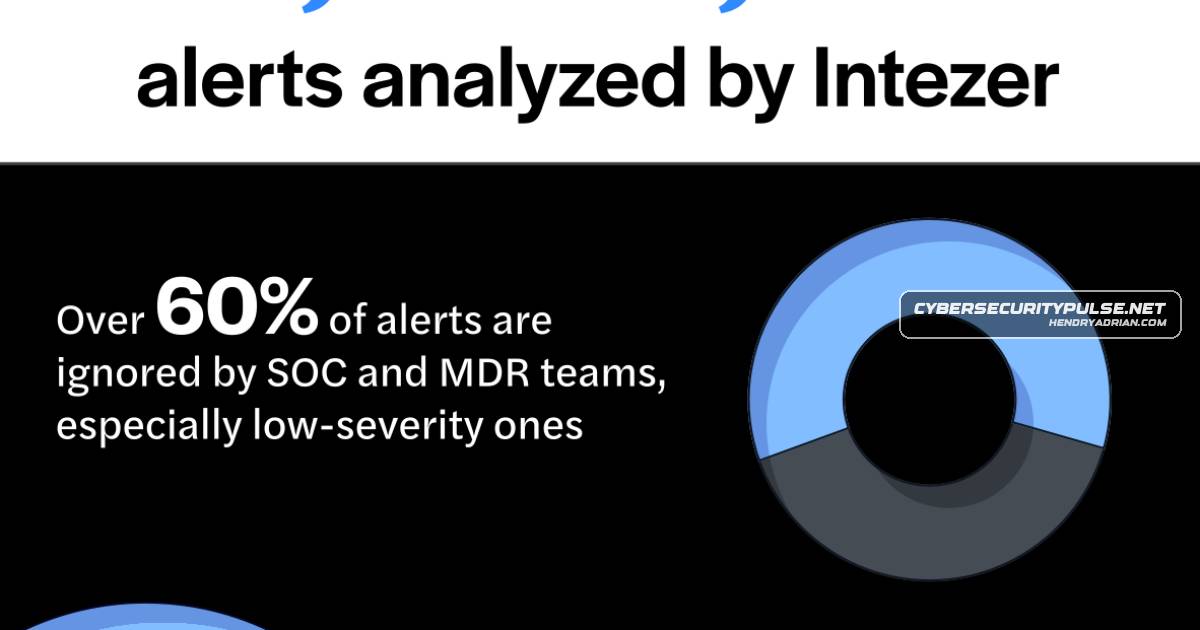
Intezer’s 2026 AI SOC Report analyzes 25 million production alerts, finding real threats among low-severity alerts and active endpoint compromises after EDRs marked them mitigated. It also highlights browser-based phishing and AWS misconfigurations.
Key points
- Intezer’s report analyzes 25 million alerts from production SOC environments in 2025, alongside endpoint, file, IP address, email, and forensic investigation data.
- The report says nearly 1% of low-severity and informational alerts were real threats; the article estimates this could mean about 54 missed incidents per enterprise per year.
- In 1.6% of more than 82,000 endpoint forensic scans, endpoints remained actively compromised despite EDRs reporting the threats as mitigated.
- The report describes phishing pages hosted on trusted developer platforms and increased use of Cloudflare Turnstile to impede security scanning.
- It reports that attachments appeared in fewer than 6% of confirmed malicious phishing emails, while around 30% relied on links.
- Only about 2% of impossible-travel alerts were confirmed as real compromises; VPN activity accounted for roughly 30% of those alerts.
- S3-related issues, including ACL misuse and permissive cross-account policies, accounted for roughly 70% of AWS control violations; the article recommends verifying EDR outcomes, reassessing browser-focused phishing defenses, and auditing cloud configurations.
Article Details
- Publisher
- Cybersecurity Pulse; Intezer published the report being analyzed
- Report Period
- 2025 operational data, analyzed in Intezer’s 2026 report
- Scope
- Operational security alerts and investigations across production enterprise SOC environments
- Sample Size
- 25 million alerts; 10 million monitored endpoints and identities; 180 million files; 7 million IP addresses; 550,000 phishing emails; more than 82,000 endpoint forensic investigations
- Key Statistics
- Intezer reported that nearly 1% of low-severity and informational alerts were real threats; the article estimates this could represent roughly 54 missed incidents per enterprise per year at the stated alert volume.
- In 1.6% of more than 82,000 endpoint forensic scans, Intezer found active compromises despite the EDR reporting the threat as mitigated.
- Intezer reported that 2% of low-severity endpoint alerts were confirmed incidents.
- Less than 8% of 550,000 user-reported phishing emails were confirmed malicious; fewer than 6% of the malicious emails carried an attachment, while around 30% relied on a link.
- S3 accounted for roughly 70% of AWS control violations in the report.
- Recommendations
- Use AI-augmented forensic triage to investigate alerts that cannot be covered manually.
- Verify endpoint status rather than relying blindly on an EDR’s “mitigated” verdict.
- Reassess phishing defenses for browser-based, link-driven attacks and credential-harvesting pages.
- Audit cloud posture, including S3 ACL use and permissive cross-account policies.
- Build team fluency with AI and evaluate AI SOC platforms for alert triage.
MITRE ATT&CK
Vendors
Amazon Web ServicesCloud posture issues—especially S3 ACL misuse and permissive cross-account policies—account for the majority of AWS control violations.CloudflarePhishing has shifted to browser-hosted credential harvesting on trusted developer platforms (e.g., Vercel, CodePen, JSBin) and abuse of Cloudflare Turnstile to evade scanners.IntezerIntezer’s 2026 AI SOC Report analyzes 25 million operational alerts and shows that SOCs routinely miss real threats hidden in low-severity alerts and that EDRs frequently report “mitigated” while endpoints remain
Products
Cloudflare TurnstilePhishing has shifted to browser-hosted credential harvesting on trusted developer platforms (e.g., Vercel, CodePen, JSBin) and abuse of Cloudflare Turnstile to evade scanners.CodePenPhishing has shifted to browser-hosted credential harvesting on trusted developer platforms (e.g., Vercel, CodePen, JSBin) and abuse of Cloudflare Turnstile to evade scanners.JSBinPhishing has shifted to browser-hosted credential harvesting on trusted developer platforms (e.g., Vercel, CodePen, JSBin) and abuse of Cloudflare Turnstile to evade scanners.JSitorIntezer found platforms like Vercel, CodePen, JSitor, and JSBin hosting live credential-harvesting pages on trusted domains.S3#IntezerVercel#Intezer