
Researchers Detail ChatGPT Lockdown Mode Bypass Enabling Data Exfiltration and Phishing
Summary
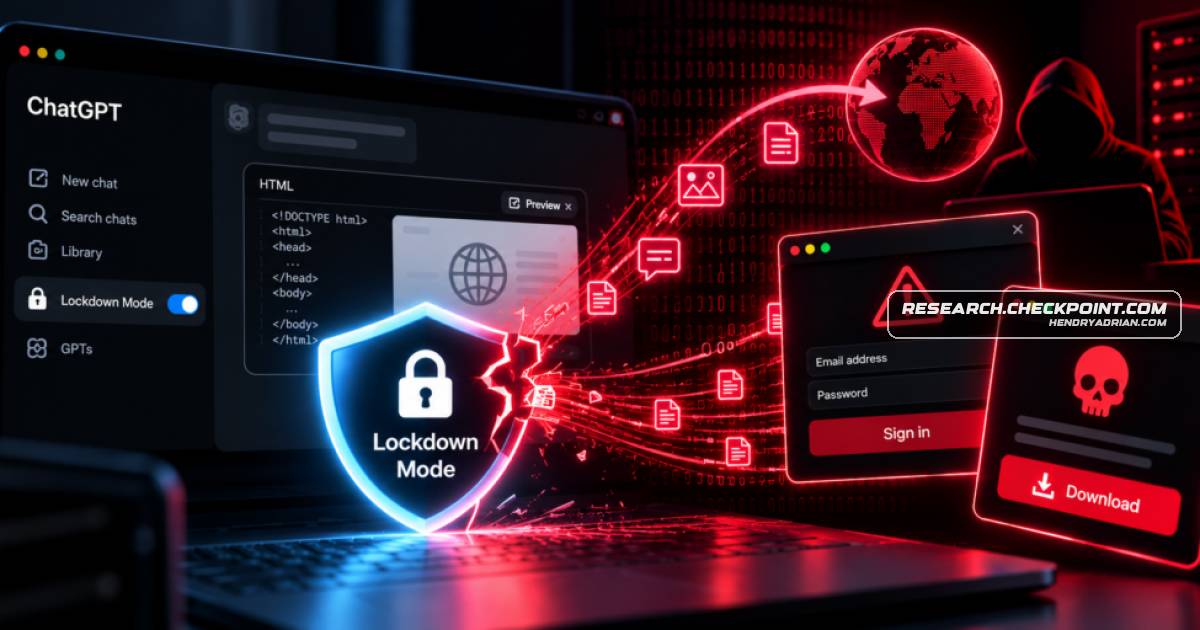
Check Point researchers described a ChatGPT HTML-preview sandbox flaw that bypassed Lockdown Mode, enabling chat-data exfiltration, phishing, and malware delivery. OpenAI removed permissive popup settings; researchers retested and confirmed the technique no longer works
Key points
- Researchers said permissive popup settings in nested HTML-preview iframes enabled a bypass of ChatGPT Lockdown Mode.
- The bypass could expose chat history and uploaded files to covert exfiltration, according to the researchers.
- Attackers could use spoofed ChatGPT windows for phishing or to lure users into downloading malware.
- In ChatGPT Classic, researchers demonstrated silent chat-message exfiltration without user interaction.
- Researchers also described a credential-theft scenario that could prompt users to re-authenticate on an attacker-controlled page.
- OpenAI told Check Point it deployed a fix on September 18, 2026, by removing the permissive popup settings; researchers retested and confirmed the described technique no longer worked.
Article Details
- Attack Vectors
- A malicious prompt, malicious GPT, or shared chat can supply crafted HTML for ChatGPT's page-preview feature.
- A nested iframe's contentWindow.open function can create a popup that escapes the HTML-preview sandbox because the outer iframe allows popups to escape the sandbox.
- The popup can display attacker-controlled HTML that impersonates the ChatGPT interface, luring users to download malware or enter credentials on a fraudulent page.
- In ChatGPT Classic, the popup behavior can silently exfiltrate chat history to an attacker-controlled server without user interaction.
- An attacker can reload the main application window and force a sign-out, then lure the user into re-authenticating on an attacker-controlled page.
- Defensive Notes
- OpenAI reported deploying a fix on 2026-09-18 by removing the allow-popups and allow-popups-to-escape-sandbox permissions from the outer HTML-preview sandbox iframe; Check Point Research retested and confirmed the described exploit no longer worked.
- Lockdown Mode restricts live web access to cached content, blocks internet images, disables network requests from Canvas-generated code, and turns off Deep Research, Agent Mode, live connectors, and file downloads; the reported vulnerability bypassed its protections.
MITRE ATT&CK
T1056.003 · Web Portal CaptureThe attacker can force a sign-out and lure the user into re-authenticating on an attacker-controlled page to steal credentials.T1059.007 · JavaScriptThe crafted HTML preview uses JavaScript, including a nested iframe's contentWindow.open function, to open a popup outside the intended sandbox restrictions.T1105 · Ingress Tool TransferThe attacker can use a spoofed ChatGPT window to induce a victim to download malware disguised as an application update.T1204.001 · Malicious LinkIn browser-based malware delivery, the victim must click content in a shared chat; the ChatGPT Classic download scenario also requires a click on the download link.T1566.002 · Spearphishing LinkA malicious shared chat or popup can present a link or lure that directs the victim to attacker-controlled content for phishing or malware delivery.T1567 · Exfiltration Over Web ServiceThe vulnerability can covertly send chat history from ChatGPT Classic to an attacker-controlled external server.