
Netskope Report Warns of Rising AI Security Risks from MCP, Coding Agents and Trojanized Tools
Summary
Netskope says AI security risks are shifting toward downstream policy violations, agentic coding execution vectors, and attacks involving trojanized developer tools and fake AI installers.
Key points
- Netskope's analysis covers June 2025 through July 2026.
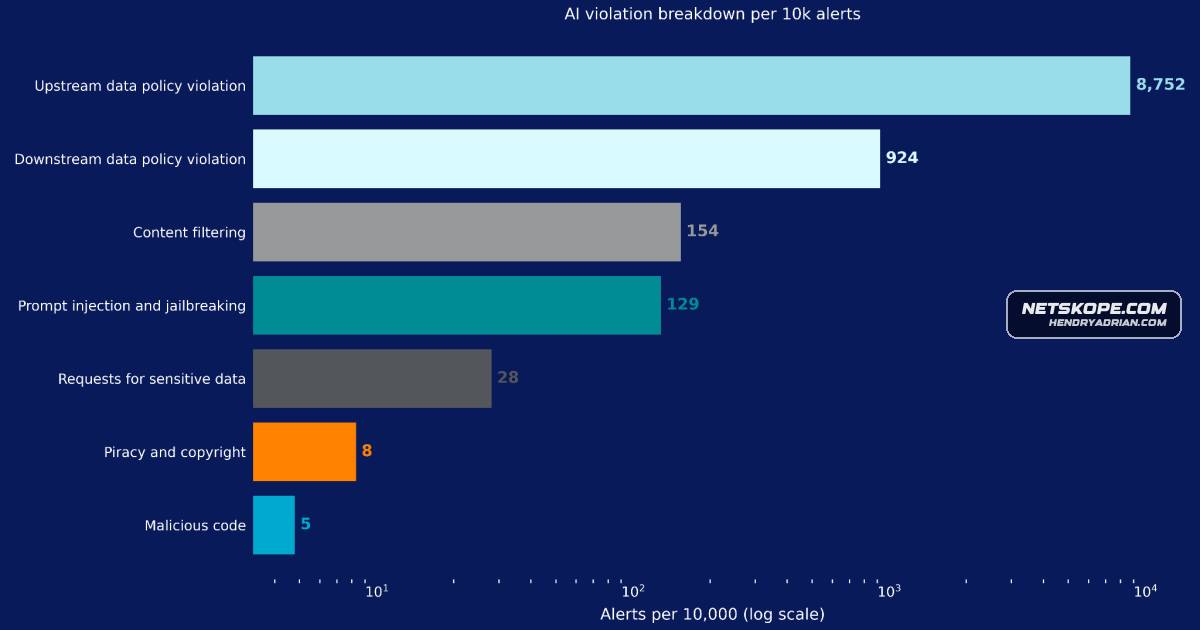
- The report identifies downstream policy violations as the primary architectural risk, as MCP connects internal data stores with external AI models.
- Netskope observed a fourfold increase in MCP traffic over the preceding 10 weeks.
- Claude Code and Codex adoption reached 75% and 58% of organizations, respectively, creating potential execution vectors for malicious code.
- The report says attackers are using trojanized developer tools and fake AI installers, and tricking AI apps into surfacing malicious content.
Article Details
- Event Type
- Publication of an AI security report describing changes in security risks, including downstream policy violations, agentic coding execution vectors, and weaponization of the AI supply chain.
- Impact
- The report says MCP traffic increased fourfold in the past 10 weeks and that Claude Code and Codex are used by 75% and 58% of organizations, respectively. It identifies risks of unauthorized access to sensitive data through AI services, execution of malicious code through agentic coding interactions, and exposure to malicious content through trojanized developer tools and fake AI installers.
Products
Claude CodeThe adoption of agentic coding tools—specifically Claude Code and Codex—has moved from negligible levels a year ago to 75% and 58% of organizations, respectively.CodexThe adoption of agentic coding tools—specifically Claude Code and Codex—has moved from negligible levels a year ago to 75% and 58% of organizations, respectively.