
Researchers Analyze Infrastructure Behind FakeWallet Crypto-Wallet Phishing
Summary
Researchers say FakeWallet used over 20 trojanized crypto-wallet apps to steal recovery phrases and private keys. Their infrastructure analysis identified 28 network IoCs and linked additional domains and IPs to malicious activity.
Key points
- Researchers say more than 20 fake wallet apps redirected users to trojanized App Store pages that stole recovery phrases and private keys.
- FakeWallet metadata suggests the campaign was active from at least fall 2025; five parent domains were updated on April 20, 2026, a day before the campaign was first detected.
- The investigation examined 28 network IoCs: 12 subdomains, 15 domains, and one IP address. Its tools classified nine subdomains as malicious and two as requiring caution.
- Historical DNS and traffic data showed one client IP communicating with three domain IoCs and nine potential victim IPs communicating with the sole IP IoC; these observations do not establish victim compromise.
- WHOIS email analysis linked seven public email addresses to 10,812 domains; threat-intelligence queries identified 11 as previously weaponized. Of 18 additional IPs found, eight had appeared in attacks.
- The researchers caution that some entities flagged as malicious may prove harmless and recommend further investigation to corroborate findings.
Article Details
- Attack Vectors
- More than 20 fake cryptocurrency wallet apps masqueraded as popular wallets and redirected users to fake App Store pages hosting trojanized apps.
- The FakeWallet apps stole affected users’ recovery phrases and private keys.
- The operation used look-alike domains and subdomains, several of which were flagged for malware distribution.
- Defensive Notes
- The article recommends conducting supplementary investigations to corroborate entities identified as malicious, since some may later prove harmless or change context.
- The article notes that blocking Cloudflare IP addresses associated with a suspicious endpoint could disrupt legitimate traffic.
Indicators of compromise
| Type | Indicator | Context |
|---|---|---|
| DOMAIN | 6688cf[.]jhxrpbgq[.]com | Subdomain flagged for malware distribution during 21–26 April 2026. |
| DOMAIN | bitpiecn[.]com[.]cn | Email-connected domain reported as used for malware distribution. |
| DOMAIN | crypto-stroe[.]cc | FakeWallet look-alike domain IoC that was bulk-registered alongside two related look-alike domains. |
| DOMAIN | crypto-stroe[.]cn | Look-alike domain bulk-registered with the FakeWallet domain IoC crypto-stroe[.]cc. |
| DOMAIN | crypto-stroe[.]top | Look-alike domain bulk-registered with the FakeWallet domain IoC crypto-stroe[.]cc. |
| DOMAIN | gxzhrc[.]cn | FakeWallet domain IoC reported as likely registered with malicious intent and listed in a malicious-domains feed. |
| DOMAIN | jhxrpbgq[.]com | FakeWallet domain IoC reported as likely registered with malicious intent and listed in a malicious-domains feed. |
| DOMAIN | ld018[.]com | Email-connected domain reported as used for malware distribution. |
| DOMAIN | meta-mask[.]org[.]cn | Email-connected domain reported as used for malware distribution. |
| DOMAIN | mgi1y[.]siyangoil[.]com | Subdomain flagged for malware distribution during 21–26 April 2026. |
| DOMAIN | mti4ywy4[.]lahuafa[.]com | Subdomain flagged for malware distribution during 21–26 April 2026. |
| DOMAIN | one-key[.]org[.]cn | Email-connected domain reported as used for malware distribution. |
| DOMAIN | t0kenpocket[.]cn | Email-connected domain reported as used for malware distribution. |
MITRE ATT&CK
T1036 · MasqueradingFakeWallet apps impersonated legitimate cryptocurrency wallets and used fake App Store pages to appear trustworthy.T1204.002 · Malicious FileUsers who downloaded the trojanized wallet apps executed the malicious apps.T1552.004 · Private KeysThe FakeWallet apps stole victims’ private keys.
Malware
Products
Tools
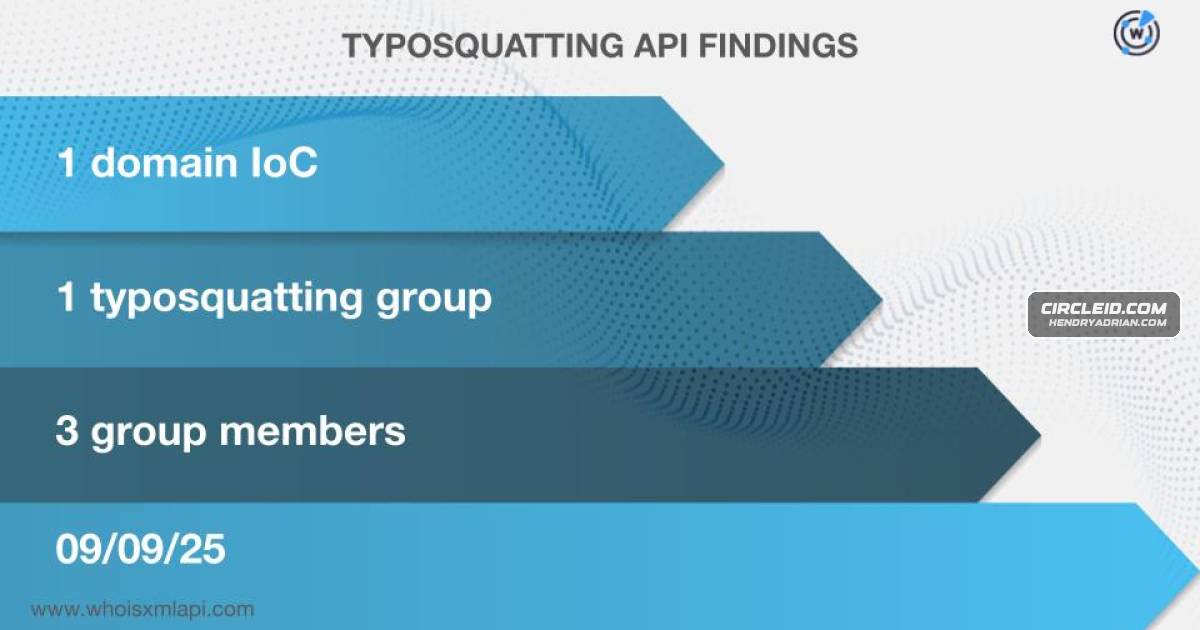
DNS Chronicle APIFinally, we queried the domain IoCs on DNS Chronicle API and discovered that 12 posted 258 historical domain-to-IP resolutions over time.DNS Lookup APINext, we queried the domain IoCs on DNS Lookup API and discovered 18 additional IP addresses after the sole IP IoC was filtered out.Domain Info APIWe then queried the domain IoCs on WHOIS API and filled in current WHOIS record detail gaps with the help of Domain Info API.IP Geolocation APIWe then queried the sole IP IoC on IP Geolocation API and learned that it was geolocated in Singapore under the purview of The Constant Company.Reverse WHOIS APIReverse WHOIS API queries for the public email addresses revealed that two could belong to domainers hence their exclusion from the next part of our analysis.Threat Intelligence APIAccording to the results of our Threat Intelligence API queries for the email-connected domains, 11 have already been weaponized for various malicious campaigns.Typosquatting APIWe then queried the domain IoCs on Typosquatting API and discovered that one—crypto-stroe[.]cc—was bulk-registered with two look-alikes—crypto-stroe[.]top and crypto-stroe[.]cn—on 9 September 2025.WHOIS APIWe then queried the domain IoCs on WHOIS API and filled in current WHOIS record detail gaps with the help of Domain Info API.WHOIS History APIWe began by querying the 15 domain IoCs on WHOIS History API.WhoisXML API MCP ServerWe extracted unique domains from the subdomain IoCs they listed and determined if any of them belonged to legitimate organizations using the WhoisXML API MCP Server.