
How Kaspersky KATA Uses Network Anomaly Detection to Identify Kerberoasting and DNS Tunneling
Summary
The article explains how Kaspersky KATA’s Network Anomaly Detection uses behavioral baselines and SQL-based rules to flag Kerberoasting and DNS tunneling, with configurable variables and alert aggregation.
Key points
- KATA’s Network Anomaly Detection analyzes DNS, Kerberos, DCE/RPC, and other traffic for behavior that deviates from normal activity rather than relying only on signatures.
- The Kerberoasting rule flags a host and account receiving TGS-REP responses for many unique, non-system SPNs within a configurable time window.
- The DNS tunneling rule correlates requested DNS names with TXT response data, groups records by source IP, and triggers when their combined volume exceeds a threshold.
- Rules are SQL queries against KATA’s ClickHouse database; variables can tune exclusions, infrastructure details, and alert thresholds.
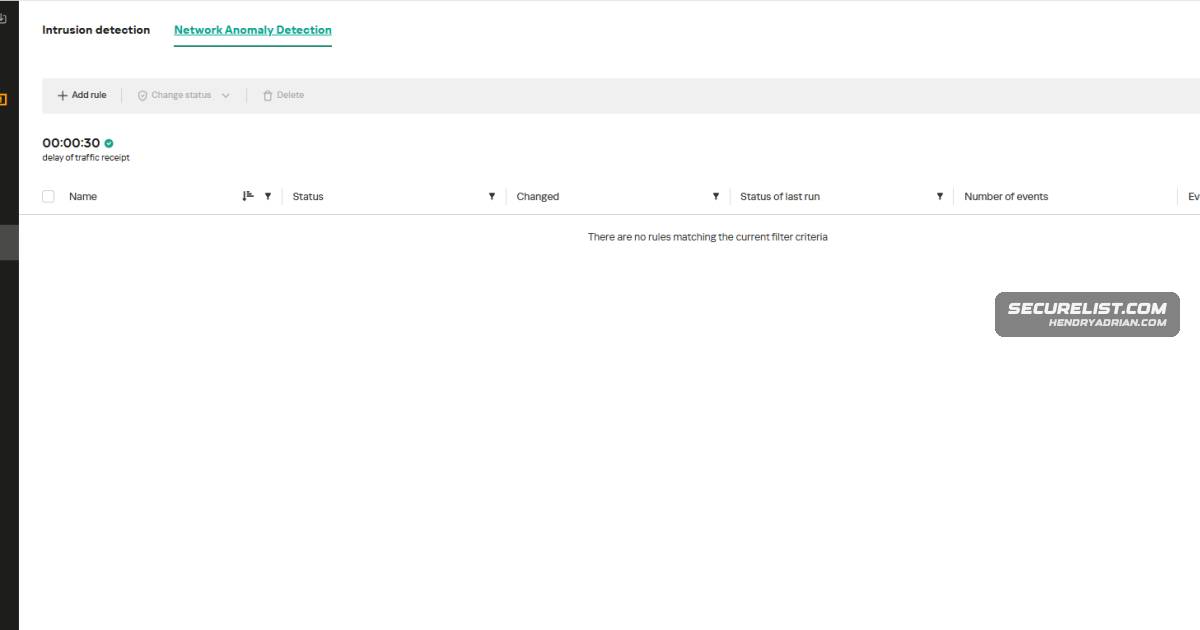
- KATA includes 59 prebuilt NAD templates and supports up to 200 active rules; rules are not enabled by default and must be added manually.
- The article notes that legitimate DNS and Kerberos activity can share these indicators, so detection relies on correlating behavior to reduce false positives.
Article Details
- Defense Focus
- Detect Kerberoasting and DNS tunneling by identifying deviations from normal Kerberos and DNS behavior, including activity that resembles legitimate traffic.
- Detection Methods
- Correlate successful Kerberos TGS-REP responses by source IP and client account, and alert when the number of unique non-system SPNs reaches a configured threshold within the search window.
- Identify DNS tunneling by aggregating unique requested DNS names and TXT response data per source IP, then alert when their combined size exceeds a configured threshold.
- Assess DNS indicators together, including long or changing subdomains under a static domain suffix, TXT records, request frequency, unique-name counts, and data volume.
- Use baseline deviations and correlated network behavior rather than relying only on signatures.
- Data Sources
- DNS network sessions, including requested names (rrname), record types (rtype), and TXT response data (rdata)
- Kerberos network sessions, including successful TGS-REP responses, client names (cname), and service principal names (sname)
- Source IP addresses, session attributes, and sent/received data volumes
- DCE/RPC and other analyzed network traffic
- Rule Types
- SQL-based Network Anomaly Detection queries
- Prebuilt anomaly-detection rule templates with configurable variables, search depth, schedule, and event-regeneration period
- Defensive Actions
- Manually add and enable the relevant anomaly-detection rules; they are not enabled by default.
- For Kerberoasting detection, exclude irrelevant source IPs and client accounts, omit system SPNs, and tune the unique-SPN threshold to the environment.
- For DNS tunneling detection, configure internal DNS server addresses, source exclusions, and the traffic-size threshold; exclude DNS server-to-server traffic to reduce false positives.
- Set an appropriate search depth and execution schedule, and use event regeneration to aggregate repeated alerts.
- Investigate triggered alerts by reviewing associated events and network sessions, including session attributes and data volumes; export related sessions when needed.
MITRE ATT&CK
T1048 · Exfiltration Over Alternative ProtocolThe article describes transmitting data through DNS tunneling, including for data exfiltration.T1071.004 · DNSThe article describes using DNS requests and responses as a covert channel for C2 communication.T1132.001 · Standard EncodingThe article describes encoding or encrypting data in the lowest-level subdomain of DNS queries for tunneling.T1558.003 · KerberoastingThe article describes requesting TGS tickets for SPN-configured service accounts and attempting to crack the tickets offline to recover passwords.