
Unit 42 Finds 45% of C2 Malware Samples Connect Directly to IPs
Summary
Unit 42 analyzed more than 4 million dynamic reports and found 45.32% of malware samples with C2 activity made at least one direct-to-IP connection, exposing limits in DNS-based defenses. The research details Phorpiex, SectopRAT, Mozi and Boatnet activity and proposes Z
Key points
- Analysis of more than 4 million Advanced WildFire reports over 30 days found that 45.32% of malware samples with C2 activity made at least one direct-to-IP connection; these connections accounted for 23.17% of C2 attempts.
- The direct-to-IP rate remained 41.97% after the analysis excluded bulk port-scanning behavior.
- Unit 42 observed Phorpiex droppers contacting hard-coded IP addresses without prior DNS queries and fetching staged payloads.
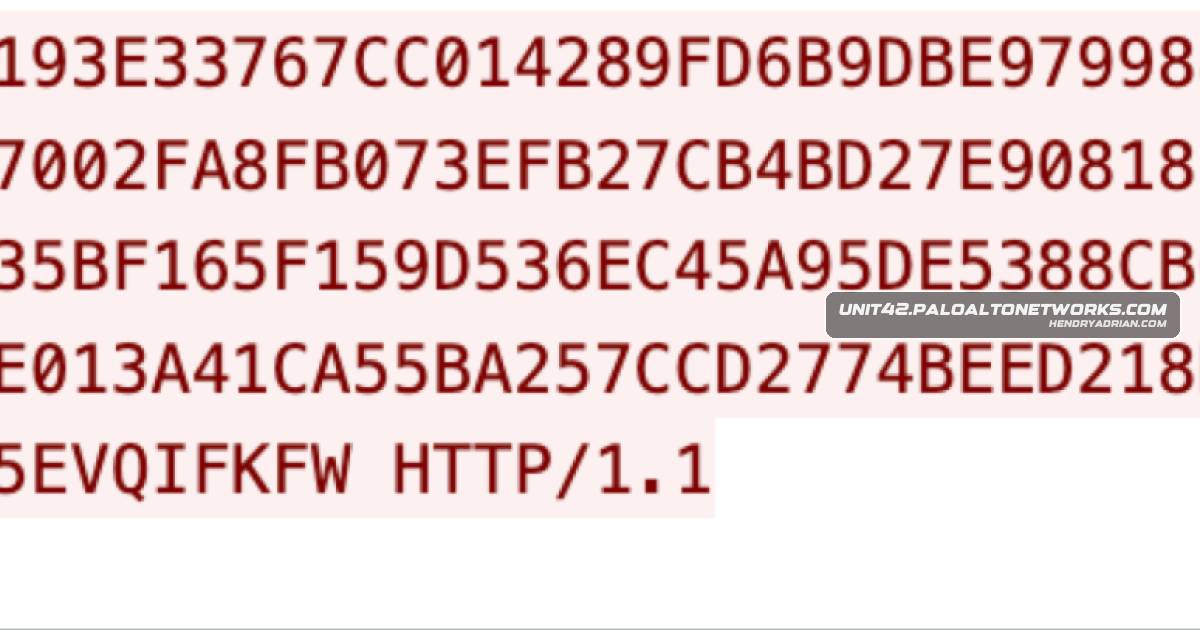
- An obfuscated HTTP GET exfiltration campaign used encoded requests and regularly rotated destination IP addresses and ports; its infrastructure was hosted on public cloud services in Brazil.
- SectopRAT activity targeting educational institutions used an in-browser proxy to relay browsing activity and exfiltrate submitted usernames and plaintext passwords.
- The analysis describes Mozi and Boatnet direct-to-IP activity against IoT devices; Boatnet binaries targeted at least 14 architectures, including m68k.
- ZT-IP is a proposed network enforcement approach that permits outbound connections to IP addresses previously approved through DNS, with allowances for specified legitimate direct-IP traffic.
Article Details
- Attack Vectors
- Malware used hard-coded IP addresses for command-and-control connections without prior DNS queries.
- Phorpiex-related activity downloaded staged payloads, including a binary from an IP-hosted URL.
- A campaign used obfuscated HTTP GET requests to exfiltrate data through rotating destination IP addresses and ports.
- SectopRAT mirrored victim browser traffic and exfiltrated submitted usernames and plaintext passwords.
- Mozi and Boatnet used direct-to-IP communications in IoT botnet activity, including propagation through HTTP requests containing exploitation payloads.
- Defensive Notes
- ZT-IP checks whether an outbound IP destination was recently approved by DNS and flags or blocks connections without that approval.
- ZT-IP uses allowlists and exemptions for private intranet addresses, trusted protocols, and well-known benign public IP addresses to reduce false positives.
- The article says DNS-based controls alone can miss malware that communicates directly with IP addresses.
- The article states that Advanced WildFire, Advanced URL Filtering, Advanced DNS Security, Cortex XDR, and XSIAM provide protections against threats discussed in the report.
Indicators of compromise
| Type | Indicator | Context |
|---|---|---|
| IPV4 | 103[.]245[.]236[.]146 | Listed by the article as a malicious destination IP address associated with the discussed activity. |
| IPV4 | 178[.]16[.]54[.]109 | Malicious payload-delivery infrastructure associated with Phorpiex activity. |
| IPV4 | 178[.]16[.]54[.]31 | Listed by the article as a malicious destination IP address associated with the discussed activity. |
| IPV4 | 18[.]228[.]188[.]56 | Destination shown for the obfuscated GET campaign, which the article describes as using cloud-hosted C2 infrastructure. |
| IPV4 | 194[.]76[.]227[.]94 | Infrastructure used by one of the reported SectopRAT attackers targeting educational institutions. |
| IPV4 | 2[.]26[.]98[.]67 | Identified as the distribution IP address for the Boatnet Mirai variant. |
| IPV4 | 206[.]189[.]229[.]43 | Listed by the article as a malicious destination IP address associated with the discussed activity. |
| IPV4 | 62[.]60[.]179[.]230 | Listed by the article as a malicious destination IP address associated with the discussed activity. |
| IPV4 | 87[.]120[.]107[.]33 | Infrastructure used by one of the reported SectopRAT attackers targeting educational institutions. |
| IPV4 | 91[.]92[.]243[.]29 | Listed by the article as a malicious destination IP address associated with the discussed activity. |
| SHA256 | 01a96eeafb72042b3f69afd21b4c9155dbfe7f97ab3dca392972ad531a075ac2 | Listed as a malware sample hash associated with the activity discussed in the report. |
| SHA256 | 9639f7ebc6a6d69d7bf5b8bc869e7783a1406088f192868624ad8919e9bfd1d4 | Listed as a malware sample hash associated with the activity discussed in the report. |
| SHA256 | bf24277400cc453d530e4277d3bd24e96c5e409adef6970518bdc59205aa0241 | Listed as a malware sample hash associated with the activity discussed in the report. |
| SHA256 | cc43cdbe8eb9874f55fffbe23b560b673eb9f31fb9a953926bba29464fd2dd07 | Hash of an associated malware sample analyzed in connection with the obfuscated GET exfiltration campaign. |
| SHA256 | e310476c41ae4f6e3c4ed9bb88303ee6e5e1455bd7afe51cf48965ea7599e6e5 | Listed as a malware sample hash associated with the activity discussed in the report. |
| SHA256 | e3513922666c202c1ae5c06eea277ba10477868d6d89ce2819f4f8ff9070bc85 | Listed as a malware sample hash associated with the activity discussed in the report. |
| SHA256 | e5715e6611ef6bcb233f5d2098510dab3db408abbb728b00e1821bb255829373 | Listed as a malware sample hash associated with the activity discussed in the report. |
| URL | hxxp[:]//178[.]16[.]54[.]109/st.exe | Phorpiex-associated binary retrieval URL identified by the article as a malicious payload. |
MITRE ATT&CK
T1027 · Obfuscated Files or InformationThe GET exfiltration campaign used an obfuscated request format and long encoded strings to evade detection.T1041 · Exfiltration Over C2 ChannelThe GET campaign exfiltrated data over its C2 communications, and SectopRAT sent captured form fields to attacker-controlled servers.T1071.001 · Web ProtocolsMalware used HTTP and WebSocket communications for direct-to-IP activity; SectopRAT also used HTTP endpoints to relay visited URLs and submitted form data.T1090 · ProxySectopRAT's in-browser proxy capability mirrored victim browser traffic to attacker-controlled servers.T1095 · Non-Application Layer ProtocolThe reported malware made direct network connections to IP addresses without preceding DNS resolution.T1105 · Ingress Tool TransferPhorpiex-related activity retrieved configuration and additional payloads, including a binary from an IP-hosted URL.
Malware
BoatnetThe report highlights ZT-IP detections for Phorpiex, SectopRAT, Mozi, and Boatnet activity, plus an obfuscated GET exfiltration campaign and hard-coded IP-based infrastructure.MiraiMozi and Boatnet demonstrated how IoT botnets and Mirai variants use D2IP communications to spread, including targeting older and industrial hardware with multiple architectures.MoziThe report highlights ZT-IP detections for Phorpiex, SectopRAT, Mozi, and Boatnet activity, plus an obfuscated GET exfiltration campaign and hard-coded IP-based infrastructure.PhorpiexThe report highlights ZT-IP detections for Phorpiex, SectopRAT, Mozi, and Boatnet activity, plus an obfuscated GET exfiltration campaign and hard-coded IP-based infrastructure.SectopRATThe report highlights ZT-IP detections for Phorpiex, SectopRAT, Mozi, and Boatnet activity, plus an obfuscated GET exfiltration campaign and hard-coded IP-based infrastructure.
Vendors
Products
Advanced DNS SecurityAdvanced URL Filtering and Advanced DNS Security identify known domains and URLs associated with this activity as malicious.Advanced URL FilteringAdvanced URL Filtering and Advanced DNS Security identify known domains and URLs associated with this activity as malicious.Advanced WildFireWe analyzed over 4 million Advanced WildFire dynamic analysis reports for a 30-day period to quantify how prevalent this behavior truly is.Cortex XDRCortex XDR and XSIAM help to prevent the threats described in this article, by employing the Malware Prevention Engine.XSIAMCortex XDR and XSIAM help to prevent the threats described in this article, by employing the Malware Prevention Engine.
Tools
Countries
Industries
AirlinesSamples that point to it were found impacting high-value sectors including government, airlines and universities.GovernmentSamples that point to it were found impacting high-value sectors including government, airlines and universities.Industrial control systemsThis processor family is common in legacy industrial control systems (ICS) and aging embedded hardware, which current malware typically overlooks.