OpenClaw Flaw Shows How Attackers Can Bypass AI-Agent Build-Time Policies
Summary
Using OpenClaw’s CVE-2026-25253 as a case study, the article explains how stolen gateway credentials could alter live agent policies and recommends runtime monitoring, stronger gateway authentication, origin checks, and least privilege.
Key points
- The article says CVE-2026-25253 affected OpenClaw’s Control UI and involved a crafted link, automatic gateway connection, and a WebSocket server that did not validate origins.
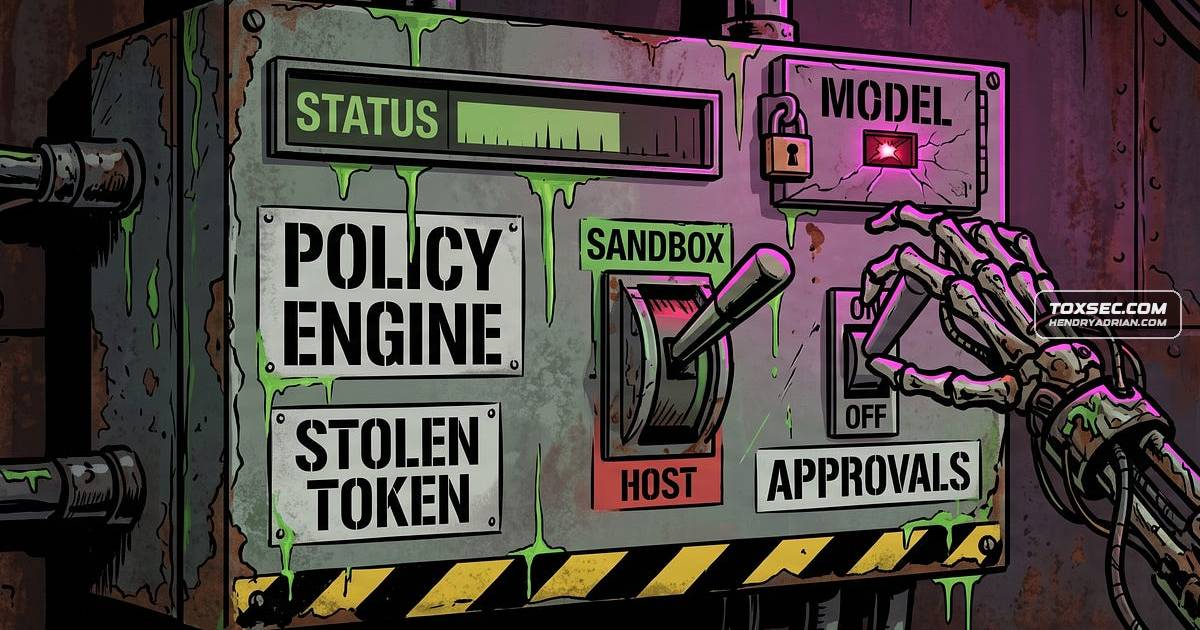
- According to the article, an attacker could obtain a stored authentication token and use it to change live policy settings, including approvals and sandbox execution targets.
- The attack path described did not require sending instructions to the underlying AI model; it targeted the system enforcing the policies.
- Build-time policy can limit an agent’s permissions, but the article says it cannot determine whether a permitted tool call was prompted by untrusted content.
- Recommended defenses include monitoring runtime behavior and policy changes, securing the gateway API, validating WebSocket origins, and requiring confirmation for high-risk actions.
- The article also recommends least-privilege tool scopes, short-lived per-task credentials, read-only defaults, and explicit outbound allowlists.
Article Details
- Defense Focus
- Combine build-time agent permission scoping with runtime monitoring and protection of the policy engine’s control surface.
- Detection Methods
- Compare each tool call with the user's stated task; flag calls justified by fetched or otherwise untrusted content.
- Monitor approvals, sandbox targets, and tool scopes for changes during a session; halt and alert on policy mutations.
- Check whether a session combines untrusted input, sensitive access, and external communications, and require human approval for high-risk actions.
- Inspect outbound destinations against an explicit allowlist and block and log unlisted destinations.
- Review live tool calls for unexpected scope expansion or behavior that does not match the stated task.
- Data Sources
- Agent tool-call records, including the stated intent and call context
- Runtime policy configuration and session-start configuration state
- WebSocket connection origin headers
- Outbound connection destinations
- Rule Types
- Per-tool-call runtime policy checks for intent matching, configuration integrity, capability combinations, and egress allowlisting
- WebSocket origin validation and first-use gateway-connection confirmation
- Risk-based human-approval gates for irreversible or high-impact actions
- Platforms
- Cisco Agent Runtime SDK
- OpenClaw
- Defensive Actions
- Protect gateway APIs that change approvals or sandbox settings with strong authentication; validate WebSocket origins and do not accept configuration parameters from URLs.
- Keep build-time least-privilege scoping, but add a runtime monitor that checks every tool call and detects policy changes.
- Require meaningful human review for destructive writes, host-level execution, and production-impacting actions.
- Scope tools to task-required resources, default to read-only access, and use short-lived per-task credentials instead of standing credentials.
- Deny outbound connections by default and allow only explicitly approved destinations.
- Patch OpenClaw to version 2026.1.29.
MITRE ATT&CK
T1059.004 · Unix ShellAfter obtaining operator access, the attacker can change the shell tool's execution target to the host to achieve host-level execution.T1189 · Drive-by CompromiseA victim clicks a crafted link; the browser then connects to an attacker gateway through the OpenClaw Control UI.T1528 · Steal Application Access TokenThe cross-site WebSocket flow sends the stored authentication token to the attacker, who replays it against the local gateway.
CVE
People
Vendors
Products
Agent Runtime SDKTL;DR: Cisco’s Agent Runtime SDK bakes build-time policy enforcement straight into agent code, wiring into AWS Bedrock AgentCore, Google Vertex Agent Builder, Azure AI Foundry, and LangChain.OpenClawThen CVE-2026-25253, the OpenClaw one-click RCE, showed the ugly part: you don’t have to fool the model to beat a policy engine.