Microsoft-led Operation Disrupts EvilTokens Phishing Service Linked to 12,000 Compromised Accounts
Summary
Microsoft and partners disrupted EvilTokens infrastructure after Microsoft reported the phishing service compromised over 12,000 accounts across more than 10,000 organizations. Two suspected administrators were arrested in the U.K.; the service remains active.
Key points
- Microsoft and partners obtained legal authority to seize infrastructure associated with EvilTokens; the article says the operation was not a full takedown and the threat remains active.
- Microsoft reported more than 12,000 compromised inboxes across over 10,000 organizations worldwide. SpyCloud reported over 8,708 affected accounts across 6,585 corporate email domains in 79 countries.
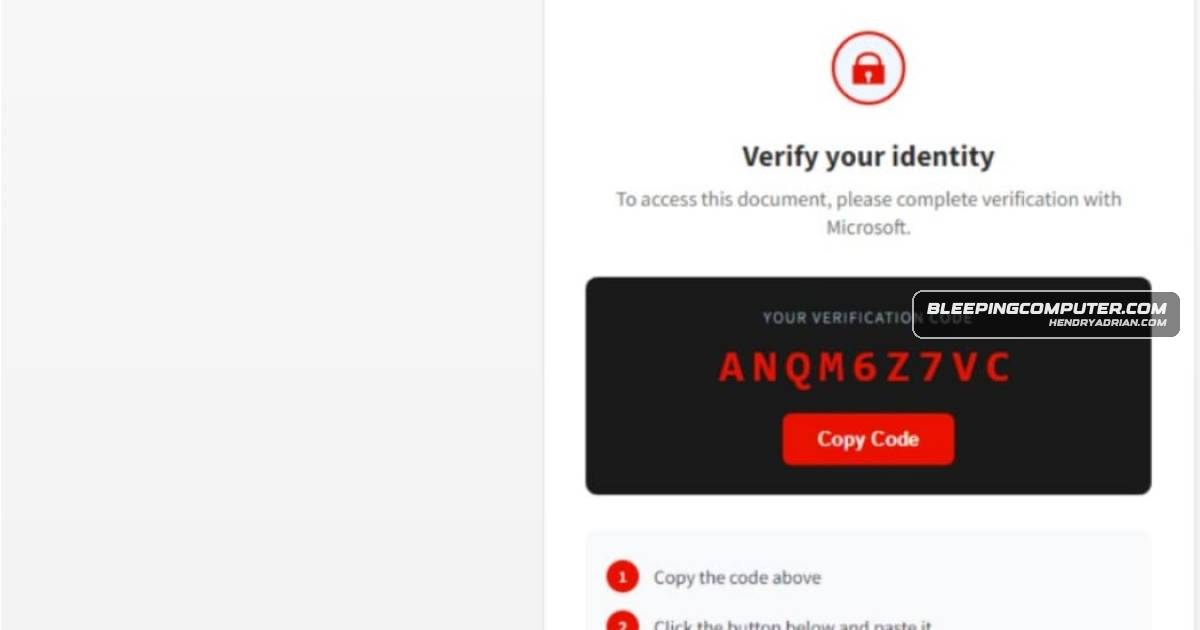
- EvilTokens used device-code phishing to obtain authentication tokens despite MFA protections, according to the article.
- The service offered 44 customizable phishing kits and AI-powered tools to analyze inboxes, identify high-value targets, and generate business email compromise messages.
- Two men suspected of administering the service were arrested in the U.K. and released on bail pending further investigation.
- Recommended defenses include disabling or blocking device-code authentication where possible, monitoring suspicious logins, and using phishing-resistant authentication such as FIDO2 keys or passkeys.
Article Details
- Event Type
- Disruption of the EvilTokens phishing-as-a-service platform through the seizure of associated active infrastructure.
- Impact
- EvilTokens compromised more than 12,000 Microsoft accounts across over 10,000 organizations worldwide, enabling business email compromise campaigns. Two men suspected of administering the service were arrested in the United Kingdom and released on bail. The platform remains active, although attacks are expected to decrease in volume.
MITRE ATT&CK
People
Threat Actors
Vendors
Products
Countries
AustraliaThe most targeted countries are the United States, followed by Canada, Australia, the United Kingdom, and Saudi Arabia.CanadaThe most targeted countries are the United States, followed by Canada, Australia, the United Kingdom, and Saudi Arabia.Saudi ArabiaThe most targeted countries are the United States, followed by Canada, Australia, the United Kingdom, and Saudi Arabia.United KingdomAuthorities arrested two suspected administrators in the United Kingdom.United StatesThe most targeted countries are the United States, followed by Canada, Australia, the United Kingdom, and Saudi Arabia.
Industries
Constructionstating that campaigns using the PhaaS platform impacted organizations in wholesale distribution, construction, financial services, real estate, higher education, and healthcare sectors.Financial Servicescampaigns using the PhaaS platform impacted organizations in wholesale distribution, construction, financial services, real estate, higher education, and healthcare sectors.Healthcarein wholesale distribution, construction, financial services, real estate, higher education, and healthcare sectors.Higher Educationimpacted organizations in wholesale distribution, construction, financial services, real estate, higher education, and healthcare sectors.real estatethe PhaaS platform impacted organizations in wholesale distribution, construction, financial services, real estate, higher education, and healthcare sectors.Wholesale distributionactor as Storm-2992, stating that campaigns using the PhaaS platform impacted organizations in wholesale distribution, construction, financial services, real estate, higher education, and healthcare sectors.