AI Agents Are Transforming CTFs—and Testing the Limits of Autonomous Cybersecurity
Summary
AI agents can now solve many CTF challenges and find and patch vulnerabilities, but results vary widely. Performance drops on fresh challenges and real-world flaws, while AI raises questions about security testing and the future of human competition.
Key points
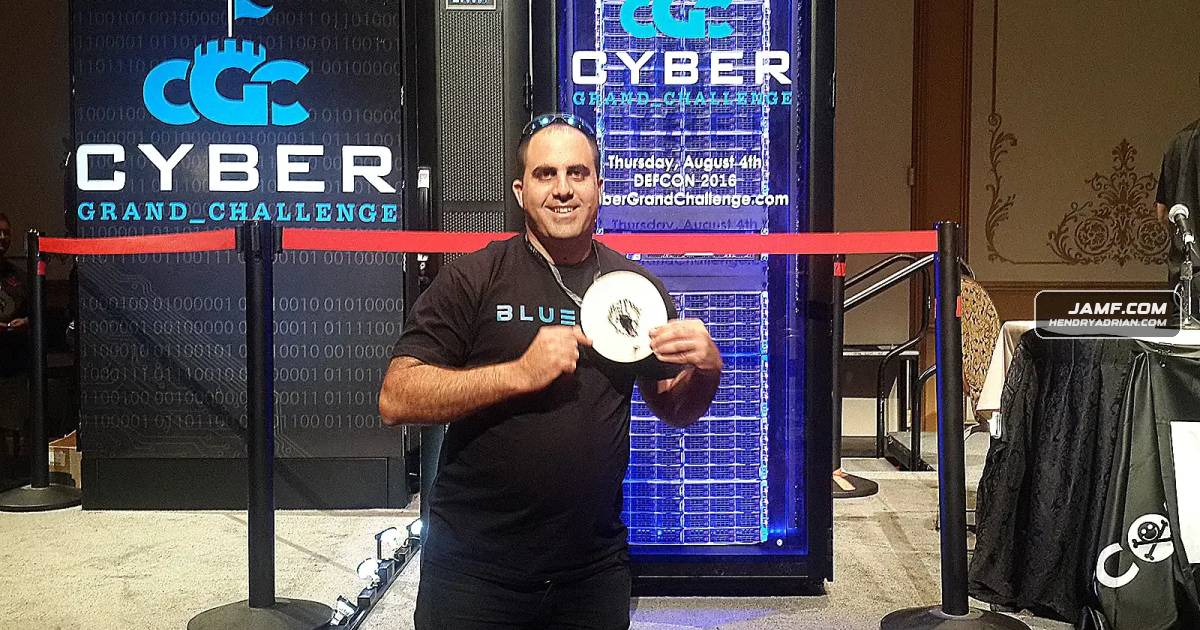
- DARPA's 2016 Cyber Grand Challenge demonstrated autonomous systems that could find, exploit, and patch vulnerabilities in a constrained environment.
- At the 2025 AI Cyber Challenge final, systems found 54 of 63 synthetic vulnerabilities and patched 43; they also found 18 real vulnerabilities and submitted 11 patches, according to DARPA.
- Agent performance depends heavily on tools, orchestration, attempts, and compute. Public benchmark results range from near-saturation on some suites to much lower success on broader or fresh challenges.
- CTFusion's evaluation found average performance fell from 14.4% on NYU CTF Bench to 6.3% on unreleased live challenges, highlighting a generalization gap and risks from public challenge solutions.
- Research cited in the article finds agents are often better at exploiting or patching known vulnerabilities than independently discovering unknown flaws; business logic and stateful attacks remain difficult.
- AI can assist both attackers and defenders by automating reconnaissance, testing, vulnerability analysis, and patching. The article emphasizes verification and human oversight for consequential actions.
- The author argues CTFs may split into unrestricted AI competitions and human-focused events that restrict generative AI or autonomous solvers.
Article Details
- Topic
- The evolution of AI agents in Capture the Flag competitions and their implications for cybersecurity
Products
Claude Opus 4.5Claude Opus 4.5 solved 118 of 200 challenges: a 59.0% solve rateDECREEThe competitors operated inside the DARPA Experimental Cybersecurity Research Evaluation Environment (DECREE). DECREE was a purpose-built operating system used in an isolated competition testbed. It reduced variabilityGemini 3 ProGemini 3 Pro solved 104 of 200 challenges: a 52.0% solve rateKali Linuxevaluation of the complete NYU CTF Bench used an extended D-CIPHER planner-executor architecture, a Kali Linux image containing more than 100 security tools and automated result parsing. This illustrates how muchMuse Spark 1.1Meta's Muse Spark 1.1 Evaluation Report reported 92.9% pass@1 and 97.0% pass@10 across all 40 Cybench challenges. Meta described the public CTF suite as approaching its performance ceiling and treated it as a capability