How Wi-Fi Metadata Can Reveal a Person’s Location and Routines
Summary
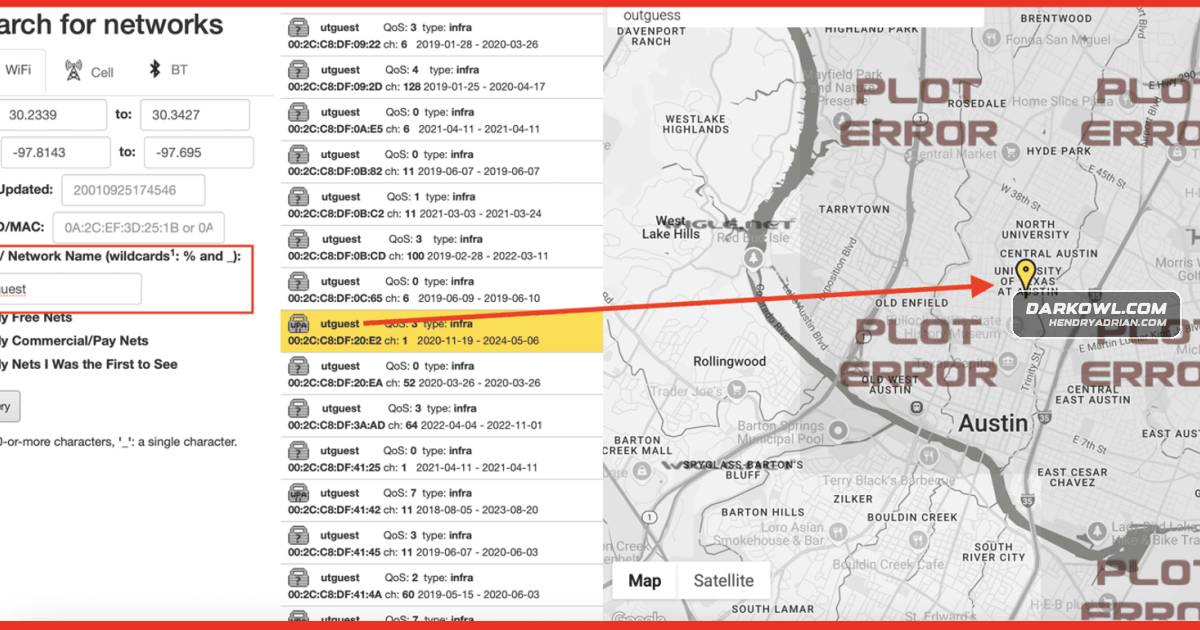
Devices may broadcast saved Wi-Fi networks and MAC-address information, allowing nearby observers to map access points and potentially infer a person’s locations and routines. The article demonstrates this with AiroDump-ng, AirGraph-ng, and Wigle[.]net.
Key points
- Devices may probe for previously saved Wi-Fi networks even when those networks are out of range, potentially revealing places they have visited.
- MAC addresses and vendor information can be captured by someone within Wi-Fi range; some devices do not randomize their MAC addresses.
- AiroDump-ng can collect Wi-Fi data, while AirGraph-ng can visualize relationships between access points and devices.
- The article describes using Wigle[.]net to locate a public access point associated with a network name.
- Combining network observations could potentially reveal routine locations or movement patterns; the example uses a public network at the University of Texas at Austin.
- The article recommends awareness of visible Wi-Fi data, MAC address randomization, and cautious network selection as privacy measures.
Article Details
- Topic
- Privacy risks of Wi-Fi metadata tracking and location inference
Products
Tools
AirGraph-ngOpen-source tools like AiroDump-ng, AirGraph-ng, and websites such as Wigle.net can also be used by less-sophisticated adversaries to potentially locate persons of interest and their routine habits.AiroDump-ngOpen-source tools like AiroDump-ng, AirGraph-ng, and websites such as Wigle.net can also be used by less-sophisticated adversaries to potentially locate persons of interest and their routine habits.