How Attackers Turn Public Profiles Into Targeted Cyberattacks
Summary
Public posts, directories, and breach data can help attackers build dossiers for targeted phishing and impersonation. The article shares examples and advice for limiting exposure, including a family safe word and stronger security-question answers.
Key points
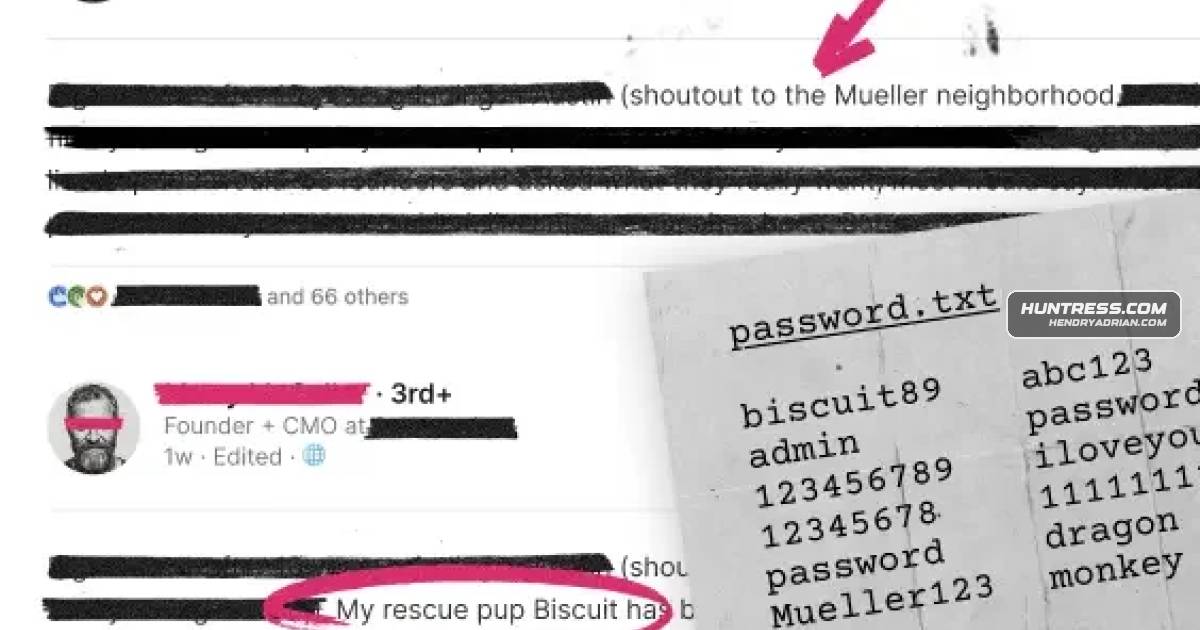
- LinkedIn posts and other public details can reveal an individual's employer, role, connections, travel plans, and routines.
- Attackers can combine corporate email patterns with personal details from breach data to make targeted phishing more convincing.
- A fake job applicant used another person's LinkedIn photo, while a separate case involved a fake Slack workspace and backdoor-installation prompt.
- Data exposed in the Instructure breach was described as fuel for targeted phishing against students.
- A few minutes of public audio can be used to create a convincing deepfake voice for impersonation.
- Suggested precautions include using false answers to security questions, freezing children's credit, setting a family safe word, and searching for publicly indexed personal information.
Article Details
- Topic
- How attackers use publicly available personal and professional information for targeted phishing, identity impersonation, social engineering, and voice-cloning scams
MITRE ATT&CK
T1566 · PhishingA targeted phishing attempt against a Huntress employee reached both his work and personal inboxes.T1589 · Gather Victim Identity InformationAttackers collect publicly available personal and professional information to build target dossiers.T1656 · ImpersonationThe article describes attackers impersonating targets with deepfake voices to manipulate people into providing money or access.
People
Caitlin SarianCybersecurity educator, also known as Cybersecurity Girl, who discussed how attackers use public information.Jai MintonHuntress employee targeted by a phishing attempt sent to his work and personal inboxes.Truman KainHuntress Principal Product Researcher who discussed how attackers use public information.
Threat Actors
Vendors
Products
CanvasFamilies aren't off the hook either. The ShinyHunters breach of Instructure, the company behind Canvas, exposed data from over 3,000 schools and millions of students. That breach immediately became fuel forLinkedInAttackers don't need the dark web to build a dossier on you. LinkedIn, corporate directories, and breach data sites on the open internet are enough.SlackHigh-profile cases show how far this can go. A developer was targeted through a fake Slack workspace, a scheduled meeting, and a prompt to install software that turned out to be a backdoor. The dossier was fully built