Common Web Application Attacks: How They Work and How to Reduce Risk
Summary
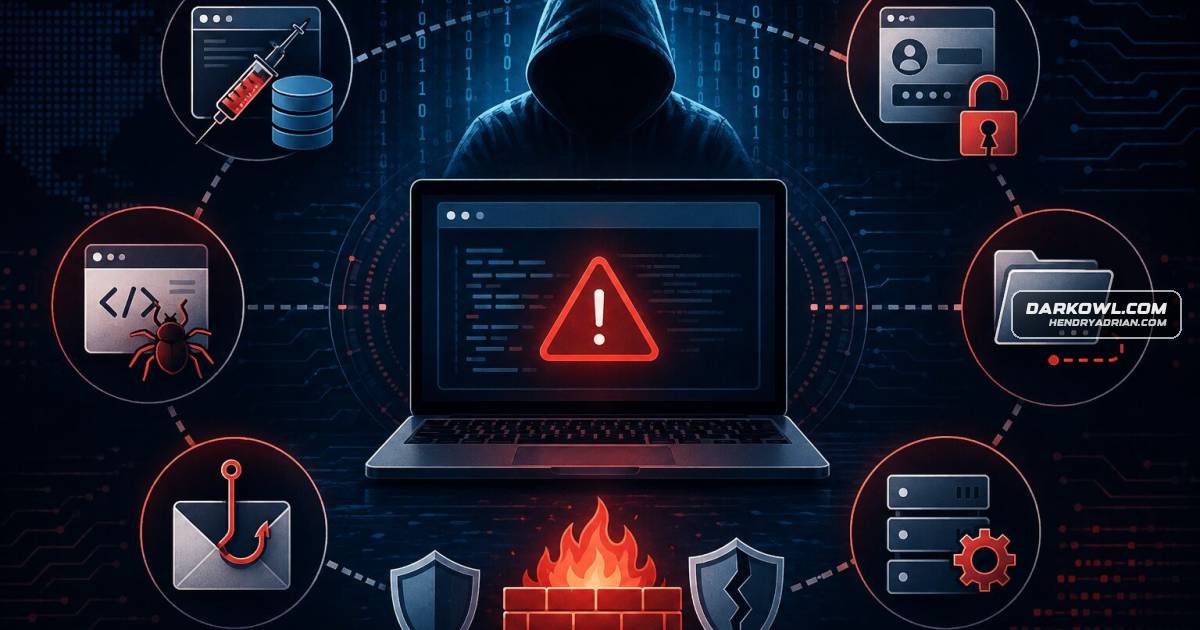
An explainer covers SQL injection, XSS, broken access control and authentication, and CSRF, with examples of major incidents and guidance on reducing risk through secure development, testing, patching, and strong authentication.
Key points
- SQL injection exploits unsanitized input to query, modify, or delete database data; parameterized queries help prevent it.
- Cross-site scripting injects scripts into pages viewed by users, potentially enabling session or credential theft; output encoding and CSP can reduce risk.
- Broken access control and authentication can enable unauthorized data access or account impersonation. The article recommends strong password policies, MFA, and secure session management.
- CSRF tricks an authenticated user's browser into making an unwanted request; applications should verify request origins.
- The article describes a typical attack lifecycle: reconnaissance, vulnerability identification, exploitation, and post-exploitation activity.
- Examples include the 2017 Equifax breach, the 2023 MOVEit campaign, and a reported 2024 XSS vulnerability in on-premises Microsoft Dynamics 365.
- Recommended safeguards include input validation, regular patching, security testing, and following OWASP guidance.
Article Details
- Topic
- An introductory overview of common web application attacks, their potential impacts, historical examples, and defensive measures.
Threat Actors
Vendors
Products
Apache StrutsOne of the most well-known examples of a web application attack occurred in 2017, when attackers exploited a vulnerability in the Apache Struts web application framework used by Equifax.Microsoft Dynamics 365In 2024, researchers identified a serious cross-site scripting (XSS) vulnerability in on-premises deployments of Microsoft Dynamics 365.MOVEit TransferIn 2023, attackers exploited a SQL injection vulnerability in the MOVEit Transfer managed file transfer platform, allowing unauthorized access to sensitive data stored by thousands of organizations worldwide.
Industries
GovernmentThe vulnerability was leveraged by the Clop ransomware group to extract data from government agencies, healthcare providers, universities, and financial institutions.HealthcareThe vulnerability was leveraged by the Clop ransomware group to extract data from government agencies, healthcare providers, universities, and financial institutions.