
Hunt Introduces Tag Cloud for Visualizing Threat Intelligence
Summary
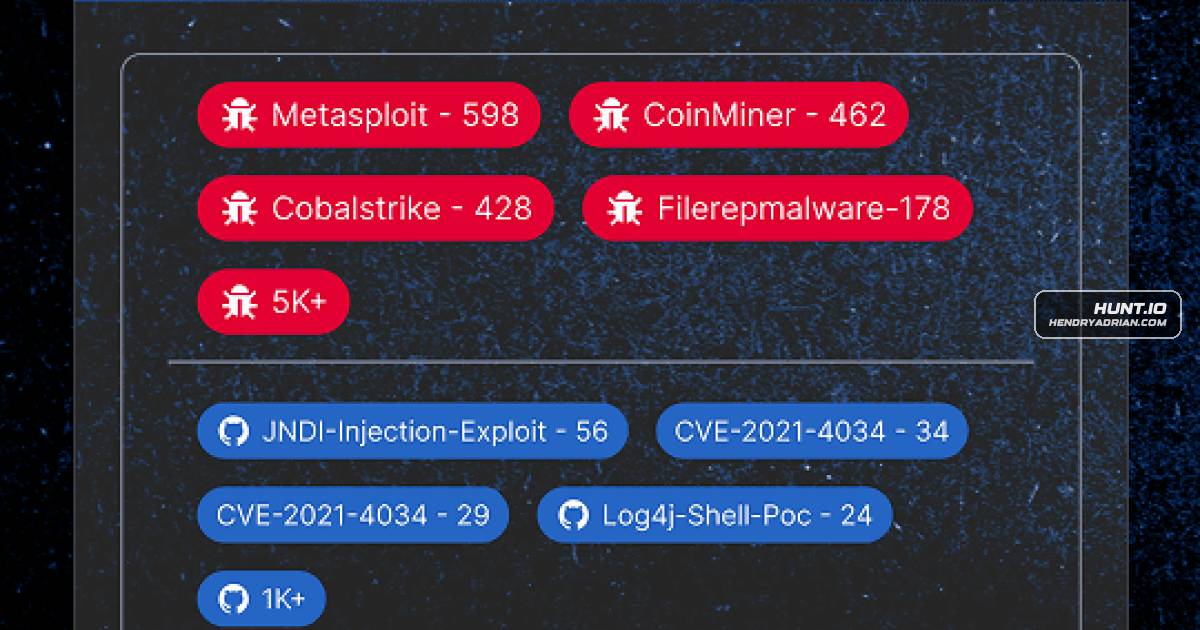
Hunt introduced Tag Cloud, a feature that labels and visualizes threat-intelligence artifacts and activity to help security professionals identify patterns, assess exposed directories, and support threat hunting.
Key points
- Tag Cloud groups artifacts such as exploit code, scanners, phishing kits, penetration-testing platforms, and fuzzing templates using aggregate counts from malicious open directories.
- Tags can represent threat actors, malware families, regions, targeted industries, and other recurring data attributes.
- The feature includes views for malicious exposed directories, exposed shell history, and malware sandbox results.
- Hunt says the visualizations can help analysts identify patterns, assess potential risks, and support incident response and threat hunting.
Article Details
- Event Type
- Hunt introduced Tag Cloud, a visual threat-intelligence feature for labeling and exploring digital artifacts and relationships in data.
- Impact
- Tag Cloud is presented as helping users identify patterns in threat-intelligence data, assess malicious exposed open directories, and visualize exposed shell-history and malware-sandbox results to support threat hunting and incident response. No specific incident or realized harm is reported.