
South Korea’s Financial Security Institute Confirms Theft of Assessment Files
Summary
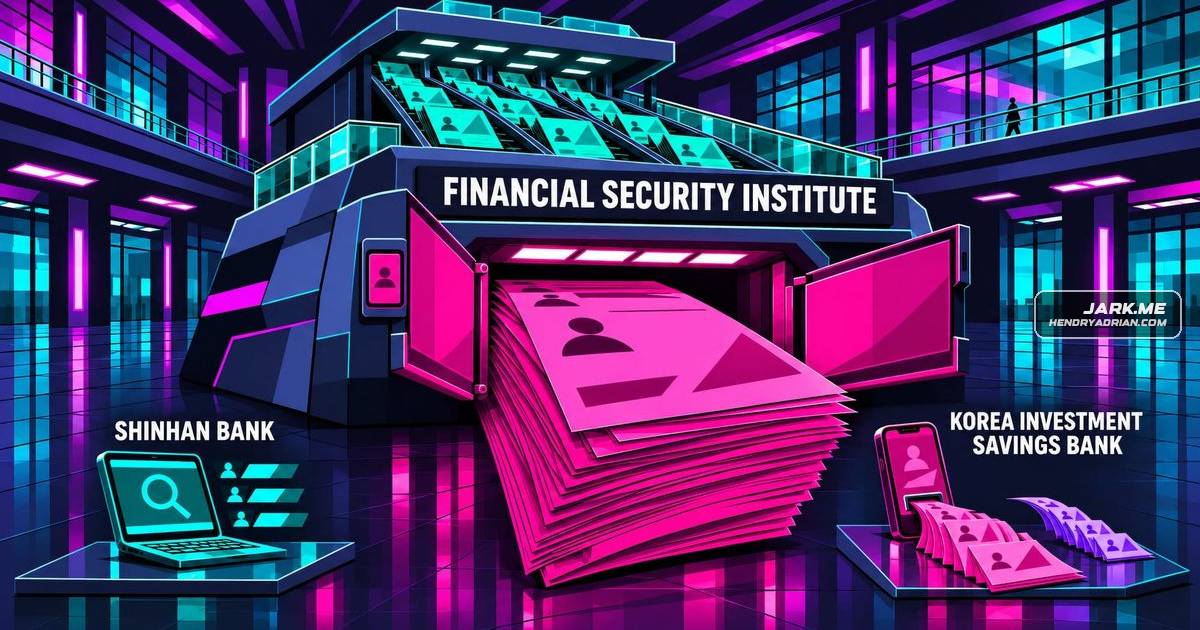
South Korea’s Financial Security Institute confirmed an attacker used registration and authorization flaws in its assessment portal to download about 130 files submitted by 48 financial firms; some files contained customers’ personal data.
Key points
- The institute confirmed files were taken from its assessment portal on November 9, 2026, after an attempted server takeover failed and an unauthorized login was detected.
- Records say a registration flaw let a new account bypass text-message verification, while a separate authorization flaw let it download submissions without assessor privileges.
- Investigators estimated about 130 files from 48 financial firms were downloaded. Some documents contained customer names, dates of birth, customer IDs, and employee information.
- The institute said the portal held assessment submissions, not technical vulnerability assessment results; most affected people were notified directly, with a public notice for those lacking contact details.
- The FSC reported 40 incident reports from 37 financial organizations through November 3, involving about 473,000 exposed records and ₩1 billion in stolen funds; it had not identified individual users’ financial losses as of its November 5 briefing.
- The article distinguishes the portal breach from an earlier ARTEX-linked campaign: the available evidence does not link the portal attacker or other later exposures to that campaign.
- The FSC planned checks of external services at roughly 580 organizations and proposed twice-yearly vulnerability assessments for large organizations; the article also recommends tighter access controls and download logging.
Article Details
- Victim Organization
- Financial Security Institute
- Victim Domain
- Not disclosed
- Incident Type
- Unauthorized access and theft of submitted files from the assessment portal through flaws in registration verification and authorization.
- Incident Date
- 2026-11-09
- Disclosure Date
- 2026-11-10
- Data Types Exposed
- Customer names, dates of birth, and customer IDs in some submitted documents
- Employee information in some forms
- Financial firms’ assessment evidence and administrative forms, including customer-consent examples
- Affected Records
- Investigators estimated that about 130 files submitted by 48 financial firms were downloaded; the number of affected individuals was not disclosed.
- Affected Data Size
- Not disclosed
- Operational Impact
- The institute took the assessment portal offline. It confirmed files had left the portal; the institute said the breach did not reach the submitting firms’ systems.
- Ransom Or Extortion
- Not disclosed for this incident.
- Claim Status
- confirmed
Indicators of compromise
| Type | Indicator | Context |
|---|---|---|
| IPV4 | 101[.]53[.]80[.]20 | Reported as a proxy address in recovered Claude Code sessions during the early ARTEX activity; the article cautions that this historical shared infrastructure requires corroboration. |
| IPV4 | 38[.]244[.]50[.]120 | CrowdStrike identified this as a threat actor-controlled ARTEX host and a source of recovered configuration material during the late September to early October 2026 campaign. |
| URL | hxxp[:]//38[.]244[.]50[.]120:18899/[.]claude/CLAUDE[.]md | Historical location of an ARTEX campaign configuration document; the article recommends correlation with archived telemetry. |
MITRE ATT&CK
T1090 · ProxyCrowdStrike mapped proxy use based on network addresses in recovered session records from the early campaign.T1136 · Create AccountPukyong National University reported creation of an unauthorized administrator account in its tuition collection service.T1190 · Exploit Public-Facing ApplicationShinhan described unauthorized access through a broker lookup function on its public mobile website.T1213 · Data from Information RepositoriesThe portal incident involved unauthorized retrieval of files that financial firms had submitted for assessment.T1583.003 · Virtual Private ServerCrowdStrike mapped acquired virtual private server infrastructure supporting the reported early South Korean financial campaign.T1588.007 · Artificial IntelligenceCrowdStrike mapped acquisition and use of ARTEX as an artificial intelligence capability in the early campaign.
People
Threat Actors
Crystal TyphoonMicrosoft reportedly documented separate ARTEX use by Crystal Typhoon; the article states that this activity is not attributed to the incidents described here. The source lists Storm-1849 and UAT4356 as aliases.Salt TyphoonMicrosoft reportedly documented separate ARTEX use by OPERATOR PANDA; the article states that this activity is not attributed to the incidents described here. The source identifies OPERATOR PANDA as an alias of Salt Typhoon.Storm-0940Microsoft reportedly attributed separate ARTEX activity targeting ConnectWise Cloud Backup customer environments to Storm-0940; the article states this activity is not attributed to the incidents described here.UAT4356The source lists Storm-1849 as an alias of Crystal Typhoon, which Microsoft reportedly documented using ARTEX in separate activity not attributed to the incidents described here.
Products
Campus eMoaA threat actor creates an unauthorized administrator account and accesses student and employee records in Campus eMoa, the tuition service Sh Suhyup Bank supplies.M ShinhanOn October 1, Shinhan Bank disclosed a breach limited to the loan broker lookup service on M Shinhan, its mobile website. Brokers used the service to check the progress of applications they had submitted. Shinhan
Tools
Countries
Chinamotivated, citing Chinese-language prompts and use of ARTEX, a tool its researchers say was developed in China. In another investigation covered in earlier analysis of ARTEX, Microsoft documented use of the tool bySouth KoreaThe logs at South Korea’s Financial Security Institute showed an attempt to take control of the server running its assessment portal. The attempt failed. Then the team reviewing the logs picked up an unauthorized login