
Security roundup: outages, malicious packages, Java4Shell and AI-agent security
Summary
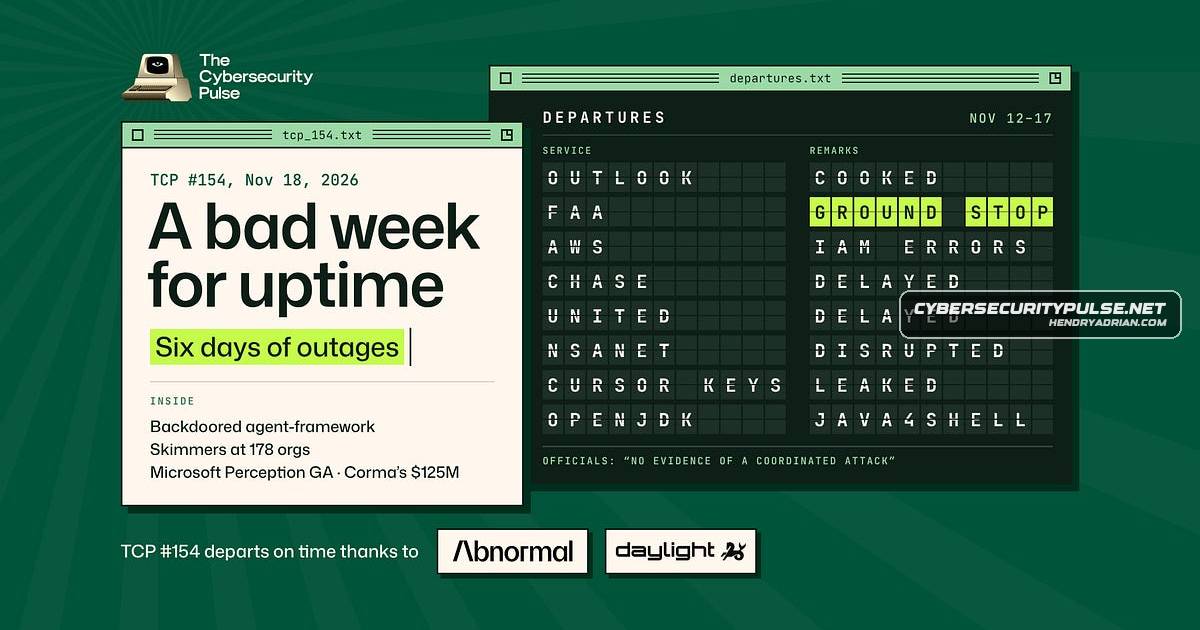
This roundup covers major service outages, malicious Optimizely scripts and Microsoft PyPI releases, Java4Shell affecting Jenkins and Jira, and security developments involving AI agents, credentials, and enterprise tools.
Key points
- U.S. officials found no evidence that the reported outages—including Outlook disruptions and the FAA ground stop—were part of a coordinated attack.
- A signup flaw in Optimizely Web Experimentation let an attacker alter scripts served by sites at 178 organizations; Report URI traced about $7,040 in cryptocurrency to the attacker’s wallets.
- Cursor said an attacker used a key issued to Fireworks AI to access coding-agent traces and replace two cached Claude Code extension versions; up to 5,000 users may have received a tampered copy.
- Two Microsoft agent-framework releases on PyPI ran a credential stealer at Python startup; the second release also requested GitHub Actions identity tokens. Aikido reported both releases were removed within about 45 minutes.
- Calif demonstrated pre-authentication RCE dubbed Java4Shell (CVE-2026-114938) on certain x86-64 systems; Oracle issued fixes, and Red Hat published a temporary workaround.
- A GitHub Actions stealer caused at least 1,835 repositories to run the wfx-loot payload and leak credentials; the article says resulting AWS and Microsoft Entra changes could persist after credential rotation.
Article Details
- Event Type
- Security and service-disruption news roundup covering malicious script injection, software supply-chain attacks, credential theft, a reported remote-code-execution vulnerability, and outages.
- Impact
- Malicious Optimizely scripts affected sites at 178 organizations, swapped cryptocurrency wallet addresses, and could skim card details entered directly on a page; Report URI traced about $7,040 to attacker wallets, while Cynet verified script delivery but could not confirm a device infection. Malicious Microsoft agent-framework releases targeted Azure and Azure DevOps credentials and, in the second release, GitHub Actions identity tokens. A tampered Claude Code extension may have reached up to 5,000 Cursor users, according to Cursor. Calif demonstrated pre-authentication RCE through Java4Shell in Jenkins and Jira on certain x86-64 systems; as of November 18, Sophos knew of no public reports of exploitation in the wild. The article also reports credential theft from at least 1,835 repositories and service outages, while noting that U.S. officials found no evidence of a coordinated attack.
MITRE ATT&CK
CVE
People
CalifDemonstrated pre-authentication RCE through Java4Shell in Jenkins and Jira on certain x86-64 systems.Jason HaddixLed the Arcanum team that built SpikeStrip to test whether AI agents would follow decoy leads in website source code.Scott HelmeReport URI’s Scott Helme found tampered Optimizely scripts served on sites at 178 organizations.
Malware
Vendors
ConnectWiseConnectWise says version 26.6.5 or later of the technician client blocks that route. It shipped the client fix in September.Cursor🗝️ Fireworks to Cursor: Secrets in agent traces led to a malicious Claude Code extension.Fireworks AICursor says an attacker used a key it had issued to Fireworks AI to copy stored coding-agent traces. Most dated to 2025, and all came from sessions outside Privacy Mode. The attacker used credentials in those traces toMicrosoft📦 Backdoored Microsoft package: Two PyPI releases targeted Azure and CI tokens.N-ableN-able removes the Legacy API used in N-central attacksOptimizely💳 Hijacked Optimizely scripts: 178 organizations’ sites served skimmers and iOS exploits.
Products
Atlassian Jira☕ Java4Shell in OpenJDK: Calif demonstrated RCE in Jenkins and Jira on certain x86 servers.Claude Code🗝️ Fireworks to Cursor: Secrets in agent traces led to a malicious Claude Code extension.Cursor🗝️ Fireworks to Cursor: Secrets in agent traces led to a malicious Claude Code extension.GitHub Actionsthe package. It targeted Azure and Azure DevOps credentials. The second release also requested GitHub Actions identity tokens.Jenkins☕ Java4Shell in OpenJDK: Calif demonstrated RCE in Jenkins and Jira on certain x86 servers.N-centralN-able removes the Legacy API used in N-central attacksOpenJDK☕ Java4Shell in OpenJDK: Calif demonstrated RCE in Jenkins and Jira on certain x86 servers.Optimizely Web ExperimentationA signup flaw in Optimizely Web Experimentation let an attacker impersonate customer admins and change the A/B testing scripts their sites served. Report URI’s Scott Helme found 188 tampered scripts across 178ScreenConnectHuntress saw attackers abuse the RMM+ extension for ScreenConnect to install rogue remote-access clients on 288 endpoints across 48 organizations. Two days later, it saw another 205 hosts hit. SCKit can also spread back
Tools
Countries
FranceLogs on the server pointed to French media, entertainment, and education sites.United StatesIs it all connected? or is it all a coincidence? If it were all connected to an attack of sorts would US officials tell us? What if it were autonomous remediation and the patch race that is bringing services