
DOJ Authorization for $1.2 Billion in Binance Theft Proceeds Raises Recovery Questions
Summary
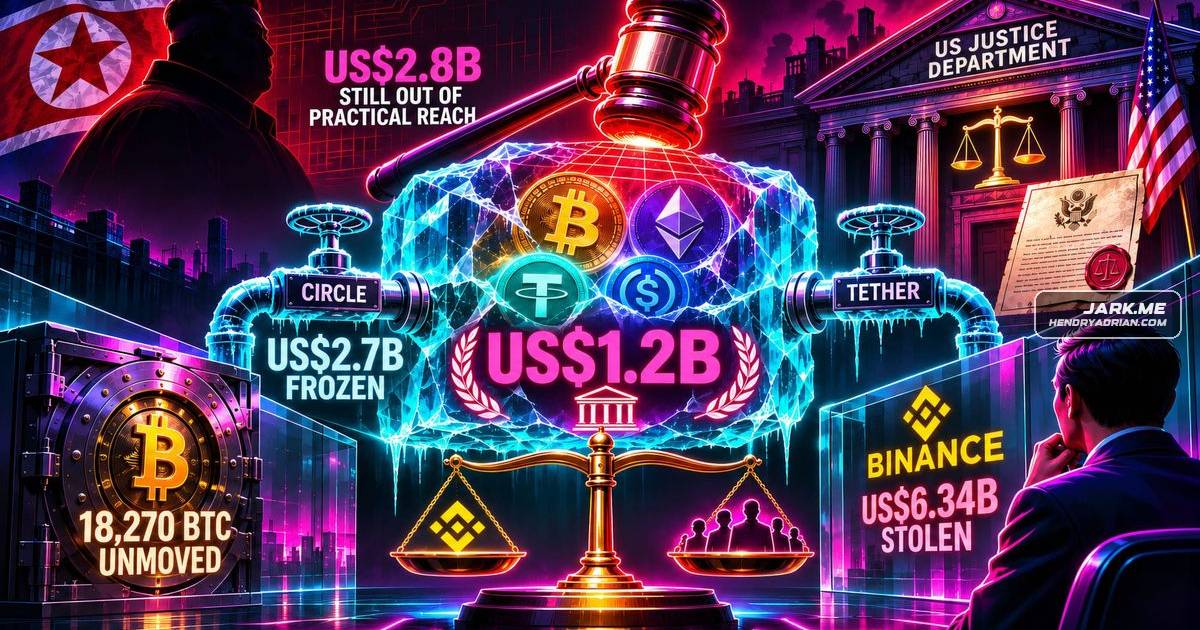
The DOJ says a court authorization covers more than $1.2 billion of over $2.7 billion frozen after the Binance theft, but has not disclosed the courts, assets or legal process. Binance has repaid customers; recovery and ownership remain unresolved.
Key points
- The DOJ says court authorization covers more than $1.2 billion of over $2.7 billion frozen after the theft, but has not disclosed the courts, specific assets or how much was seized rather than restrained.
- The article distinguishes seizure, which puts assets under government control, from restraint, which immobilizes them during forfeiture proceedings; it notes no published forfeiture filing identifies the assets.
- Tether’s chief executive reportedly put its USDT freeze at nearly $1.57 billion; Circle reported about $1.1 billion in frozen USDC. The article says the issuers’ actions account for close to the DOJ’s stated frozen total.
- Binance says it replaced approximately $6.34 billion in affected customer assets. Whether it can recover frozen funds, including through remission, remains unresolved.
- The article assesses that proceeds could potentially go to the USVSST Fund if the undisclosed forfeiture theory meets statutory requirements, but treats that outcome as low confidence.
- The annex describes a reported intrusion involving compromised engineers, a malicious Homebrew installer clone, a trojanized pyenv component and access to Binance’s wallet-signing service; the FBI and DOJ attribute the theft to TraderTraitor.
Article Details
- Event Type
- U.S. court authorization to seize or restrain cryptocurrency assets linked to the North Korea-attributed Binance theft, opening a legal contest over recovery and forfeiture.
- Impact
- More than US$1.2 billion of assets is reported to be under court authority, out of more than US$2.7 billion frozen through government and private-sector action. The authorization does not clarify which assets were seized versus restrained. Binance has replaced approximately US$6.34 billion in affected customer assets, but its recovery of the frozen funds is uncertain. Elliptic assesses that roughly US$2.8 billion remains in addresses linked to the theft and is very likely still controlled by North Korea.
MITRE ATT&CK
T1027 · Obfuscated Files or InformationBinance reported that the malicious pyenv replacement used sophisticated obfuscation to evade device security controls.T1059.004 · Unix ShellThe malicious setup created a symbolic link and spawned zsh on Engineer B's Mac.T1070.004 · File DeletionBinance reported that the malware erased traces of the intrusion, including file deletion during replacement of the pyenv component.T1078 · Valid AccountsThe threat actor reportedly logged in to Engineer C's computer and used credentials stolen from Engineer A to deploy the attack container.T1204.002 · Malicious FileEngineer B downloaded and ran setup for a malicious code repository presented as a technical test.T1552 · Unsecured CredentialsProvisional mapping: the threat actor found a container deployment token on Engineer A's computer; the article does not explain where it was stored or how it was obtained.T1554 · Compromise Host Software BinaryThe malicious setup deleted the legitimate pyenv component and replaced it with a malicious file at that component's path.T1566.003 · Spearphishing via ServiceThe threat actor used a fake project director on a legitimate job platform to contact Engineer B, followed by staged interviews and a malicious technical test.T1591.004 · Identify RolesProvisional mapping: information exposed by the June compromise reportedly revealed Engineer A's Wallets DevOps role and colleagues associated with wallet infrastructure.T1608.006 · SEO PoisoningProvisional mapping: Engineer A found a modified Homebrew installer through a search engine; the article says it is not established whether SEO poisoning or another mechanism delivered it.T1610 · Deploy ContainerThe threat actor used a deployment token found on Engineer A's computer to deploy a container and run a script that reached Binance's wallet signing service.T1657 · Financial TheftThe threat actor used Binance's signing service and on-chain authorizations to steal approximately US$6.34 billion from hot wallets across multiple blockchains.
People
Andrew Tysen DuvaAssistant Attorney General who credited the Criminal Division with moving to halt about half of the breach; the article notes that stablecoin issuers' freeze controls enabled the intervention.Charles GersteinCounsel whose clients hold roughly US$877 million in unpaid terrorism judgments against North Korea; the article discusses their potential claims relating to frozen assets.Kim Yo JongPublicly condemned the FBI's attribution related to the separate FaceStealer matter, calling it “absurd rhetoric” and a political provocation, according to the article.Paolo ArdoinoTether Chief Executive who reportedly said Tether had frozen nearly US$1.57 billion in USDT.
Threat Actors
BlueNoroffListed in the source as another name for STARDUST CHOLLIMA, which the FBI and DOJ associate with the separate FaceStealer campaign.Jade SleetThe FBI and DOJ attributed the October 29 Binance theft to PRESSURE CHOLLIMA, described as members of the North Korean military. The source identifies TraderTraitor as another name for this adversary.Sapphire SleetListed in the source as another name for STARDUST CHOLLIMA, which the FBI and DOJ associate with the separate FaceStealer campaign.STARDUST CHOLLIMAAssociated by the FBI and DOJ with FaceStealer, a separate campaign not observed in the Binance intrusion. The source lists BlueNoroff and Sapphire Sleet as other names for STARDUST CHOLLIMA.
Malware
Vendors
Binanceof why North Korea is sitting on US$3 billion nobody can freeze. More than US$1.2 billion stolen from Binance is now trapped under US court authority. North Korea cannot move it. Binance cannot yet reclaim it. TheCirclePaolo Ardoino put its freeze at nearly US$1.57 billion in USDT, Finance Magnates reported on October 30. Circle initially reported more than US$800 million in USDC. Circle’s November 5 account raises its figure toTetherThe authorization may formalize freezes stablecoin issuers already made. Tether Chief Executive Paolo Ardoino put its freeze at nearly US$1.57 billion in USDT, Finance Magnates reported on October 30. Circle initially
Products
USDCin USDT, Finance Magnates reported on October 30. Circle initially reported more than US$800 million in USDC. Circle’s November 5 account raises its figure to approximately US$1.1 billion. Together the two issuersUSDTissuers already made. Tether Chief Executive Paolo Ardoino put its freeze at nearly US$1.57 billion in USDT, Finance Magnates reported on October 30. Circle initially reported more than US$800 million in USDC.
Countries
ChinaThe remaining recovery problem may eventually run through China. Elliptic says funds already moving may have reached Chinese money laundering networks. It expects eventual cash-out through over-the-counter (OTC)North KoreaThis updates my assessment of why North Korea is sitting on US$3 billion nobody can freeze. More than US$1.2 billion stolen from Binance is now trapped under US court authority. North Korea cannot move it. BinanceUnited Statesraises its figure to approximately US$1.1 billion. Together the two issuers account for close to the US$2.7 billion the department describes as frozen.