
Amazon Tracks AI-Agent Campaign Targeting Exposed AI Apps for API Keys
Summary
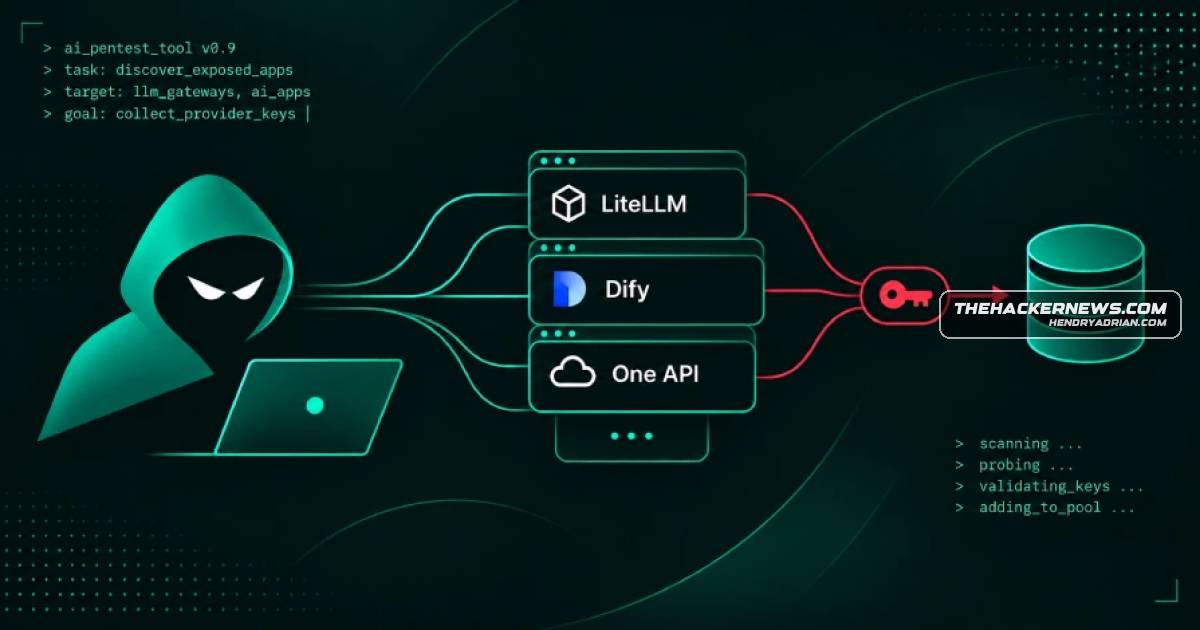
Amazon says decoy-server records show AI agents targeting exposed AI apps to steal provider keys, while Cloudflare reported separate ARTEX-related token abuse. Amazon could not verify agent-reported outcomes and notified potentially affected AWS customers.
Key points
- Amazon's MadPot decoys captured records describing agents targeting hundreds of systems, including AI gateways and app builders; Amazon could not verify the outcomes the agents reported.
- The records describe agents seeking provider keys through exposed apps, verifying the keys and adding them to a shared pool.
- The playbook lists default credentials, unauthenticated endpoints, an authentication bypass in One API family systems, SSRF, and secrets exposed in code or files.
- Amazon assessed with moderate confidence that the agents ran on ARTEX and that separate China-linked groups operated them, citing prompts and time-zone settings.
- Cloudflare reported ARTEX-related activity involving a compromised account-level API token, likely obtained through a third-party cloud provider. The token was followed by 400 database dump requests in an hour; whether any data was returned is unknown.
- Cloudflare said multiple investigations involved static, broad-access CI/CD tokens; persistence attempts in the reported ARTEX case were not confirmed as successful.
- The FBI said attackers have used ARTEX since at least August. Amazon recommended treating AI apps and inference endpoints as production systems and monitoring for exposed-secret misuse.
Article Details
- Event Type
- AI-agent-assisted cyber campaigns targeting exposed AI applications and cloud environments
- Impact
- Amazon's decoy records describe agents seeking and collecting AI-provider keys from exposed applications, then using the keys to search for more. Amazon said it could not verify the outcomes reported in the records. In a separate Cloudflare investigation, a compromised account-level API token was followed by 400 database dump requests in an hour; Cloudflare did not say whether any data was returned. The records also describe attempted deepfake identity-check bypasses at cryptocurrency exchanges, but whether fabricated ID photos passed checks was not disclosed.
MITRE ATT&CK
T1078 · Valid AccountsA compromised account-level API token was used to access a customer's Cloudflare account; the article does not disclose how the token was first stolen.T1190 · Exploit Public-Facing ApplicationThe agents targeted internet-exposed AI applications, including through known flaws and an authentication bypass.T1552.001 · Credentials In FilesThe records describe searching for exposed credentials and secrets in source code, client-side JavaScript, source maps, environment files, and other public files.T1552.005 · Cloud Instance Metadata APIThe playbook describes using SSRF through URL-fetch features to reach cloud metadata services.
Vendors
AmazonThe records, which Amazon's threat intelligence team captured with decoy servers, describe stolen keys being used to run the AI models that powered the search for more keys.CloudflareIn a separate case reported this week, Cloudflare's incident responders saw ARTEX gain access to a compromised API token that had been used for CI/CD. The token had no IP restrictions or rate limiting, and the activityMicrosoftMicrosoft reported last week that attackers were using agentic AI tools such as ARTEX for GitHub secret hunting, looking for exposed credentials that included API keys for AI inference.
Products
DifyAttackers' AI agents have been hunting for weak spots in internet-exposed AI apps such as LiteLLM, One API, and Dify to steal the AI provider keys stored inside, according to the agents' own records.FastGPTTargets named in the records include LLM gateways and proxies such as One API, New API, Veloera, Sub2API and LiteLLM, and AI app builders such as Dify, FastGPT, Langflow, RAGFlow, Open WebUI, LobeChat and Ollama.LangflowLiteLLM's default master key, unfinished installs that an outsider could take over, and known flaws in Langflow and RAGFlow.LiteLLMAttackers' AI agents have been hunting for weak spots in internet-exposed AI apps such as LiteLLM, One API, and Dify to steal the AI provider keys stored inside, according to the agents' own records.LobeChatTargets named in the records include LLM gateways and proxies such as One API, New API, Veloera, Sub2API and LiteLLM, and AI app builders such as Dify, FastGPT, Langflow, RAGFlow, Open WebUI, LobeChat and Ollama.New APITargets named in the records include LLM gateways and proxies such as One API, New API, Veloera, Sub2API and LiteLLM, and AI app builders such as Dify, FastGPT, Langflow, RAGFlow, Open WebUI, LobeChat and Ollama.OllamaTargets named in the records include LLM gateways and proxies such as One API, New API, Veloera, Sub2API and LiteLLM, and AI app builders such as Dify, FastGPT, Langflow, RAGFlow, Open WebUI, LobeChat and Ollama.One APIAttackers' AI agents have been hunting for weak spots in internet-exposed AI apps such as LiteLLM, One API, and Dify to steal the AI provider keys stored inside, according to the agents' own records.Open WebUITargets named in the records include LLM gateways and proxies such as One API, New API, Veloera, Sub2API and LiteLLM, and AI app builders such as Dify, FastGPT, Langflow, RAGFlow, Open WebUI, LobeChat and Ollama.RAGFlowmaster key, unfinished installs that an outsider could take over, and known flaws in Langflow and RAGFlow.Sub2APITargets named in the records include LLM gateways and proxies such as One API, New API, Veloera, Sub2API and LiteLLM, and AI app builders such as Dify, FastGPT, Langflow, RAGFlow, Open WebUI, LobeChat and Ollama.VeloeraTargets named in the records include LLM gateways and proxies such as One API, New API, Veloera, Sub2API and LiteLLM, and AI app builders such as Dify, FastGPT, Langflow, RAGFlow, Open WebUI, LobeChat and Ollama.
Tools
Countries
ChinaThe team assessed, with moderate confidence, that the operators were separate China-linked groups, citing Simplified Chinese prompts and China time zone settings, among other evidence.South KoreaThe alert's examples include an earlier campaign against South Korean financial institutions that stole personal information on about 67,000 people, and the ConnectWise compromise.