
Researchers Detail Operation CloudFire Google Session-Hijacking Campaign
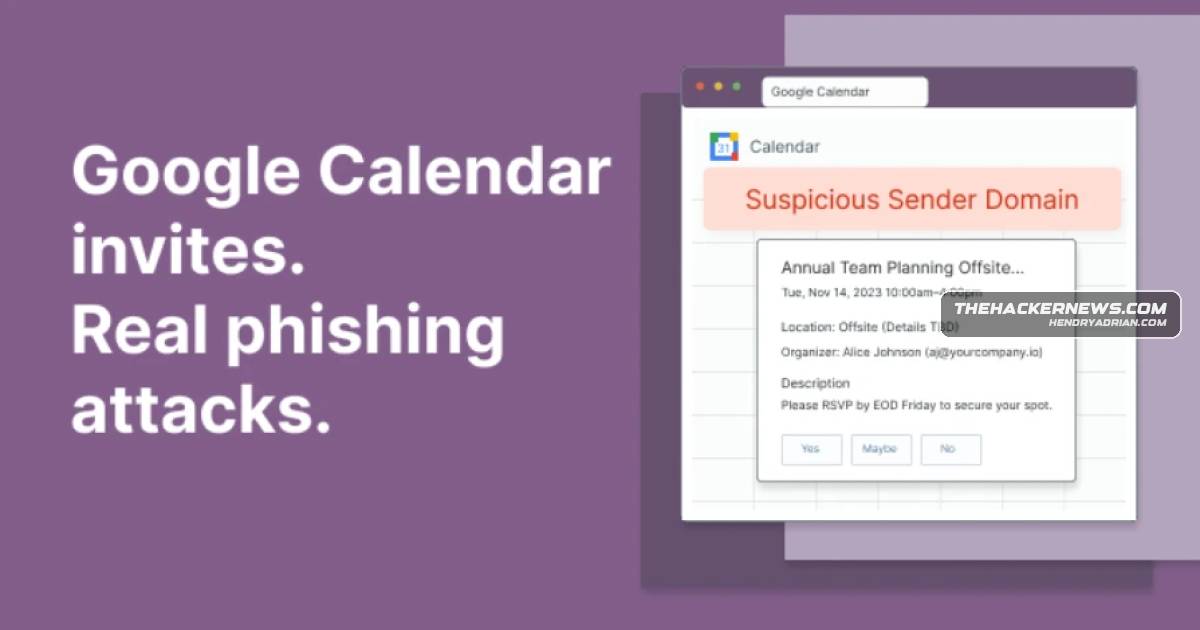
Summary
Material Security researchers describe Operation CloudFire, a phishing campaign using calendar invites, trusted redirects and a live reverse proxy to capture Google sessions and MFA responses. They report the activity appears to have scattered.
Key points
- Since mid-August 2026, the campaign used Google Calendar invites and other familiar-looking lures to target corporate users.
- Attackers routed victims through trusted redirects to a live reverse proxy that relayed passwords and second-factor approvals to Google in real time.
- Cloudflare Turnstile challenges and browser-built phishing pages made the credential-capture sites difficult for reputation checks and crawlers to identify.
- Material Security says its detections caught more than 99% of malicious messages, with a 0.01% reclassification rate.
- Researchers reported gateway and backend URLs to Cloudflare; Cloudflare confirmed the phishing pages and displayed warnings for reported destinations.
- A hijacked session could provide access to Google Workspace mail and Drive and allow OAuth grants in the victim’s name.
- Researchers say the lures have shifted to Google Drive sharing invites and activity has scattered; an unfinished Microsoft 365 branch was also found.
Article Details
- Attack Vectors
- Phishing messages delivered as Google Calendar invites used routine pretexts and links routed through trusted Google URLs; some variants used Google Drive sharing links or Intuit transaction notification links.
- A live reverse proxy presented the genuine Google sign-in page, captured passwords and relayed SMS codes, authenticator codes, Tap-Yes approvals, or phone-based account recovery in real time.
- Attackers used compromised accounts to send invites to saved contacts and other recipients.
- After recipients cleared a Cloudflare Turnstile challenge, JavaScript built the credential-capture page in the browser.
- Defensive Notes
- Assess message intent, where links ultimately lead, technical indicators, and the sender-recipient relationship together rather than relying on any single reputation or link signal.
- Treat calendar invites as a threat surface and use the account's history alongside technical signals when analyzing them.
- Review Google Workspace audit logs and be prepared to revoke sessions, contain OAuth grants, and reset affected accounts promptly.
- The researchers reported gateway and backend URLs through Cloudflare's abuse reporting system; Cloudflare confirmed the phishing pages and placed warnings in front of reported destinations.
MITRE ATT&CK
T1056.003 · Web Portal CaptureA reverse proxy presented the genuine Google sign-in page and captured victims' credentials.T1078.004 · Cloud AccountsThe operator controlled compromised accounts and used them to send invites to saved contacts and other recipients.T1111 · Multi-Factor Authentication InterceptionThe proxy relayed SMS codes, authenticator codes, Tap-Yes approvals, and phone-based account recovery to Google in real time.T1539 · Steal Web Session CookieThe operation stole live Google sessions through its reverse-proxy sign-in flow.T1566.002 · Spearphishing LinkThe operation delivered phishing links in Google Calendar invites and, in later waves, Google Drive sharing invites.
Vendors
CloudflareThe first is Google’s redirector, which gives the initial hop a trusted Google URL. The second is a Cloudflare Turnstile challenge, and in some builds it’s the real widget served from Cloudflare’s ownGoogleSince mid-August 2026, a phishing operation has been stealing live Google sessions from corporate users. Every check defenders normally lean on to judge a link came back clean, and the operator designed it that way on
Products
Cloudflare Turnstilefirst is Google’s redirector, which gives the initial hop a trusted Google URL. The second is a Cloudflare Turnstile challenge, and in some builds it’s the real widget served from Cloudflare’s own infrastructure.Google CalendarThe lure: Google Calendar invitesGoogle DriveThe phishing themes have moved from calendar invites to Google Drive file and document share invites. Researchers haven’t seen a matching jump in other lures or tactics, and activity from this group seems to haveGoogle WorkspaceA hijacked session leaves its trail in Google Workspace audit logs. A live session reaches mail, Drive, and the ability to grant OAuth access in the victim’s name, so the blast radius goes well past the inbox.Microsoft 365 Apps for Enterpriseis cheap, and the framework has been public since February. The operator also shipped an unfinished Microsoft 365 branch alongside the live Google code. It includes a stylesheet path, a second harness, and a title