Cisco Details ArcaneDoor Espionage Campaign Targeting Perimeter Devices
Summary
Cisco Talos details ArcaneDoor, a state-sponsored espionage campaign targeting network perimeter devices, including Cisco ASA appliances. Attackers used Line Dancer and Line Runner backdoors; Cisco advises patching affected devices and provides detection guidance.
Key points
- Talos attributes the activity with high confidence to a state-sponsored actor tracked as UAT4356 and Microsoft-tracked as STORM-1849; identified victims included government networks globally.
- The campaign used two backdoors: memory-resident Line Dancer for command execution and data collection, and persistent Line Runner, which survived reboots and upgrades.
- Observed actions included modifying configurations, capturing and exfiltrating network traffic, disabling logs, bypassing AAA authentication, and interfering with crash dumps to hinder forensics.
- Cisco identified CVE-2024-20353 and CVE-2024-20359 as abused in the campaign and released patches; the initial access vector remains unknown.
- Talos recommends upgrading to fixed software, checking devices for indicators such as unexpected ZIP files and anomalous executable memory regions, and using its published Snort signatures and IOC list.
Article Details
- Attack Vectors
- The initial access vector is unknown; Cisco reported no evidence of pre-authentication exploitation to date.
- UAT4356 abused CVE-2024-20359 to install Line Runner through the ASA's legacy VPN client/plugin preloading functionality, and in at least one case abused CVE-2024-20353 to reboot the device and trigger installation.
- On compromised Cisco ASA devices, Line Dancer intercepted shellcode submitted via the host-scan-reply field, allowing unauthenticated POST requests to interact with the implant without using traditional management interfaces.
- Line Runner maintained persistence through a modified HTTP-based Lua backdoor that survived reboots and upgrades.
- Defensive Notes
- Upgrade affected devices to fixed software and follow Cisco's security advisories.
- Keep perimeter devices patched, use up-to-date hardware, software and configurations, centralize logging, and configure strong multi-factor authentication.
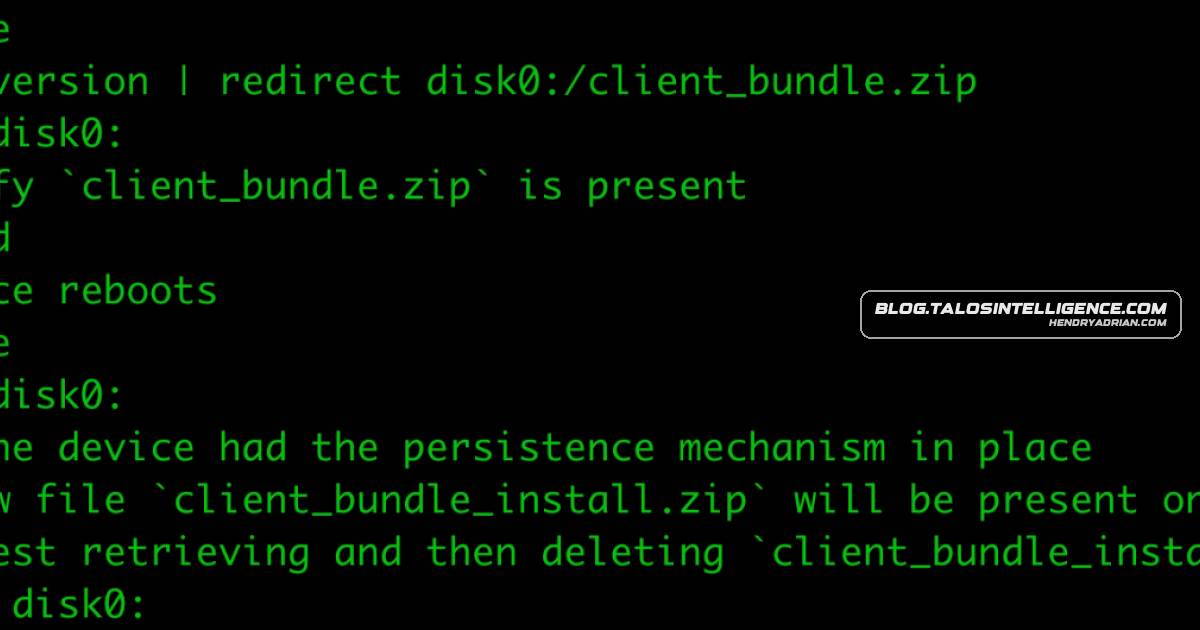
- Review disk0: for newly appearing or unusual ZIP files, including client_bundle_install.zip, and use the article's Line Runner detection and removal procedures.
- Investigate unexpected gaps in logging, device reboots, and ASA memory-region output showing more than one executable region, especially a region exactly 0x1000 bytes.
- Do not collect a core dump or reboot a suspected compromised device when the lina memory-region output indicates compromise; follow Cisco ASA forensic procedures through collection of the memory text section.
- Use Snort signatures 63139, 62949, and 45575 to detect related activity; TLS decryption is required for these signatures to be effective.
Indicators of compromise
| Type | Indicator | Context |
|---|---|---|
| IPV4 | 103[.]114[.]200[.]230 | Listed as likely actor-controlled infrastructure used by UAT4356. |
| IPV4 | 103[.]119[.]3[.]230 | Listed as multi-tenant infrastructure associated with the operation; the article does not say it was directly controlled by the actor. |
| IPV4 | 103[.]125[.]218[.]198 | Listed as multi-tenant infrastructure associated with the operation; the article does not say it was directly controlled by the actor. |
| IPV4 | 103[.]20[.]222[.]218 | Listed as multi-tenant infrastructure associated with the operation; the article does not say it was directly controlled by the actor. |
| IPV4 | 103[.]27[.]132[.]69 | Listed as multi-tenant infrastructure associated with the operation; the article does not say it was directly controlled by the actor. |
| IPV4 | 103[.]51[.]140[.]101 | Listed as multi-tenant infrastructure associated with the operation; the article does not say it was directly controlled by the actor. |
| IPV4 | 104[.]156[.]232[.]22 | Listed as multi-tenant infrastructure associated with the operation; the article does not say it was directly controlled by the actor. |
| IPV4 | 107[.]148[.]19[.]88 | Listed as multi-tenant infrastructure associated with the operation; the article does not say it was directly controlled by the actor. |
| IPV4 | 107[.]172[.]16[.]208 | Listed as multi-tenant infrastructure associated with the operation; the article does not say it was directly controlled by the actor. |
| IPV4 | 107[.]173[.]140[.]111 | Listed as multi-tenant infrastructure associated with the operation; the article does not say it was directly controlled by the actor. |
| IPV4 | 121[.]227[.]168[.]69 | Listed as likely actor-controlled infrastructure used by UAT4356. |
| IPV4 | 121[.]37[.]174[.]139 | Listed as multi-tenant infrastructure associated with the operation; the article does not say it was directly controlled by the actor. |
| IPV4 | 131[.]196[.]252[.]148 | Listed as likely actor-controlled infrastructure used by UAT4356. |
| IPV4 | 139[.]162[.]135[.]12 | Listed as multi-tenant infrastructure associated with the operation; the article does not say it was directly controlled by the actor. |
| IPV4 | 149[.]28[.]166[.]244 | Listed as multi-tenant infrastructure associated with the operation; the article does not say it was directly controlled by the actor. |
| IPV4 | 152[.]70[.]83[.]47 | Listed as multi-tenant infrastructure associated with the operation; the article does not say it was directly controlled by the actor. |
| IPV4 | 154[.]22[.]235[.]13 | Listed as multi-tenant infrastructure associated with the operation; the article does not say it was directly controlled by the actor. |
| IPV4 | 154[.]22[.]235[.]17 | Listed as multi-tenant infrastructure associated with the operation; the article does not say it was directly controlled by the actor. |
| IPV4 | 154[.]39[.]142[.]47 | Listed as multi-tenant infrastructure associated with the operation; the article does not say it was directly controlled by the actor. |
| IPV4 | 172[.]105[.]90[.]154 | Listed as likely actor-controlled infrastructure used by UAT4356. |
| IPV4 | 172[.]105[.]94[.]93 | Listed as likely actor-controlled infrastructure used by UAT4356. |
| IPV4 | 172[.]233[.]245[.]241 | Listed as multi-tenant infrastructure associated with the operation; the article does not say it was directly controlled by the actor. |
| IPV4 | 176[.]31[.]18[.]153 | Listed as likely actor-controlled infrastructure used by UAT4356. |
| IPV4 | 185[.]123[.]101[.]250 | Listed as multi-tenant infrastructure associated with the operation; the article does not say it was directly controlled by the actor. |
| IPV4 | 185[.]167[.]60[.]85 | Listed as likely actor-controlled infrastructure used by UAT4356. |
| IPV4 | 185[.]227[.]111[.]17 | Listed as likely actor-controlled infrastructure used by UAT4356. |
| IPV4 | 185[.]244[.]210[.]120 | Listed as likely actor-controlled infrastructure used by UAT4356. |
| IPV4 | 185[.]244[.]210[.]65 | Listed as likely actor-controlled infrastructure used by UAT4356. |
| IPV4 | 192[.]210[.]137[.]35 | Listed as multi-tenant infrastructure associated with the operation; the article does not say it was directly controlled by the actor. |
| IPV4 | 192[.]36[.]57[.]181 | Listed as likely actor-controlled infrastructure used by UAT4356. |
| IPV4 | 194[.]32[.]78[.]183 | Listed as multi-tenant infrastructure associated with the operation; the article does not say it was directly controlled by the actor. |
| IPV4 | 194[.]4[.]49[.]6 | Listed as likely actor-controlled infrastructure used by UAT4356. |
| IPV4 | 205[.]234[.]232[.]196 | Listed as multi-tenant infrastructure associated with the operation; the article does not say it was directly controlled by the actor. |
| IPV4 | 207[.]148[.]74[.]250 | Listed as multi-tenant infrastructure associated with the operation; the article does not say it was directly controlled by the actor. |
| IPV4 | 212[.]193[.]2[.]48 | Listed as likely actor-controlled infrastructure used by UAT4356. |
| IPV4 | 213[.]156[.]138[.]68 | Listed as likely actor-controlled infrastructure used by UAT4356. |
| IPV4 | 213[.]156[.]138[.]77 | Listed as likely actor-controlled infrastructure used by UAT4356. |
| IPV4 | 213[.]156[.]138[.]78 | Listed as likely actor-controlled infrastructure used by UAT4356. |
| IPV4 | 216[.]155[.]157[.]136 | Listed as multi-tenant infrastructure associated with the operation; the article does not say it was directly controlled by the actor. |
| IPV4 | 216[.]238[.]66[.]251 | Listed as multi-tenant infrastructure associated with the operation; the article does not say it was directly controlled by the actor. |
| IPV4 | 216[.]238[.]71[.]49 | Listed as multi-tenant infrastructure associated with the operation; the article does not say it was directly controlled by the actor. |
| IPV4 | 216[.]238[.]72[.]201 | Listed as multi-tenant infrastructure associated with the operation; the article does not say it was directly controlled by the actor. |
| IPV4 | 216[.]238[.]74[.]95 | Listed as multi-tenant infrastructure associated with the operation; the article does not say it was directly controlled by the actor. |
| IPV4 | 216[.]238[.]75[.]155 | Listed as likely actor-controlled infrastructure used by UAT4356. |
| IPV4 | 216[.]238[.]81[.]149 | Listed as multi-tenant infrastructure associated with the operation; the article does not say it was directly controlled by the actor. |
| IPV4 | 216[.]238[.]85[.]220 | Listed as multi-tenant infrastructure associated with the operation; the article does not say it was directly controlled by the actor. |
| IPV4 | 216[.]238[.]86[.]24 | Listed as multi-tenant infrastructure associated with the operation; the article does not say it was directly controlled by the actor. |
| IPV4 | 45[.]128[.]134[.]189 | Listed as multi-tenant infrastructure associated with the operation; the article does not say it was directly controlled by the actor. |
| IPV4 | 45[.]63[.]119[.]131 | Listed as multi-tenant infrastructure associated with the operation; the article does not say it was directly controlled by the actor. |
| IPV4 | 45[.]76[.]118[.]87 | Listed as multi-tenant infrastructure associated with the operation; the article does not say it was directly controlled by the actor. |
| IPV4 | 45[.]77[.]52[.]253 | Listed as likely actor-controlled infrastructure used by UAT4356. |
| IPV4 | 45[.]77[.]54[.]14 | Listed as multi-tenant infrastructure associated with the operation; the article does not say it was directly controlled by the actor. |
| IPV4 | 45[.]86[.]163[.]224 | Listed as likely actor-controlled infrastructure used by UAT4356. |
| IPV4 | 45[.]86[.]163[.]244 | Listed as multi-tenant infrastructure associated with the operation; the article does not say it was directly controlled by the actor. |
| IPV4 | 5[.]183[.]95[.]95 | Listed as multi-tenant infrastructure associated with the operation; the article does not say it was directly controlled by the actor. |
| IPV4 | 51[.]15[.]145[.]37 | Listed as likely actor-controlled infrastructure used by UAT4356. |
| IPV4 | 89[.]44[.]198[.]16 | Listed as multi-tenant infrastructure associated with the operation; the article does not say it was directly controlled by the actor. |
| IPV4 | 89[.]44[.]198[.]189 | Listed as likely actor-controlled infrastructure used by UAT4356. |
| IPV4 | 89[.]44[.]198[.]196 | Listed as likely actor-controlled infrastructure used by UAT4356. |
| IPV4 | 96[.]44[.]159[.]46 | Listed as multi-tenant infrastructure associated with the operation; the article does not say it was directly controlled by the actor. |
MITRE ATT&CK
T0874The article maps the hook of processHostScanReply() to this technique.T1037 · Boot or Logon Initialization ScriptsThe article identifies Line Runner's boot-time persistence mechanism with this technique.T1040 · Network SniffingLine Dancer was used to create packet captures on compromised ASA devices.T1041 · Exfiltration Over C2 ChannelThe actor exfiltrated configuration data, packet captures, and staged information through C2.T1055 · Process InjectionThe article reports code injection into AAA and crash-dump processes.T1059 · Command and Scripting InterpreterLine Dancer executed CLI commands supplied in shellcode on compromised ASA devices.T1070.004 · File DeletionThe article reports malware scripts and related files removing themselves or other files after execution.T1071.001 · Web ProtocolsThe implants used HTTP communications, including Line Runner's HTTP-based backdoor.T1102.003 · One-Way CommunicationThe article identifies Line Runner's HTTP C2 as a one-way backdoor.T1140 · Deobfuscate/Decode Files or InformationLine Dancer base64-decodes submitted payloads before copying them into executable memory.T1556 · Modify Authentication ProcessThe actor hooked AAA to enable magic-number authentication and bypass configured AAA mechanisms.T1557 · Adversary-in-the-MiddleLine Runner intercepted HTTP requests to the ASA and used matching parameters to execute supplied payloads.T1562.001 · Disable or Modify ToolsUAT4356 disabled syslog and altered AAA-related behavior on compromised devices.T1653 · Power SettingsCVE-2024-20353 was used to reboot a target ASA, triggering installation of Line Runner.
CVE
CVE-2018-0101by the Line Dancer implant. Note that the use of this field does not indicate the exploitation of CVE-2018-0101 which was NOT used as a component of this campaign. The host-scan-reply field, typically used in laterCVE-2024-20353we have been unable to identify the initial attack vector, we have identified two vulnerabilities (CVE-2024-20353 and CVE-2024-20359), which we detail below. Customers are strongly advised to follow the guidanceCVE-2024-20359to identify the initial attack vector, we have identified two vulnerabilities (CVE-2024-20353 and CVE-2024-20359), which we detail below. Customers are strongly advised to follow the guidance published in theCVE-2025-20333Adaptive Security Appliances (ASA) 5500-X Series and has released three CVE’s related to the event: CVE-2025-20333, CVE-2025-20362 and CVE-2025-20363. The following Snort Rules cover these vulnerabilities: 65340,CVE-2025-20362Appliances (ASA) 5500-X Series and has released three CVE’s related to the event: CVE-2025-20333, CVE-2025-20362 and CVE-2025-20363. The following Snort Rules cover these vulnerabilities: 65340, 46897.CVE-2025-203635500-X Series and has released three CVE’s related to the event: CVE-2025-20333, CVE-2025-20362 and CVE-2025-20363. The following Snort Rules cover these vulnerabilities: 65340, 46897.
Threat Actors
Malware
Line DancerUAT4356 deployed two backdoors as components of this campaign, “Line Runner” and “Line Dancer,” which were used collectively to conduct malicious actions on-target, which included configuration modification,Line RunnerUAT4356 deployed two backdoors as components of this campaign, “Line Runner” and “Line Dancer,” which were used collectively to conduct malicious actions on-target, which included configuration modification,
Vendors
Products
Adaptive Security ApplianceNext-Generation Firewall and Firepower NGFW) appliances such as Threat Defense Virtual, Adaptive Security Appliance and Meraki MX can detect malicious activity associated with this threat. Cisco Adaptive Security Appliances*Update 2025-09-25: Cisco is aware of new activity targeting certain Cisco Adaptive Security Appliances (ASA) 5500-X Series and has released three CVE’s related to the event: CVE-2025-20333, CVE-2025-20362 andCisco Secure FirewallCisco Secure Firewall (formerly Next-Generation Firewall and Firepower NGFW) appliances such as Threat Defense Virtual, Adaptive Security Appliance and Meraki MX can detect malicious activity associated with thisMeraki MXFirewall and Firepower NGFW) appliances such as Threat Defense Virtual, Adaptive Security Appliance and Meraki MX can detect malicious activity associated with this threat. Microsoft Exchangefrom intelligence partners indicate the actor is interested in — and potentially attacking — Microsoft Exchange servers and network devices from other vendors. Regardless of your network equipment provider, nowOpenConnect VPN Servercertificate. The SSL certificate information suggests that the infrastructure is making use of an OpenConnect VPN Server (https://ocserv.openconnect-vpn.net) through which the actor appeared to be conducting actions onSnortthree CVE’s related to the event: CVE-2025-20333, CVE-2025-20362 and CVE-2025-20363. The following Snort Rules cover these vulnerabilities: 65340, 46897.Threat Defense VirtualCisco Secure Firewall (formerly Next-Generation Firewall and Firepower NGFW) appliances such as Threat Defense Virtual, Adaptive Security Appliance and Meraki MX can detect malicious activity associated with thisUmbrellaUmbrella, Cisco's secure internet gateway (SIG) blocks devices from connecting to malicious IPs. Sign up for a free trial of Umbrella here.
Tools
Industries
Energysustained increase in the targeting of these devices in areas such as telecommunications providers and energy sector organizations — critical infrastructure entities that are likely strategic targets of interest forTelecommunicationswe have seen a dramatic and sustained increase in the targeting of these devices in areas such as telecommunications providers and energy sector organizations — critical infrastructure entities that are likely