
Proofpoint Details Cargo-Theft Actor’s Post-Compromise Playbook
Summary
Proofpoint observed a cargo-theft actor in a decoy environment for over a month, using multiple remote management tools and a third-party signing service for persistence while conducting reconnaissance for financial and transportation-related access.
Key points
- Proofpoint observed the activity in a Deception.pro decoy environment after executing a malicious payload in late February 2026; the environment did not represent a transportation carrier.
- The actor used a compromised load board and email to deliver a VBS payload that launched PowerShell and installed ScreenConnect.
- The actor installed four ScreenConnect instances, Pulseway, and SimpleHelp, creating redundancy for remote access.
- A PowerShell deployment chain used a third-party signing service to re-sign ScreenConnect installers and components with a fraudulent but valid certificate, replacing binaries signed with revoked certificates. Researchers collaborated to revoke the certificate.
- At least 13 PowerShell scripts searched browser histories and databases for financial, payment, logistics, and fleet-service access, and sent reconnaissance results to attacker-controlled Telegram bots.
- The actor manually accessed PayPal and ran a binary designed to find browser and desktop cryptocurrency wallets; Proofpoint assessed the targeting as likely intended to support financial fraud and cargo theft.
- Proofpoint recommends monitoring for unauthorized remote management tools, suspicious PowerShell activity, and abnormal browser telemetry related to financial platforms.
Article Details
- Attack Vectors
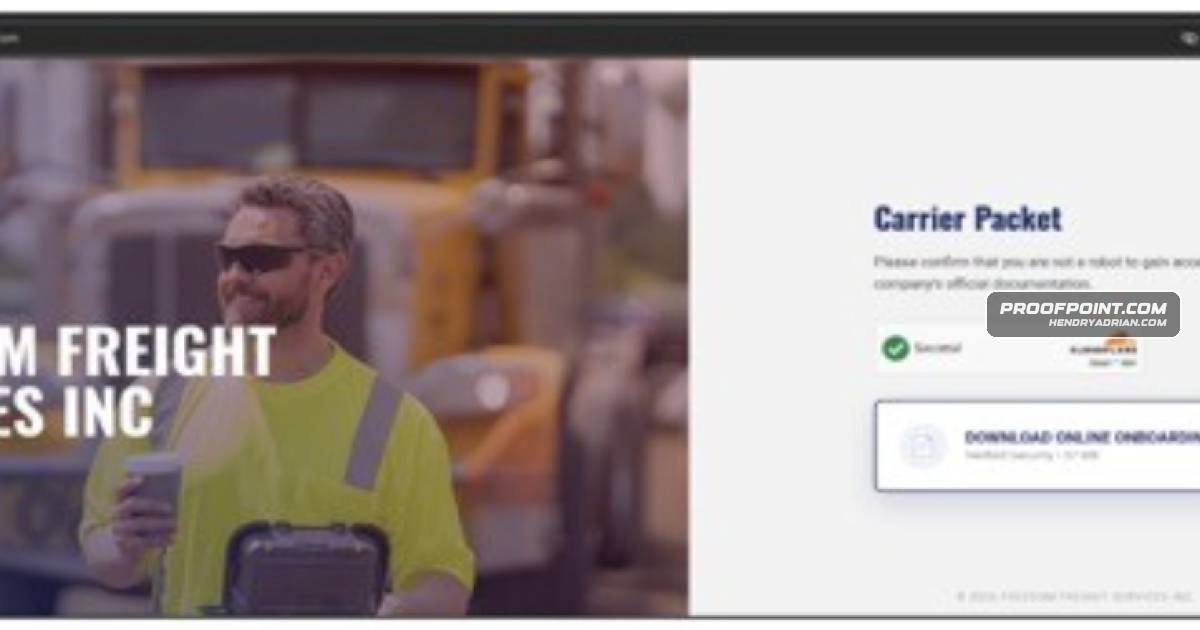
- The actor compromised a load board platform and emailed transportation carriers a malicious VBS payload in response to fraudulent advertised loads.
- The VBS payload downloaded and executed PowerShell, installed ScreenConnect, and displayed a decoy broker-carrier agreement.
- The actor installed four ScreenConnect instances, Pulseway, and SimpleHelp to maintain redundant remote access.
- A PowerShell workflow used a third-party signing service and a fraudulent but valid Authenticode certificate to re-sign ScreenConnect installers and components.
- PowerShell scripts enumerated users and browser profiles, examined browser history and databases, and searched for financial and transportation-related access.
- The actor executed a cryptocurrency-wallet-stealer binary and sent positive findings to attacker-controlled Telegram bots.
- Defensive Notes
- Monitor for unauthorized remote management tools and suspicious PowerShell activity.
- Monitor for abnormal browser telemetry associated with access to financial platforms.
Indicators of compromise
| Type | Indicator | Context |
|---|---|---|
| DOMAIN | nq251os[.]top | ScreenConnect C2 domain listed among the article's indicators. |
| DOMAIN | officcee404[.]com | Domain listed among indicators associated with the intrusion. |
| DOMAIN | screlay[.]amtechcomputers[.]net | ScreenConnect C2 domain identified in the article's indicators. |
| DOMAIN | signer[.]bulbcentral[.]com | Signing-service domain used in the malicious workflow to re-sign ScreenConnect installers and components. |
| HOSTNAME | af124i1agga[.]anondns[.]net | Hostname listed among indicators associated with the intrusion. |
| HOSTNAME | services-sc-files[.]s3[.]us-east-2[.]amazonaws[.]com | Signer-controlled host used to deliver the newly signed MSI and ScreenConnect component archive. |
| IPV4 | 147[.]45[.]218[.]0 | IP address identified as related to SimpleHelp C2. |
| SHA256 | 1f89a432471ec2efe58df788c576007d6782bbdf5b572a5fbf5da40df536c9f5 | SHA-256 hash identified for the malicious VBS payload. |
| SHA256 | 3dcb89430bae8d89b9879da192351506f4fdb7c67e253a27f58b3bf52101cd4c | SHA-256 hash identified for a PowerShell script used in the intrusion. |
| SHA256 | 82d603c0b387116b7effdee6f361ca982c188de0c208e681e942300a0139c03f | SHA-256 hash identified for the cryptocurrency wallet stealer. |
| SHA256 | b861e3682ca3326d6b29561e4b11f930f4a9f10e9588a3d48b09aa6c36a8ea80 | SHA-256 hash listed alongside SimpleHelp indicators. |
| SHA256 | d9832d9208b2c4a34cf5220b1ebaf11f0425cf638ac67bf4669b11c80e460f58 | SHA-256 hash listed for Pulseway RMM in the article's indicators. |
| SHA256 | f4977bfeae2a957add1aaf01804d2de2a5a5f9f1338f719db661ac4f53528747 | SHA-256 hash identified for ScreenConnect tooling used in the intrusion. |
| URL | hxxps[:]//carrier-packets-docs[.]com/FREEDOM_FREIGHT_SERVICES_CARRIERS_ONBOARDING.vbs | VBS payload staging URL identified as malicious. |
| URL | hxxps[:]//qto12q[.]top/pdf.ps1 | PowerShell payload staging URL identified as malicious. |
MITRE ATT&CK
T1005 · Data from Local SystemPowerShell scripts copied locked browser databases and extracted browsing history from local browser profiles.T1021 · Remote ServicesThe actor installed and used ScreenConnect, Pulseway, and SimpleHelp for remote access.T1041 · Exfiltration Over C2 ChannelThe actor sent reconnaissance results and wallet findings to attacker-controlled Telegram bots.T1053 · Scheduled Task/JobThe article reports delayed SYSTEM scheduled tasks created to evade proxy controls.T1059 · Command and Scripting InterpreterThe actor used VBS and PowerShell to download, execute, and chain payloads and run reconnaissance scripts.T1082 · System Information DiscoveryA PowerShell script enumerated installed antivirus software and checked for financial, tax, accounting, and cryptocurrency applications.T1553.002 · Code SigningThe actor used a signing service to re-sign ScreenConnect installers and components with a fraudulent but valid certificate.T1566 · PhishingThe actor emailed transportation carriers a malicious payload after they inquired about fraudulent loads.
People
Vendors
ConnectWiseThis step eliminated ScreenConnect binaries signed with nowârevoked ConnectWise certificates and ensured that all installed components were uniformly signed with a certificate that Windows still treated as trusted.Kaseya2066799 – Kaseya Pulseway Domain in DNS Lookup (pulseway .s3-accelerate .amazonaws .com) SectigoCertIssuer Sectigo Public Code Signing CA EV R36
Products
PulsewayThe actor installed multiple concurrent RMM solutions—four ScreenConnect instances, Pulseway, and SimpleHelp—to create redundancy and preserve access if one tool was detected or disabled.ScreenConnectThe actor abused a thirdâparty signingâasâaâservice to reâsign ScreenConnect installers and maintain stealthy persistence while targeting financial and transportation platforms for freight fraud and cargoSimpleHelpThe actor installed multiple concurrent RMM solutions—four ScreenConnect instances, Pulseway, and SimpleHelp—to create redundancy and preserve access if one tool was detected or disabled.