
Microsoft Details Cross-Tenant Helpdesk Impersonation Intrusion Chain
Summary
Microsoft describes a human-operated intrusion chain using cross-tenant Teams helpdesk impersonation to gain Quick Assist access, sideload payloads, pivot with WinRM and exfiltrate data via Rclone. It also provides hunting queries and defenses.
Key points
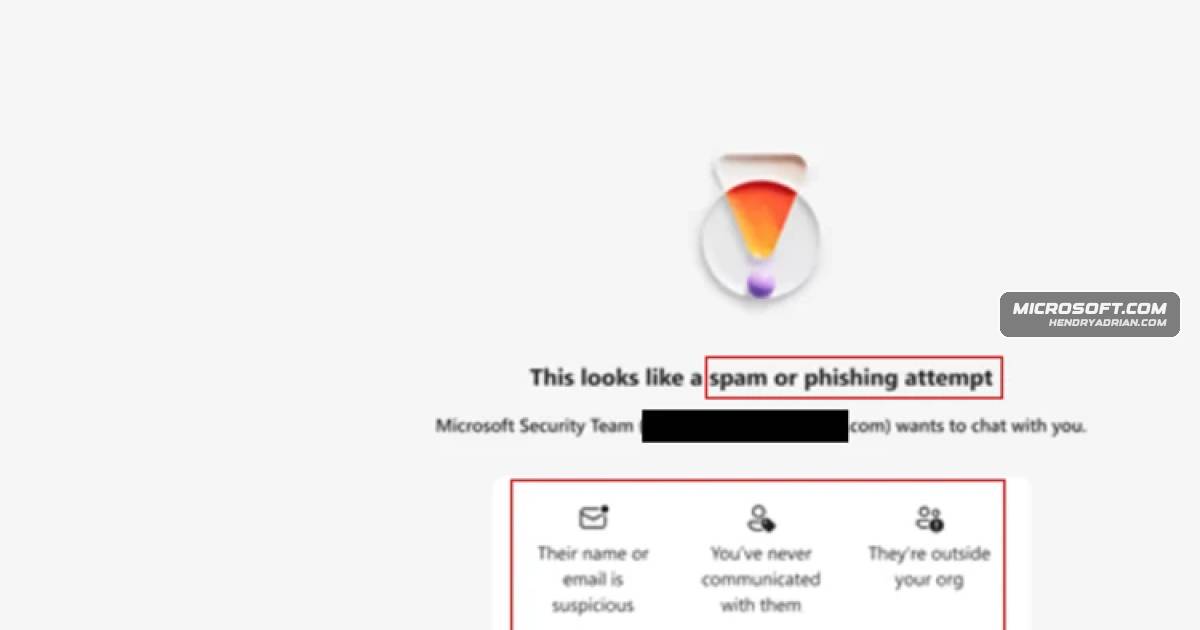
- Microsoft describes attackers impersonating IT help desks through cross-tenant Teams chats or calls, sometimes with vishing, to persuade users to launch Quick Assist and approve elevation prompts.
- The described activity includes rapid reconnaissance, often within 30–120 seconds of remote access, using cmd.exe or PowerShell to check user privileges, system details and domain affiliation.
- Attackers stage payloads in user-writable locations and use DLL side-loading through trusted signed applications; encoded configuration stored in the user registry is decrypted in memory.
- Microsoft reports sideloaded processes communicating over HTTPS, followed by credential-backed WinRM movement toward high-value systems such as domain controllers and installation of additional management tooling.
- The described actors use Rclone to transfer targeted business data to cloud storage, with file-type exclusions intended to reduce transfer size and detection risk.
- The article provides hunting queries to correlate Teams activity with remote-management launches, reconnaissance, staging, registry changes, network connections and Rclone activity.
- Recommended defenses include user education, Conditional Access and MFA, restricting remote-management tools and WinRM, and enabling Safe Links, ZAP, ASR and WDAC.
Article Details
- Attack Vectors
- Attackers impersonate IT or helpdesk personnel in cross-tenant Microsoft Teams chats or calls, sometimes using vishing, to persuade users to launch Quick Assist and approve access or elevation prompts.
- After obtaining interactive access, attackers conduct rapid reconnaissance using cmd.exe or PowerShell to inspect user, system, domain, and network information.
- Attackers stage payloads in locations such as ProgramData and use trusted signed applications to DLL side-load attacker-supplied modules.
- A sideloaded component stores encoded or encrypted configuration in user-context registry locations and decrypts it in memory.
- Compromised processes establish HTTPS command-and-control communications with externally hosted infrastructure.
- Attackers use WinRM for credential-backed lateral movement toward domain-joined systems, including domain controllers.
- Attackers install auxiliary remote management software using msiexec.exe and use Rclone to transfer selected business data to external cloud storage.
- Defensive Notes
- Enforce Conditional Access and MFA for administrative roles, and require compliant devices where appropriate.
- Restrict WinRM and remote management tools to authorized roles and management workstations.
- Enable Safe Links for Teams and ensure Zero-hour Auto Purge (ZAP) is active.
- Use Attack Surface Reduction rules and Windows Defender Application Control to restrict DLL side-loading and execution from user-writable locations.
- Enable network protection and investigate suspicious outbound connections, registry modifications, and use of Rclone or similar synchronization utilities.
- Train employees to verify external tenant indicators and treat unsolicited helpdesk contact as suspicious; consider an internal verbal authentication phrase.
MITRE ATT&CK
T1012 · Query RegistryThe article describes querying registry values to determine the operating-system build and edition.T1016 · System Network Configuration DiscoveryThe attacker conducts quick network reconnaissance to assess connectivity and possible lateral movement.T1021.006 · Windows Remote ManagementThe attacker uses WinRM to pivot from the initially accessed endpoint to other domain-joined systems.T1033 · System Owner/User DiscoveryThe attacker checks user context and privilege levels after gaining interactive access.T1059.001 · PowerShellPowerShell activity is used during post-access reconnaissance and is included in the article's hunting queries.T1059.003 · Windows Command Shellcmd.exe activity is used for rapid reconnaissance after remote access is established.T1071.001 · Web ProtocolsA sideloaded process communicates with external command-and-control infrastructure over HTTPS.T1078 · Valid AccountsThe article describes WinRM lateral movement as credential-backed, indicating the use of valid credentials.T1082 · System Information DiscoveryThe attacker gathers host and operating-system information during initial reconnaissance.T1112 · Modify RegistryAttackers write encoded configuration data to user-context registry locations.T1204 · User ExecutionUsers are persuaded to open Quick Assist, enter a key, and approve prompts that grant the attacker access.T1219 · Remote Access ToolsThe attacker uses Quick Assist to obtain interactive control of the compromised device.T1566.003 · Spearphishing via ServiceAttackers initiate cross-tenant Teams chats or calls while impersonating IT or helpdesk personnel.T1567.002 · Exfiltration to Cloud StorageRclone is used to transfer selected data from internal network locations to external cloud storage.T1574.002 · DLL Side-LoadingStaged attacker DLLs are loaded by trusted signed applications, including AcroServicesUpdater2_x64.exe.
Vendors
Products
Microsoft Defender for EndpointMicrosoft Defender for Endpoint may detect this activity as:Microsoft Defender for Office 365Microsoft Defender for Office 365 – Microsoft Teams chat initiated by a suspicious external user – IT Support Teams Voice phishing following mail bombing activity – A user clicked through to a potentially malicious URL.Microsoft Defender XDRMicrosoft Defender XDR detectionsMicrosoft Quick Assistand calls (often with vishing) to socially engineer users into launching remote support tools like Quick Assist, granting interactive control, and approving elevation prompts; they then perform rapidMicrosoft TeamsAttackers impersonate IT/helpâdesk via crossâtenant Microsoft Teams chats and calls (often with vishing) to socially engineer users into launching remote support tools like Quick Assist, granting interactive