Netskope Explains How AI Agents Amplify OAuth Token Risks
Summary
Netskope outlines how persistent, broadly scoped OAuth tokens can let AI agents execute malicious instructions without further human approval, and recommends isolated agent identities, short-lived task-scoped credentials, monitoring, and governance.
Key points
- OAuth tokens can remain valid after a user’s initial consent, allowing access without another MFA checkpoint if a token is compromised.
- Netskope estimates that 1,000 employees using five agents each could result in 50,000 active OAuth tokens, many potentially unreviewed or unrotated.
- Broad scopes, persistent credentials, limited runtime visibility, autonomous actions, and open-ended execution can increase agents’ security risks.
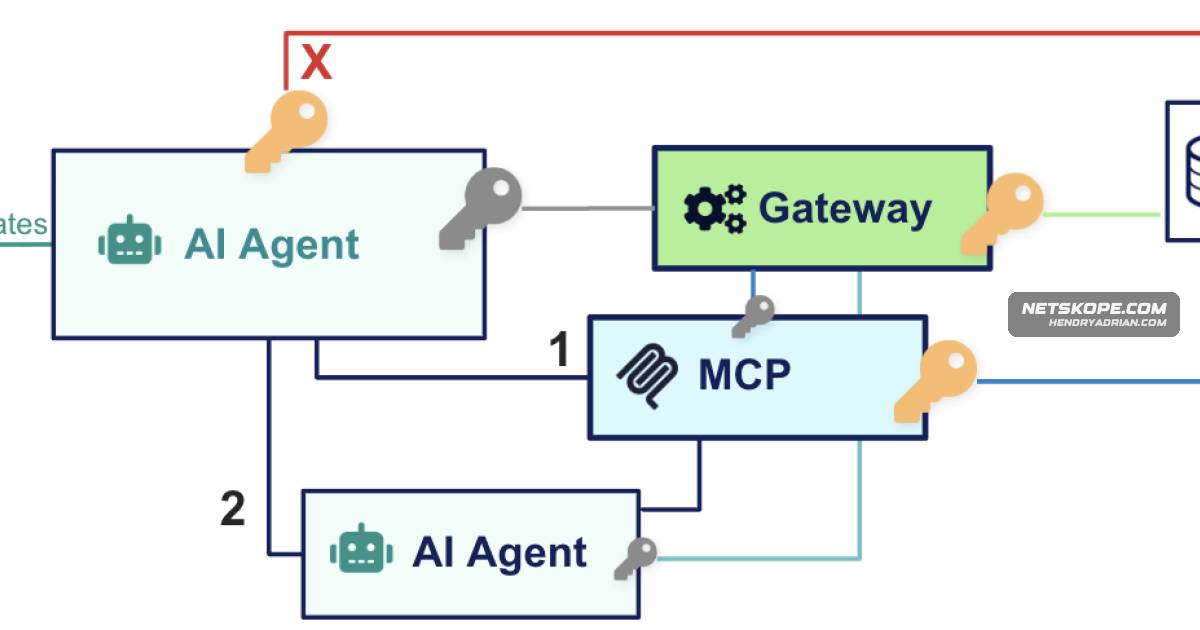
- A confused-deputy attack can exploit an agent’s valid token: malicious instructions in data the agent consumes may prompt it to make authorized API calls on an attacker’s behalf.
- Recommended safeguards include separate agent identities, minimal task-specific permissions, short-lived credentials, token isolation, and segmentation.
- The article also recommends agent activity logging, behavioral baselines, anomaly response, and gateways to help govern access and detect misuse.
- DPoP and Rich Authorization Requests are cited as standards that can support sender-constrained tokens and more granular permissions.
Article Details
- Topic
- OAuth authorization risks in AI agents and governance measures for limiting token exposure and agent privileges.
Vendors
Products
AI GatewayNetskope’s AI Gateway provides access control, policy enforcement, and more.Netskope Skylight Agentic BrokerNetskope Skylight Agentic Broker addresses the gap the MCP specification (November 2025) currently leaves open whereby the spec recommends OAuth 2.1 for HTTP deployments but leaves per-tool scoping to implementers.Netskope Skylight AI Command CenterNetskope Skylight AI Command Center allows for visibility across the entire AI environment.