
Why Hiring More SOC Analysts May Not Fix Alert Backlogs
Summary
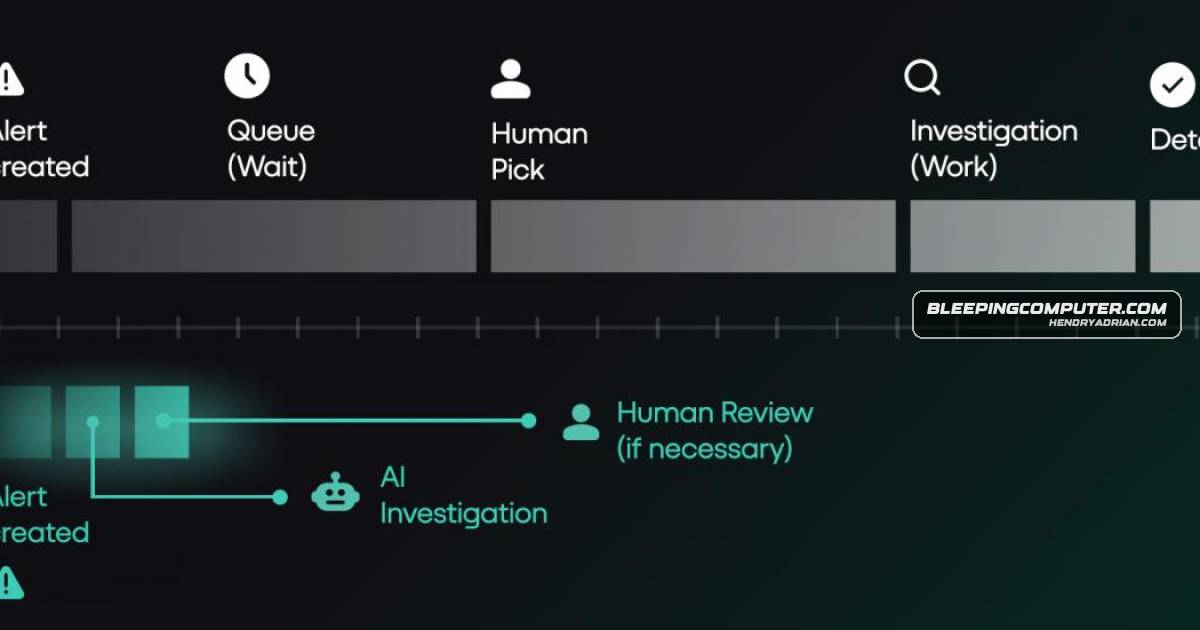
A sponsored Prophet Security article argues that SOC alert backlogs require operating-model changes, not just more hires. It offers a capacity diagnostic, reports vendor customer results, and outlines cases where human-led investigations remain important.
Key points
- The author argues that post-tiering alert volume can exceed human investigation capacity, leaving some alerts delayed or uninvestigated.
- A four-question diagnostic examines investigation coverage, detection rules suppressed without replacement, analyst turnover, and how the team would respond to doubled alert volume.
- The article reports that JB Poindexter processed 4,407 investigations through Prophet AI in its first 60 days, with a mean investigation time under four minutes; these are vendor-presented deployment results.
- The article says Cabinetworks processed 3,200 alerts in 33 days, with six escalated to a human, and reports a 90% reduction in SIEM costs.
- The author recommends keeping humans in the lead for insider-threat cases requiring personal context, novel TTPs, and environments with strict data-residency requirements.
- The article says deployments require two to four weeks of focused tuning and emphasizes maintaining detection engineering, investigation audit trails, and data portability.
Article Details
- Defense Focus
- Reduce SOC alert-investigation backlogs while preserving human-led analysis for cases requiring contextual judgment or involving novel TTPs.
- Detection Methods
- Investigate alerts across severity levels, including low- and medium-severity alerts that may otherwise remain in the queue.
- Use AI-assisted investigations to query EDR and identity source systems directly and collect investigation evidence.
- Use investigation results as feedback for detection engineering and deliberate rule tuning.
- Assess alert coverage by comparing alerts above the investigation threshold with alerts actually investigated.
- Data Sources
- Security alerts and alert-severity data
- EDR telemetry
- Identity logs
- Network data
- DLP telemetry
- Investigation queries and collected evidence
- Rule Types
- SIEM detection rules; the article discusses suppressing and tuning noisy rules but specifies no rule syntax or query language.
- Platforms
- SIEM platforms
- EDR systems
- Identity systems
- DLP systems
- Defensive Actions
- Track the proportion of alerts above the investigation threshold that receive investigation; the article identifies investigating less than 90% as a possible coverage gap.
- Require an engineering ticket or replacement coverage when suppressing detection rules, and review undocumented suppressions as detection debt.
- Keep low- and medium-severity alerts within investigation scope where feasible.
- Use direct queries against source systems to investigate alerts and assess whether raw EDR or identity telemetry must be ingested and stored in the SIEM.
- Keep humans in the lead for insider-threat cases requiring non-telemetry context and for novel TTPs without useful historical analogues.
- Schedule detection engineering work using investigation findings rather than relying only on manual triage to identify noisy detections.
- Evaluate data-residency requirements before adopting an AI SOC platform and verify where alert telemetry will be processed or stored.
- Allow two to four weeks of focused tuning for deployments to reach steady state, as reported in the article.