
Gartner Predicts SOCs Will Have 50% More Engineers Than Analysts by 2028
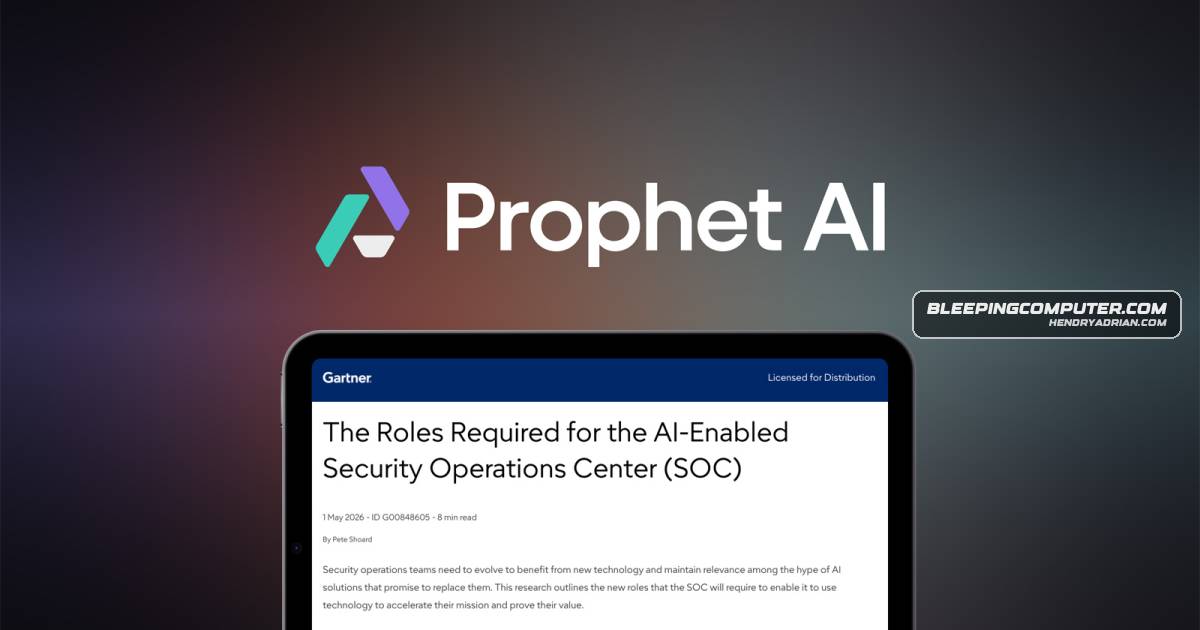
Summary
A sponsored summary of Gartner's 2026 report says AI agents are reducing routine alert work, shifting SOC roles toward case ownership, SOC engineering and exposure management; it outlines related staffing, training and measurement changes.
Key points
- Gartner predicts SOCs will have 50% more engineers than analysts by 2028 and says SOCs will not shrink by 2030.
- The report says AI agents already reduce alert-handling work for common detection use cases, shifting analysts from triage toward case ownership and response.
- It recommends training junior analysts to review agent investigations, own lower-risk cases with oversight, and feed corrections back into AI guidance.
- Detection engineering is expected to expand into SOC engineering, covering prompt design, workflow testing, AI output validation, versioning and rollback.
- Gartner recommends measuring case accuracy, cycle time and decision confidence rather than relying primarily on alert volume and closure rates.
- The report calls for continuous threat exposure management as a standing SOC function and predicts SOCs will be largely offensively driven by 2030.
- In Prophet Security's survey of more than 250 security leaders and practitioners, 57% expected team size to stay the same and 9% expected it to grow.
Article Details
- Publisher
- BleepingComputer (sponsored content by Prophet Security)
- Report Period
- 2026 report; projections through 2028 and 2030
- Scope
- Gartner's report on roles, skills, and metrics for AI-enabled security operations centers.
- Sample Size
- Prophet Security survey: more than 250 CISOs, SOC leaders, and practitioners.
- Key Statistics
- Gartner predicts that by 2028 SOCs will have 50% more engineers than analysts.
- In the Prophet Security survey, 57% of respondents expected their team size to stay the same and 9% expected it to grow.
- Among teams that hunted weekly or more, 49% said a hunt had surfaced malicious activity their detections missed, compared with 8% among teams reporting the lowest hunting frequency.
- Recommendations
- Map current SOC roles against growing work in case ownership, SOC engineering, threat hunting, and exposure management.
- Update detection engineering roles to include prompt design, workflow testing, and AI output validation.
- Create entry-level development paths that include case ownership and feedback work before triage volume declines.
- Establish baselines for case accuracy and cycle time before an AI SOC rollout.
- Choose an exposure-management practice to run continuously rather than annually.