Malicious BlockBlasters Steam Patch Delivered StealC and a Backdoor
Summary
A malicious August 30 BlockBlasters patch used scripts to steal Steam, browser, and crypto-wallet data and install StealC and a backdoor. The game was removed from Steam after more than 100 downloads were reported.
Key points
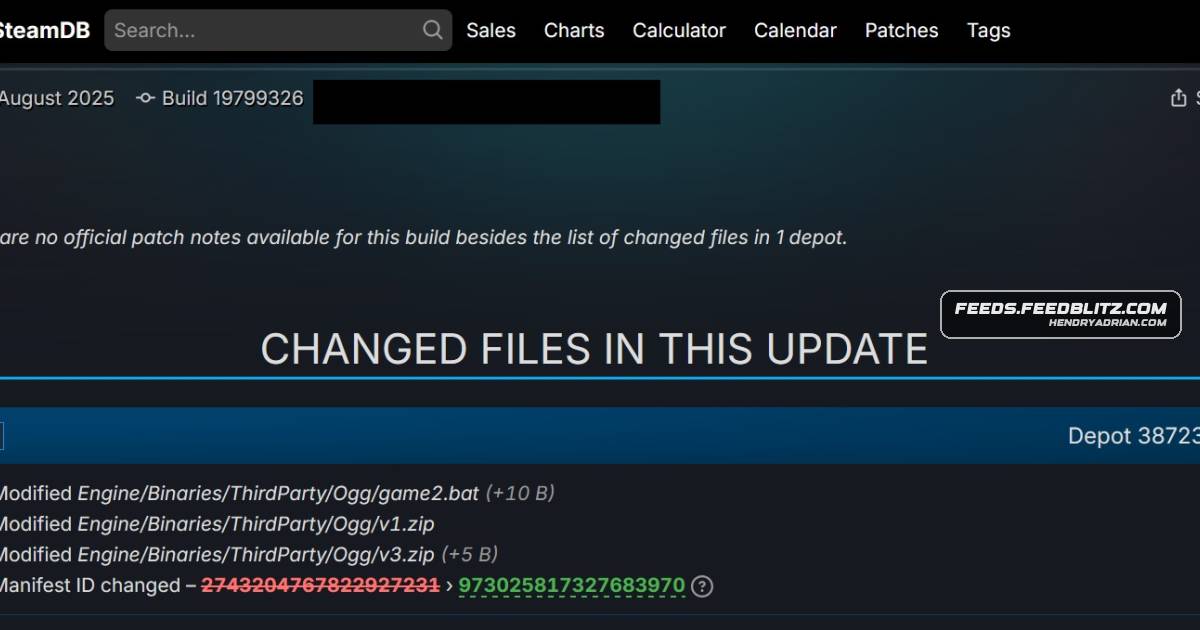
- G DATA researchers found malicious files in BlockBlasters Build 19799326, released on Steam on August 30, 2025.
- A batch script gathered IP and Steam account details, checked for antivirus processes, and sent collected data to a command-and-control server.
- Additional scripts collected browser-extension and crypto-wallet information.
- The malware added its execution folder to Microsoft Defender exclusions and launched payloads while starting the game to mask activity.
- Payloads included a backdoor and StealC, which targeted Chrome, Brave, and Edge browser data.
- Telemetry cited by the article indicated more than 100 downloads after the patch; the game was flagged as suspicious and removed from Steam.
Article Details
- Attack Vectors
- A patch for BlockBlasters (Build 19799326) distributed malicious batch files, VBS launchers, and password-protected archives to players.
- The batch files collected Steam login information, browser extension data, and cryptocurrency wallet information, then sent collected data to command-and-control servers.
- A batch file added the payload execution directory to the Microsoft Defender Antivirus exclusion list before unpacking and running the payloads.
- The patch deployed a backdoor and StealC stealer; the backdoor ran the game executable to mask its activity.
- Defensive Notes
- BlockBlasters was removed from Steam shortly before the article was published, and SteamDB marked it as suspicious.
- The article reports that Microsoft Defender Antivirus exclusions were added for the payload execution directory; review exclusions for unexpected entries.
- The article reports that the patch archives were password-protected and that the scripts unpacked and executed their contents.
Indicators of compromise
| Type | Indicator | Context |
|---|---|---|
| IPV4 | 203[.]188[.]171[.]156 | IP address used by the campaign's C2 server. |
| IPV4 | 45[.]83[.]28[.]99 | IP address used as the StealC payload's separate C2 channel. |
| SHA256 | 17c3d4c216b2cde74b143bfc2f0c73279f2a007f627e3a764036baf272b4971a | Hash listed for the malicious Client-built2.exe backdoor payload. |
| SHA256 | 3766a8654d3954c8c91e658fa8f8ddcd6844a13956318242a31f52e205d467d0 | Hash listed for malicious Test.bat. |
| SHA256 | 58a97ab524b704172a8f68fda92daa802b706e397adede410b6475a4eb229c9b | Hash of the password-protected v3.zip archive containing the payload executables. |
| SHA256 | 59f80ca5386ed29eda3efb01a92fa31fb7b73168e84456ac06f88fdb4cd82e9e | Hash listed for the malicious Block1.exe StealC payload. |
| SHA256 | aa1a1328e0d0042d071bca13ff9a13116d8f3cf77e6e9769293e2b144c9b73b3 | Hash listed for malicious Game2.bat. |
| SHA256 | b2f84d595e8abf3b7aa744c737cacc2cc34c9afd6e7167e55369161bc5372a9b | Hash listed for malicious Test.vbs. |
| SHA256 | c3404f768f436924e954e48d35c27a9d44c02b7a346096929a1b26a1693b20b3 | Hash listed for malicious Launch1.vbs. |
| SHA256 | cd817345f9e62fa8e9b66e47b645278e74f2a2cf59b8a81b88d1b2ec54b9933d | Hash of the password-protected v1.zip archive installed with the malicious patch. |
| SHA256 | e4cae16e643a03eec4e68f7d727224e0bbf5415ebb0a831eb72cb7ff31027605 | Hash listed for malicious 1.bat. |
| URL | hxxp[:]//203[.]188[.]171[.]156 | C2 URL used by the campaign's batch file and backdoor. |
| URL | hxxp[:]//203[.]188[.]171[.]156:30815/upload | C2 upload URL used by the batch file to send collected data. |
| URL | hxxp[:]//45[.]83[.]28[.]99 | Separate C2 URL contacted by the StealC payload. |
MITRE ATT&CK
T1041 · Exfiltration Over C2 ChannelThe batch file sends collected information to a C2 server.T1057 · Process DiscoveryThe payload checks for a running Steam process.T1059.003 · Windows Command ShellThe patch uses batch files and cmd.exe to run scripts and payloads.T1059.005 · Visual BasicVBS scripts launch the batch-file payloads.T1071.001 · Web ProtocolsThe backdoor and stealer communicate with their C2 channels over HTTP.T1518.001 · Security Software DiscoveryThe batch file searches for running processes associated with antivirus products.T1555.003 · Credentials from Web BrowsersStealC searches browser user-data locations, and the batch file collects browser and cryptocurrency wallet information.T1562.001 · Disable or Modify ToolsThe script adds the payload directory to Microsoft Defender Antivirus exclusions.
People
Malware
Products
BlockBlastersA 2D platformer game called BlockBlasters has recently started showing signs of malicious activity after a patch release on August 30. While the user is playing the game, various bits of information are lifted from theBrave BrowserBrave Browser – “\\BraveSoftware\\Brave-Browser\\User Data\\Local State” Google ChromeGoogle Chrome – “\\Google\\Chrome\\User Data\\Local State” Microsoft Defender Antivirusarchive to the exemption list for Microsoft Defender Antivirus. This will ignore the destination folder during security scans and behavior checks. AfterwardsMicrosoft EdgeMicrosoft Edge – “\\Microsoft\\Edge\\User Data\\Local State” SteamIn 2025, there has been a rise in malware infections in games being released on the popular games platform Steam. The perhaps most notable case is that of PirateFi[A], a Free-to-Play game that comes with an information